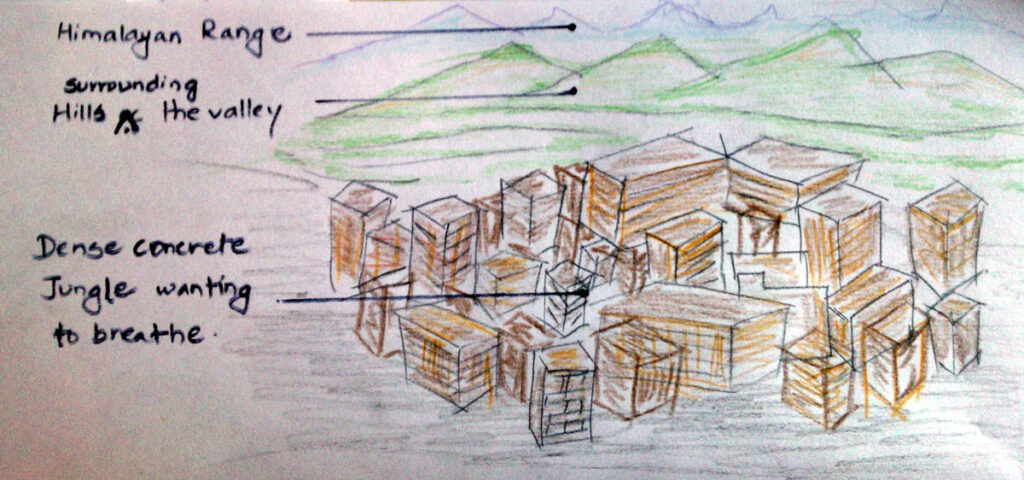
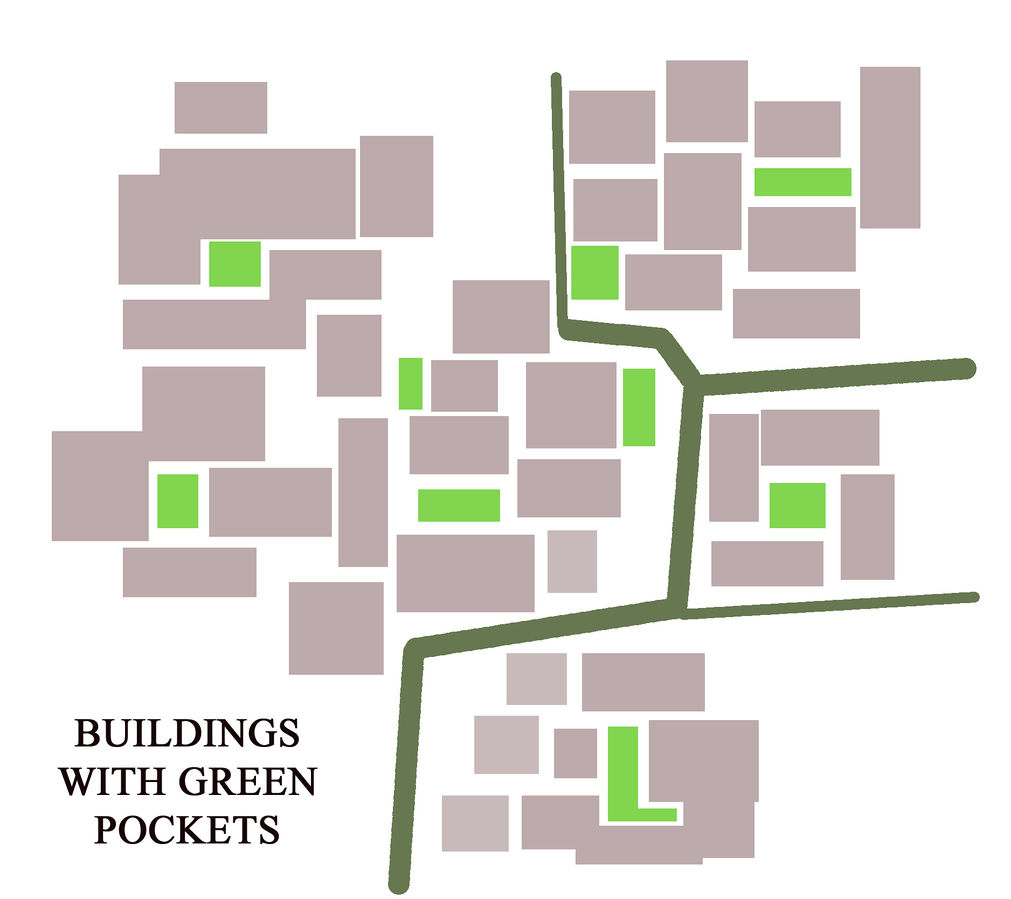
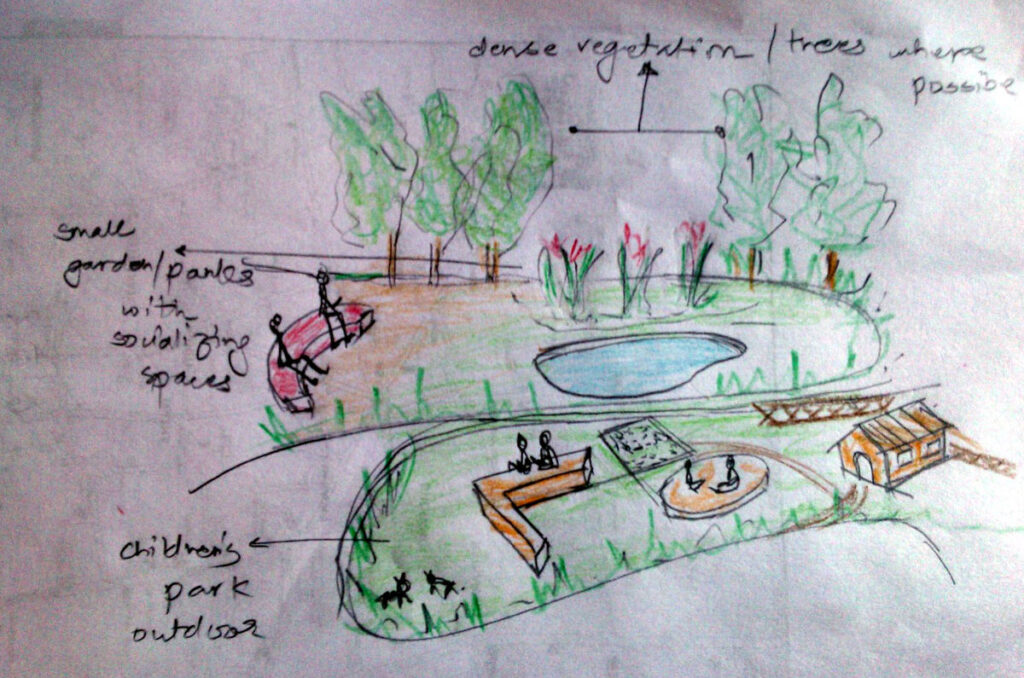
‘If there was a big green space in my neighbourhood, if I had a place to go during this pandemic, I would quietly go there and sit. I would sit for hours and contemplate. I would lay down in the grass and hear the birds sing. I could stay alone because the nature would give me company. I could walk my dog in those lanes where there is enough space for all of us. Those big buildings and no open spaces in the city have confined us all inside these concrete walls. An overcrowded city is always vulnerable. This is more relevant now that this pandemic requires more space per person for everybody to be safe. During the 2015 earthquake, the situation was different. People came out and stayed together and faced the disaster together. Everybody wanted to be with one another because that gave them hope and relief. In this case, this is not possible because, social distancing is the main criteria for safety. I cannot not even imagine if both of these crises came together. How could we have even managed to cope with it.’
I have always been the type of person who thinks communities have the capability to strengthen, transform and be self-reliant in all aspects of life. Communities when work together can bring about giant leap in their existing condition. Should we always follow the global trend and mould our lives into identical identities or should be also shape our individuality?
This is a perfect time to reminiscence on evolution and life. The basic concept of food, shelter and clothing has been transformed to a level that this asset has been taken for granted. The online world has a huge role to play in this. Making technology available to use for the cause that are not for a progressive future is making our society fake day by day. Before when we did something we never thought if people are seeing us or if people are taking about my daily life. Now with the use of social media, people know about your daily life.
I see in social media, people flaunting their houses with large open spaces. They say that they have taken all the safety measures to stop the virus from entering their houses and closed their gates so that nobody can come close. This is a good practice. Of course, the idea is social distancing, no way anyone could invite over guests to their houses in such a crisis. But do they even consider letting a homeless enter their compound and at least shelter in the huge open ground they have. That is why public open spaces are even more vital at this moment. Those who have a lot of private land are closing everything and taking advantage of the privilege they have. Don’t flaunt your privilege in social media. Try to be compassionate and try to see the misery around you.
But there are these huge groups of people who have been selflessly contributing during the time of crisis to serve the most needy in the community. Community groups, youth groups who are involved in crises, feeding the poor, cooking and sharing, they could also contribute to the development of open spaces. As vital as food and shelter, mental well-being is important for a healthy life as recommended by WHO. For such wellbeing one needs fresh air, exercise, green areas and many such facilities that can only be provided in open spaces. At times like these and always open spaces are as important for the public. Open spaces in these contexts are not big open areas but small spaces in between the communities, where people can jog at a safe distance and smile and greet each other, where people can get some fresh air, where they can create these bonding which are vital for a healthy living. Maintaining social distance as a social being is not an easy task for us but we should try to bring solutions that can maintain our safety, at the same time, bring us together as community. We could share stories by writing on walls, we could leave messages, we could do the same activities at the same time but in our own house or in the terrace, there are many we could do to stay connected and motivated. This will surely bring the missing bond among the communities.
Maybe we can share our skills and help each other in need. May be someone is good at cooking and the other is good at plumbing, may be someone can take care of the garden we have made in the community open space. Someone could make their artwork and display in the open spaces. And someone could make some play areas and children could play in turn after properly sanitizing, may be someone who plays music could give concerts from their terrace and everybody can have a party from their home. Could we do all this? How could we do all this?
The neighbours were always together, but we were so busy that we never thought spending some time with them is important. But between those quick smiles, passing by in cars, seeing the light turned on in their rooms, seeing them walk their dogs, we always shared a special bond that only the place where we live in can provide. Let’s make these places and memories ours by appreciating and creating more opportunities for such encounters and interactions.
We will thrive and we will rise again. Let’s play our roles and contribute.
This is a link to my very initial project of providing better green/open spaces in Kathmandu Valley when I had just started my Master’s degree in Landscape Architecture. After almost 5 years, how strongly I still believe in the vision I had back then. Surely, my horizon has expanded and I am able to look at it through many perspectives and dimensions. Hence, making me more focused on how to achieve my goal. Do click in the link below to find out more.
A normal weekday, two siblings, didi (sister) and bhai (brother), walk hand in hand amidst the crowded, chaotic and somewhat self-centred bunch of denizens. Didi probably around 7-8 years old, bhai seemed a couple of years younger. It was around 8 am and as the crowd of urban area would behave, there was a certain rush in the environment. People all dressed up for work, rushing bikes, kids in uniform and school bags, some opening their shops for business, some fetching water from the stone spouts. Older females with plates (thali) filled with offerings to deities were heading towards the temples. Some young folks in uniforms were drinking tea and complaining about the mundane. Some older lads were also in the corner shop drinking tea, reading newspapers and complaining about the country and the whole system. To my surprise, a lot of tourists with fancy cameras already in action to create memories, some to remember the place, some perhaps to remind themselves how lucky they are not to be living here. There was more your eyes could witness, there were many stories you could hear and tell. But today I want to focus on my didi and bhai couple. Amongst the ruins of temples and houses, yet to be constructed after the 2015 earthquake, patis and shattals (rest houses) with unrestful people, sound of prayer bells and vehicle horns, the white neoclassical palace also under reconstruction, lots of eateries, shops and bargains, there still seemed to exist a time that was still. It seemed that the rush each civilian beared had nothing to do with the calmness and existence of the Basantapur Durbar Square and yet they maintained a sense of harmony. Just like the two little soldiers who found their way into this flamboyant yet modest scenario.
This dynamic space I believe has to remain calm on itself, as the stage remains the same, only the plays change.
Ragged loose trousers, a black polka dotted pink top, a bit shorter pale outer with orange collar and linings, a fancy colorful bag and a pair of blue ballerina shoes, didi sure looked she could carry any style with ease. Bhai was a bit arrogant in his outlook wearing a tshirt written ‘It’s all about me!’. Of course to add to the swag didi was carrying an umbrella, black in color and a little crooked.
Look! A mouse!
When I saw them the first time, they were amused looking at the ground. They were near a stone spout in one of the squares of Basantapur in Maru tole. Their journey started from there where I followed them, not stalked! What were they amused of? A small mouse! Didi had her umbrella opened though it was not raining. Didi was excited but not as much as bhai. He wanted to observe the mouse, why it was moving, why it was so small, what was it? perhaps he had a tons of questions in his mind but as a researcher with children I could recognise the curiosity in his eyes. The drive that makes you want to learn naturally without anyone forcing you to do so in a closed room, is the best teacher you could ever have. He was so engaged that didi had to hold his hand and take him away from there as if they were trying to reach somewhere and she was in a rush.
Holding hands they moved forward towards the Maru Ganesh through the narrow passage. To add to its narrowness, on both sides, there were bricks to construct new houses and ruins of old traditional houses. On the right side was the reconstruction site of Kasthamandap, which also collapsed during the 2015 earthquake. It is under reconstruction now using the traditional methods. Now didi closes her umbrella which is apparently not so easy to do. While she tries to get hold of that, bhai grasps the side of his sister’s tshirt as both her hands were busy. They meet a friend there, just exchange smiles and a bit of conversation and continue along their own path. The pulling of the tshirt was a signal that bhai was tired. The metals from the closed umbrella were dancing as the strings had come off. With that on one hand, didi carried her bhai at the back. Then they continued for a while.
Wait, let me close it first.
Crooked bond.
Along the way, they came across ground floor grocery shops, shops to buy prayer materials, street vendors who had shops literally on the path they were walking. They were selling local produce like saag (mustard leaves, spinach), spices, fruits and many things. When they were near one of the vendors place, bhai came down from his sister’s back and stopped there. Without a word, the vendor gave him one of the fruits he was selling, he took it and walked along eating it. There was no exchange of words, just the gesture. Looked like this happens everyday. How can you define this human relationship. This is so special. Then they continued and reached the Maru Ganesh. Outside there were devotees with plates full of offerings for the Ganesha. There both didi and bhai got some prasad (sweets offered to God). They also put tika (red colored blessings) on their forehead by themselves. Bhai had some sweets in his mouth, a handful in his pocket. Now they had to cross more ruins, more construction sites with bricks laying all over, wooden planks everywhere.
They are now already at the centre where all the area is paved with stone. It looks like a pedestrian prioritised area but practically it was full of vehicles. Of course they were not going very fast as there was no space and also pedestrians would be given more preference in such areas, but their noise and disturbance was felt. Among the vehicles were school vans, motorbikes, four wheel drives, taxis on standby and rickshaws. From this durbar (palace) square we were moving towards the Swetabhairava and reached the square with Pratap Malla’s statue. This square is always so interesting because of the pigeons. There are always a lot of pigeons on the ground, on top of the temple roofs and everywhere. People feed them and chase them and take a lot of photos with them. Apparently my didi was not so much impressed by this. Bhai went inside the pigeon gang and started playing as everyone else was doing. Didi just waited for him.
Bhai I think was around 4 years old. Didi may be around 7-8. It took me by surprise how bhai was interested in everything and didi was not much impressed by anything. She was more taking care of her bhai than enjoying her moments. May be she has done all that and she doesn’t enjoy it anymore, or she is more into taking care of her brother because she was asked to do so by her parents. It could be anything. But I wished she also enjoyed this moment, she also chased the birds once in a while, she also did the same as a kid of her age would do. But she just stood there waiting for her brother to come back so that they could continue their journey. Perhaps she was just being the responsible older sister. Perhaps she enjoys her time when she is free with her friends. After that they crossed the Taleju mandir (temple) and headed towards Makhan tole and disappeared from my sight.
There she goes.
Leaning towards the railings of her balcony, looking across the street view of a house inside a housing complex (a gated community), she could view many other houses same as hers and no one on the street. A car passed once in a while, while she yearned for some excitement. The housing complex was situated on the periphery of the valley, away from the chaos of the city life, well above the valley overlooking the haphazard city. You could view mountain range from here. Built to give almost a traditional look with dachi appa (Newari traditional bricks), the houses seemed to be in harmony with each other. But they lacked the basic concept of Newari architecture, the courtyards and the squares where the communal activities would take place, where children could play together while elderly could pray and share their stories. Also the streets those created opportunities for human interaction were used merely for cars. Perhaps for an eight years old girl, it was the best any parents could give in terms of physical comfort. Her toys inside her house in her playroom were waiting for her to come back. She also had a small private garden in her front yard but no one to play with. She just stays there looking, perhaps waiting for something to happen. Waiting for some stories to be made, so that she could too tell her grandchildren about all the adventures she had when she was a kid. But her life is made too perfect for that.
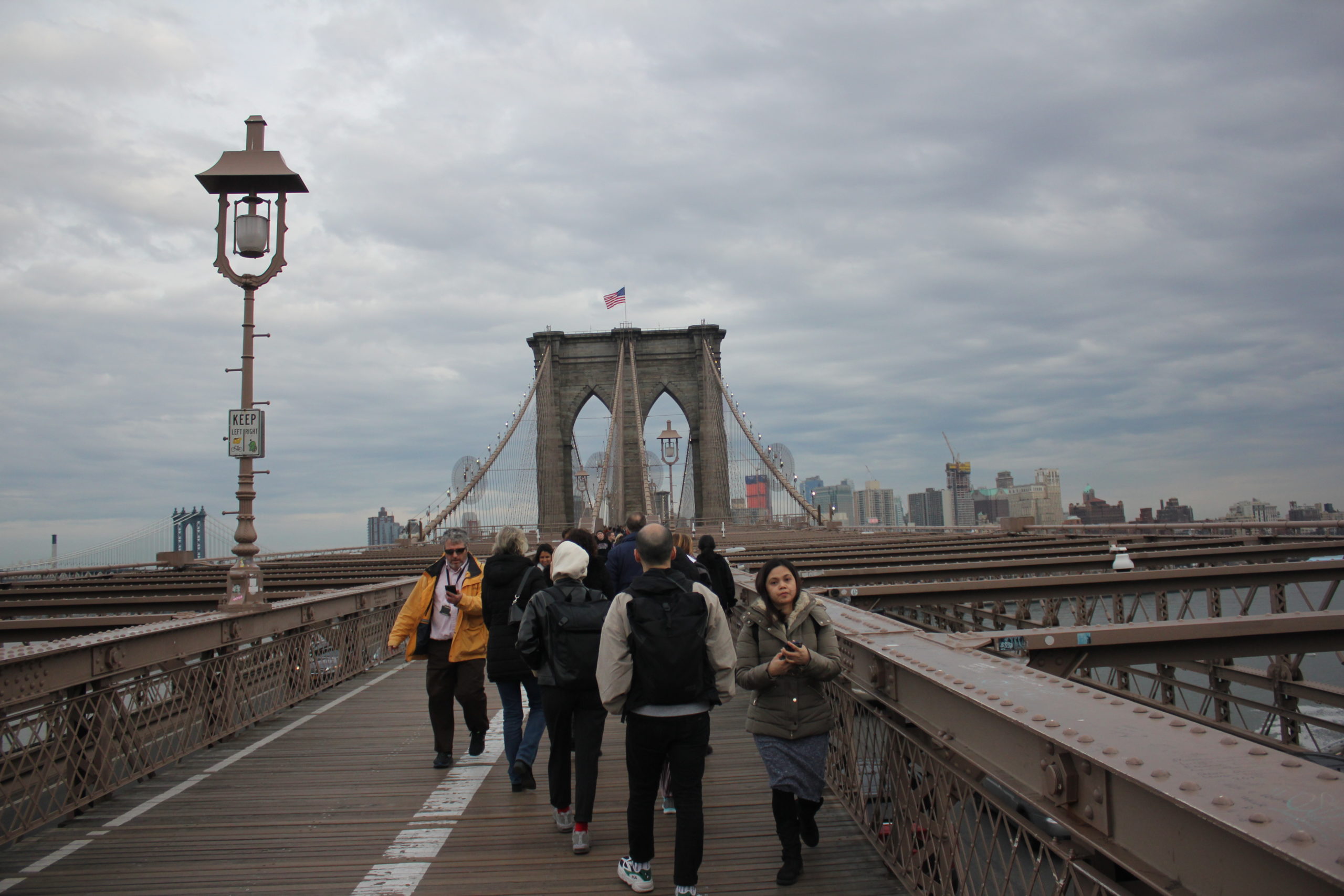
Big city, big road, yet bigger cars, narrow or no bike lanes. The places you could safely ride bikes were the central park, the Brooklyn’s bridge, Hudson river greenway, east river greenway and may be a few other places, which we couldn’t visit. At least what I am trying to say here is, there are some bike paths and you could see some people riding bikes, but when one talks about the connectedness, its hard to find. In Manhattan area, there is bike lane but it was very rare to see anyone riding bikes in those areas. In the city core area, one struggles to find his/her way in the traffic. Also we took a bike for a day when we wanted to explore central park. This day we realised as was said by one random guy on the street in Harlem, that we “looked pathetic with the bikes” and nobody rides bike around these areas. Believe me, having lived in Germany for a while, where even university professors, people in their 70s-80s ride bikes everywhere, it was a strange thing to encounter. And also when people say that New York City is so vibrant, it’s a people’s city, I found it little hard to digest on couple of encounters we had. And the bikers biking in their bike ways, they weren’t the nicest people, you could get seriously hurt if you come in their way.
Pedestrians out of the way of the bike way!
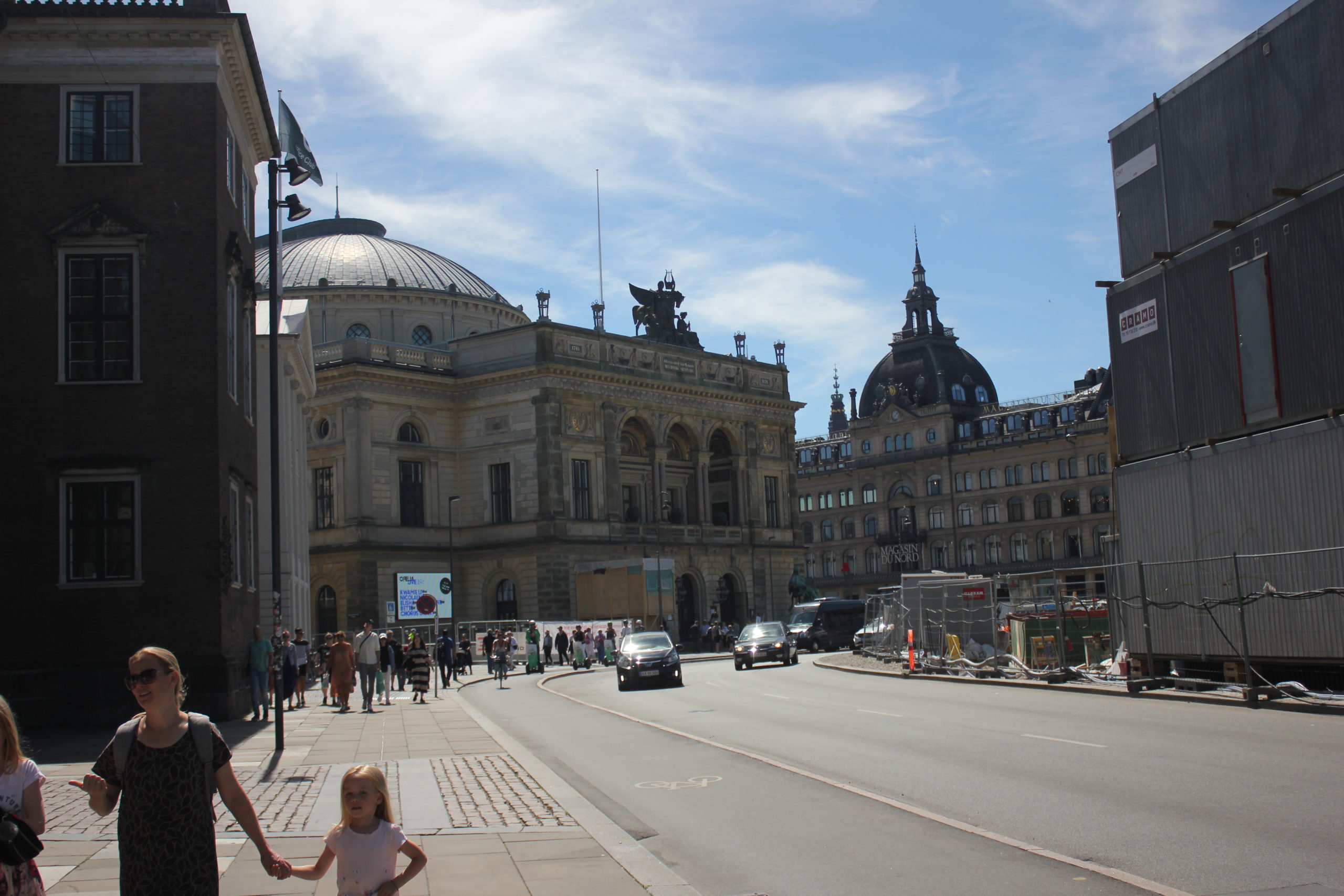
In Copenhagen, every street, every neighbourhood, any place that you could see or walk, you could see bike lanes. The amount of people cycling there had definitely made the traffic so well managed. And in this city we decided not to rent a bike because it was just too hot and we had to be outside to explore all the time. So we definitely had to spare some energy and water inside our bodies. But the sight was amazing. To see so many bikes passing and crossing everywhere, everything so well managed nobody was suffering.
Elevated bike path along the road of Copenhagen.
The cyclists knew what they were doing, the pedestrians also valued each others path, nothing was going wrong. As this was happening in daily basis, there was a silent rule that was followed by everyone. Cycling was not for leisure, not just a quicker alternative to walking, it was a means of transportation. No wonder it is the most bike friendly city in the world. A whooping 62 percent of the residents ride bikes to work and education with only 9 percent of the population driving. They are doing a lot more than this. You can check out this site. Isn’t that something for cities which are expanding their infrastructures to accommodate more cars.
Thinking about my hometown Kathmandu in this context. Such a small city,
where you could reach everywhere by bikes, wouldn’t it have been better to
prioritise bike lanes than expanding roads for more cars. Anyways, the traffic
congestion will not go unless we have underpasses and overhead bridges. So why
not go for some feasible options. And for people who would say the pollution
will make it hard to ride bikes, I would say if they have noticed the city
during strikes and Dashain & Tihar festivals. Anyway, this is just a
thought, I haven’t done any detailed study or research to talk about this any
more than I just did. But when I was doing a study with the children of
Kathmandu for my project, I found out that not even 1 percent of the students
whom I asked were going to school by bike, not even riding bikes as leisure. May
be road safety is the concern for the parents.
When I was in Copenhagen, I could
feel the city enjoying riding bikes and when I asked someone who was living
there if it’s the same during cold and dark winter days, she said it’s the
same, they wont stop riding bikes. The paths are cleared off the snow and made
bikeable all the time.
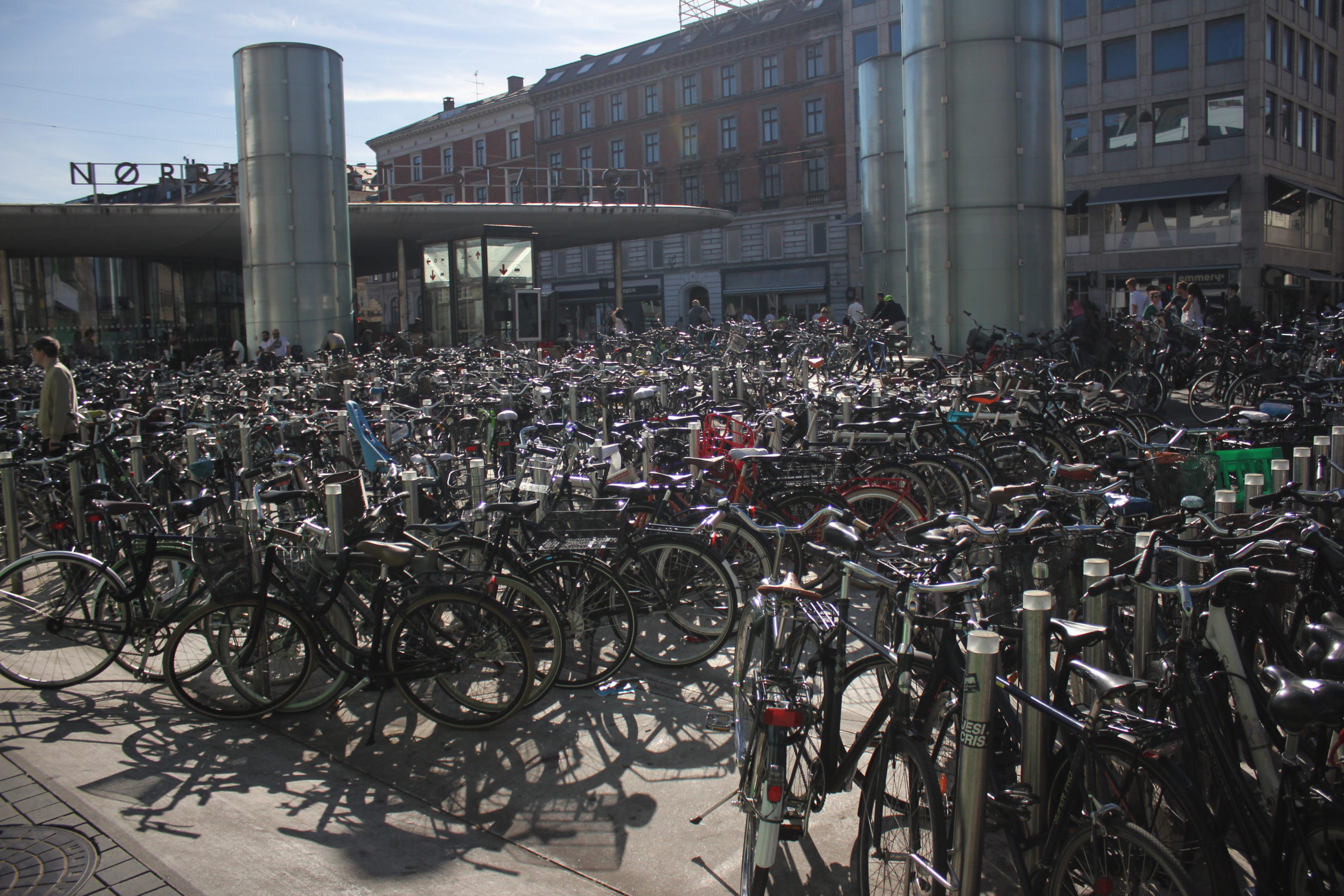
Look, a bike parking! Nørreport station, Copenhagen.
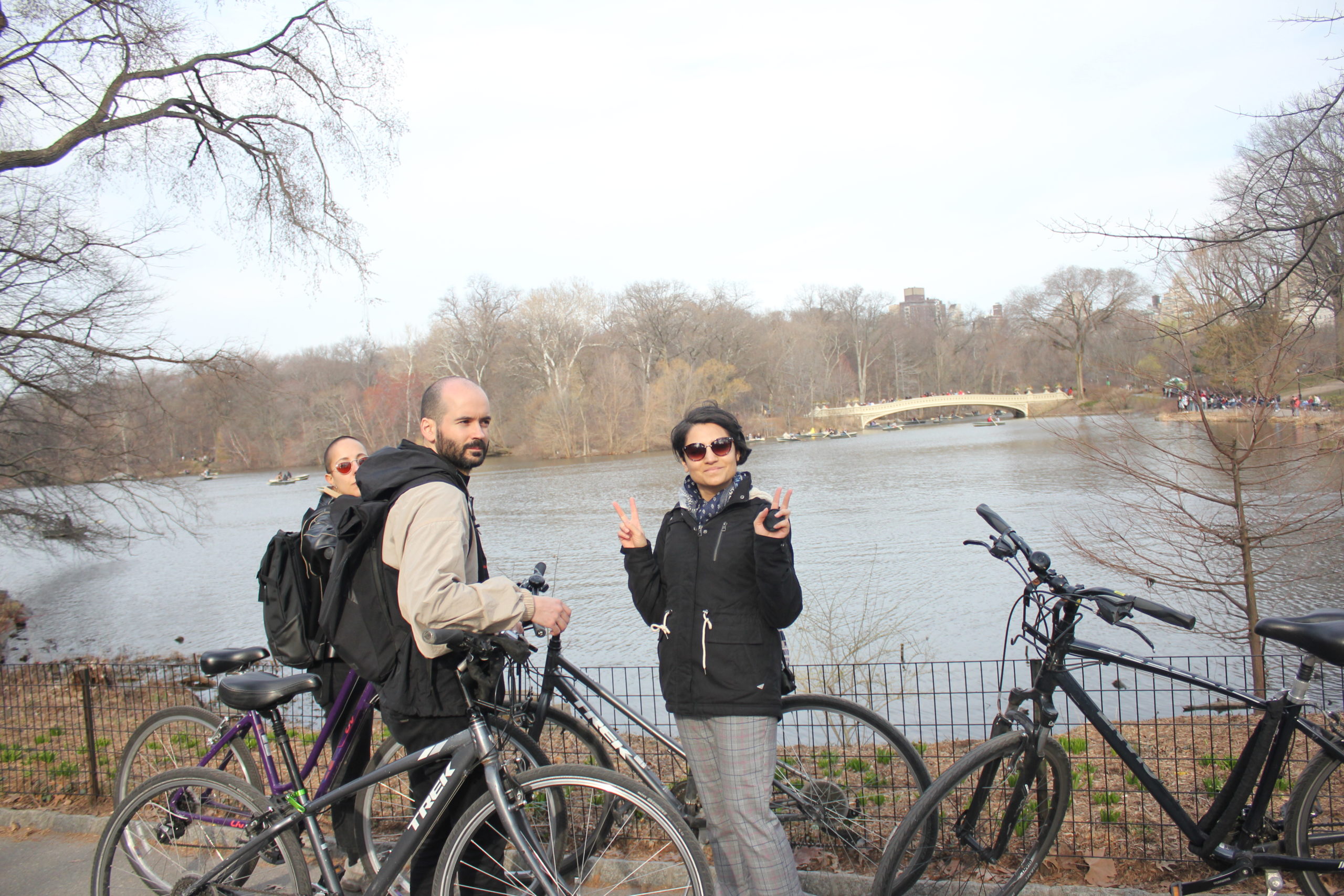
In New York City, even in places where bike lanes were integrated with the landscape, for example central park, the convenience level was a bit low. We hired the bikes to stroll around the park and we were not even allowed to enter all the paths that were only meant for “walking”. The bike lanes were with all the traffic lights and strongly disconnected with the park. So most of the time, we had to just move around with our bikes by our side. The bikers were just biking around the park and nobody would dare to cross their paths. So for the tourist it could be a bit overwhelming to go around in the park with bikes, maybe walking would be a better option.
We found our way!
Nonetheless, we really enjoyed our bike rides for the day. The bike paths were very nice to see around the outside areas of the park as well, you could also bike through the east river greenway to have a pleasant view of that side. It depends on what is your motive of riding a bike. There it was definitely not to integrate bikers to the park. At least in touristic spots like Brooklyn bridge, it could have been a little friendlier. The bike lanes did provide a lot of positive impacts. One could have a view of the beautiful scenery around the park as well as have some workout with pleasure. The rules were easy to follow and not misguiding. It is strange how back in the late 80s and 90s, when we were watching TV shows like Seinfeld, they were always complaining about scarce parking spots, grotesque subway lines, and till date they are still facing these problems. May be these are part of the “big city living”.
There is a bike lane, if you can see.
It was contrasting to see New York City and Copenhagen in their bike friendliness. Of course, we can argue that Copenhagen is small, New York City is way too big to be bikeable. Still there are people who ride bikes half way to work and then take trains too. Its all about how you want to live and make impact in the society. Cities sure are providing a lot of alternatives and provisions when it comes to bikers in Europe. In Copenhagen one could really witness that. Riding bikes is a good exercise if you are looking for a personal benefit too. In the long term one must not even mention that it helps in less carbon emission, friendlier neighbourhood, place attachment due to slower movement and openness than cars, just to name a few.
It cannot be done only by people’s will
or by government’s efforts. Government must encourage people with such infrastructures
and the public should also be aware and enthusiast towards it. Would you
consider riding bikes around your city to go to work or to just travel around?
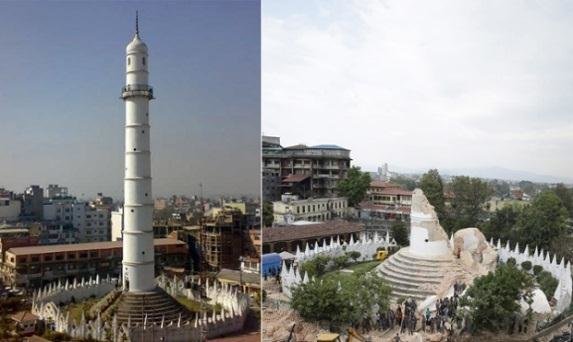
Dharhara Tower at Kathmandu, Nepal before and after the earthquake of April 25, 2015 (Source: http://www.theguardian.com)
Dharahara Tower: also known as Bhimsen Tower. This tower was
built in 1832 by then Prime Minister Bhimsen Thapa of Nepal under the orders of
the Queen. In 1934 earthquake, this tower almost collapsed and it was renovated
by then prime minster Juddha Shamsher. It was opened for public in 2005 for
viewing from the eighth floor holding a circular balcony which provided a
panoramic view of the whole Kathmandu Valley. (Dharahara,
n.d.)
Sadly, it fell down completely, along it many people also fell and lost their
lives.
It has not been there for 4 years. It seems like it will not stand any time soon. Will it re-acquire its dignity if it stands tall again through the rubbles? Will the people who lost their lives in the disaster be remembered? Will the new generation be able to feel the pain and grief that was risen by its fall? All these questions will be answered differently with different perspectives. Here is my perspective on how to rebuild or how to make a memorial that will last for generations to come and to connect in a way that will slowly heal the wound and make each one of us stronger from inside.
Dharahara complex as a whole could be defined as a city’s public
space. Hence while redesigning, it could be taken as an innovative public open
space which speaks history, at the same time, a lot of emotions attached after
it collapsed in 2015 earthquake.
The best remembrance in this city core area could be a
museum or a memorial to remind everybody of the disaster that took place on 25th
April, 2015. This is very important because people tend to forget the past and
remind the new generations about the events. If this is presented as a
remembrance to the city and devoted towards the loss of heritage and loss of
lives of the people, the future generation will also witness it and be more
alert and prepared.
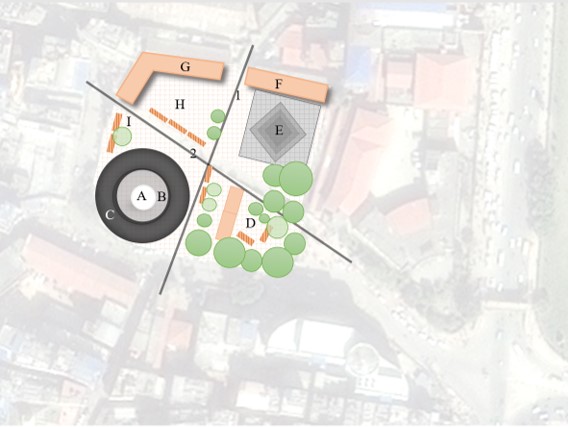
The tower shall be constructed again, not above the ground, but underground. The damaged structure remains as it is, and its story will be told in the underground memorial.
The museum could showcase pictures, photographs of the
people and also the places that were most affected, how people were sheltering
after the earthquake. Each corner will tell different stories of the people who
struggled and survived, how bonding among the neighbours increased, how people
were there to help each other and many more events that took place during that
time that could connect and inspire. Different artists could come together and
express their creative perceptions. This museum would be as a shadow on the
ground floor to the monument and it would go underground through which people
walk and only after the full story is told they reach the collapsed monument to
finally feel the grief. The monument was white in colour and the shadow could
be with darker (black) effect, lights would pass through different angles for
the displays to be seen.
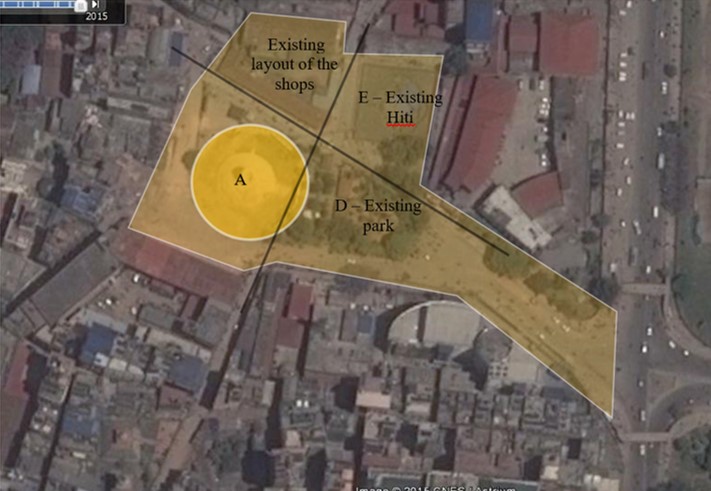
At the outside, surrounding areas will have open spaces as an urban park where people can relax and interact with each other. It already has a sunken water feature (Hiti) which can be revitalised. The existing shopping block could be converted from enclosed space to open space interacting with the Hiti and the Monument zone. With minimal intervention, this outer space could engage the passersby and leave a feeling of grief and affinity.
Site condition of Dharahara complex after the earthquake in 2015 (Photo source – Google earth)Proposed Design of Dharahara complex as a whole.
Legend:
A – The collapsed monument as it is;
B – The transition between the monument and museum;
C – The underground museum/memorial which symbolises as shadow of the monument;
D – Existing park area;
E – Existing historic Sunken water body (Hiti);
F – Shaded rest area (Pati);
G – New layout of the existing street shops (to make the spaces more connected and vibrant);
H – The Open space achieved after the alteration;
I – Seating area outside the museum; and
1 and 2 are the axes that are created by the existing routes and entrance.
Proposed design derived from : Dhungel, A. (2015). IDENTITY, LIVEABILITY and RESILIENCE: Open Space Categorisation and Management in Kathmandu Valley. Master’s Thesis: Weihenstephan-Triesdorf University of Applied Sciences, Freising, Germany.
Peace, serenity, togetherness, bonding, grief but enormous
strength. This is how I saw ground zero on my first visit. There is nothing to
complain about this complex of monuments that is dedicated to all those lost
their lives in 9/11 incident. One of the most unfortunate events of 21st
century remains as a bruise in every living being’s heart connected directly
and indirectly to this incident. I knew it made impact on everybody’s life, but
now standing at this point, still, made me realise why it made such an impact.
That day, humanity was in stake. Every human being with a heart and soul will
not accept what happened here that day.
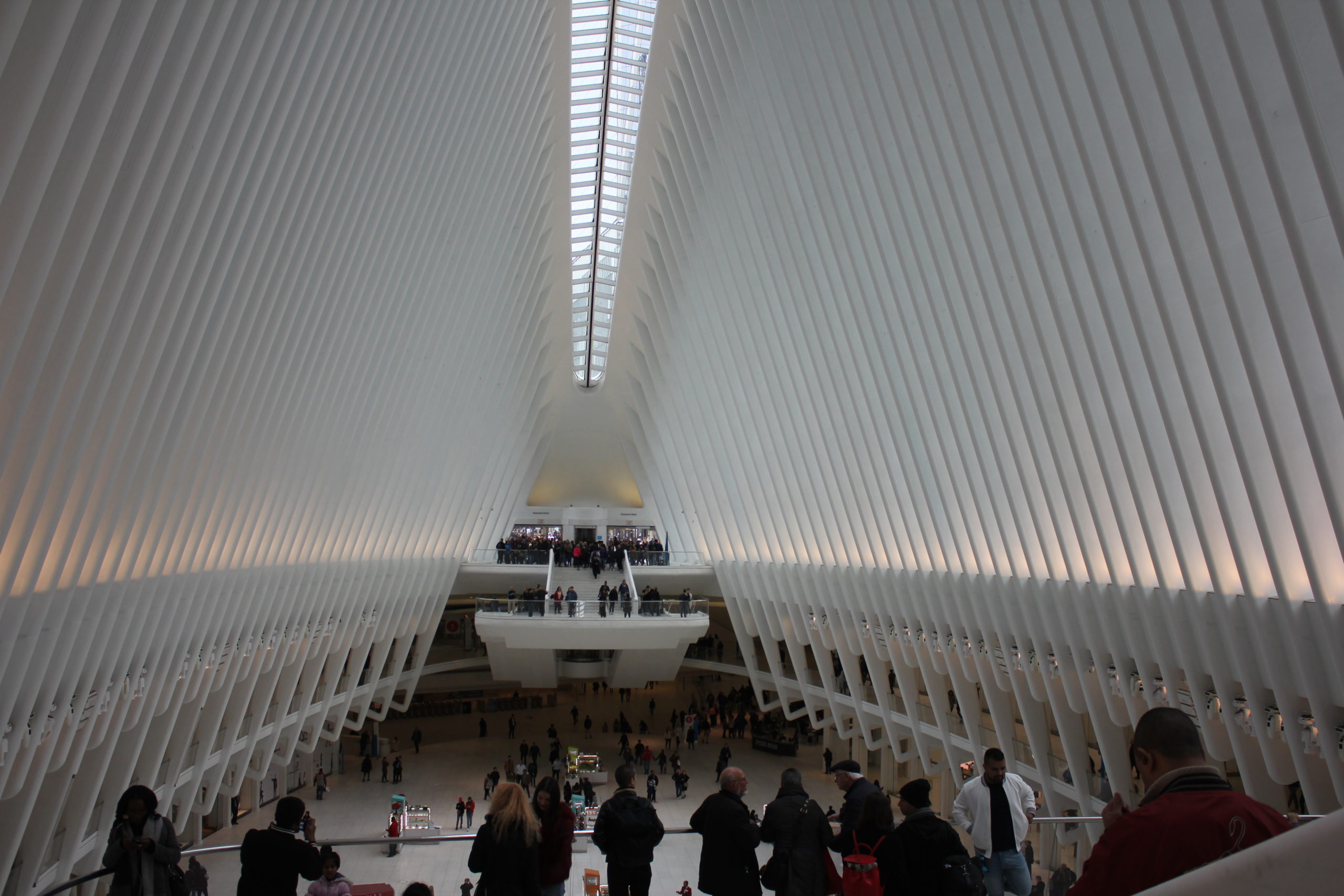
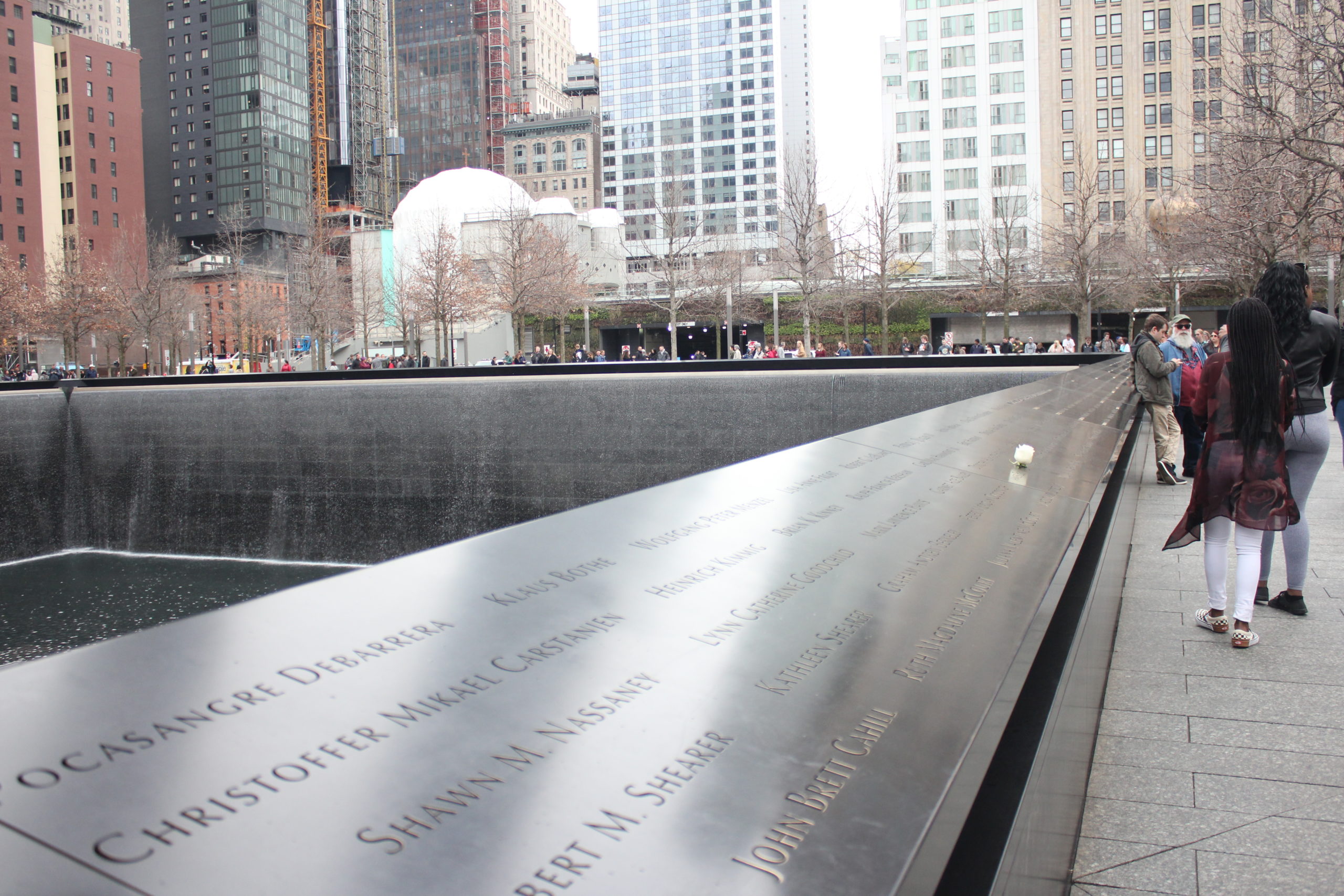
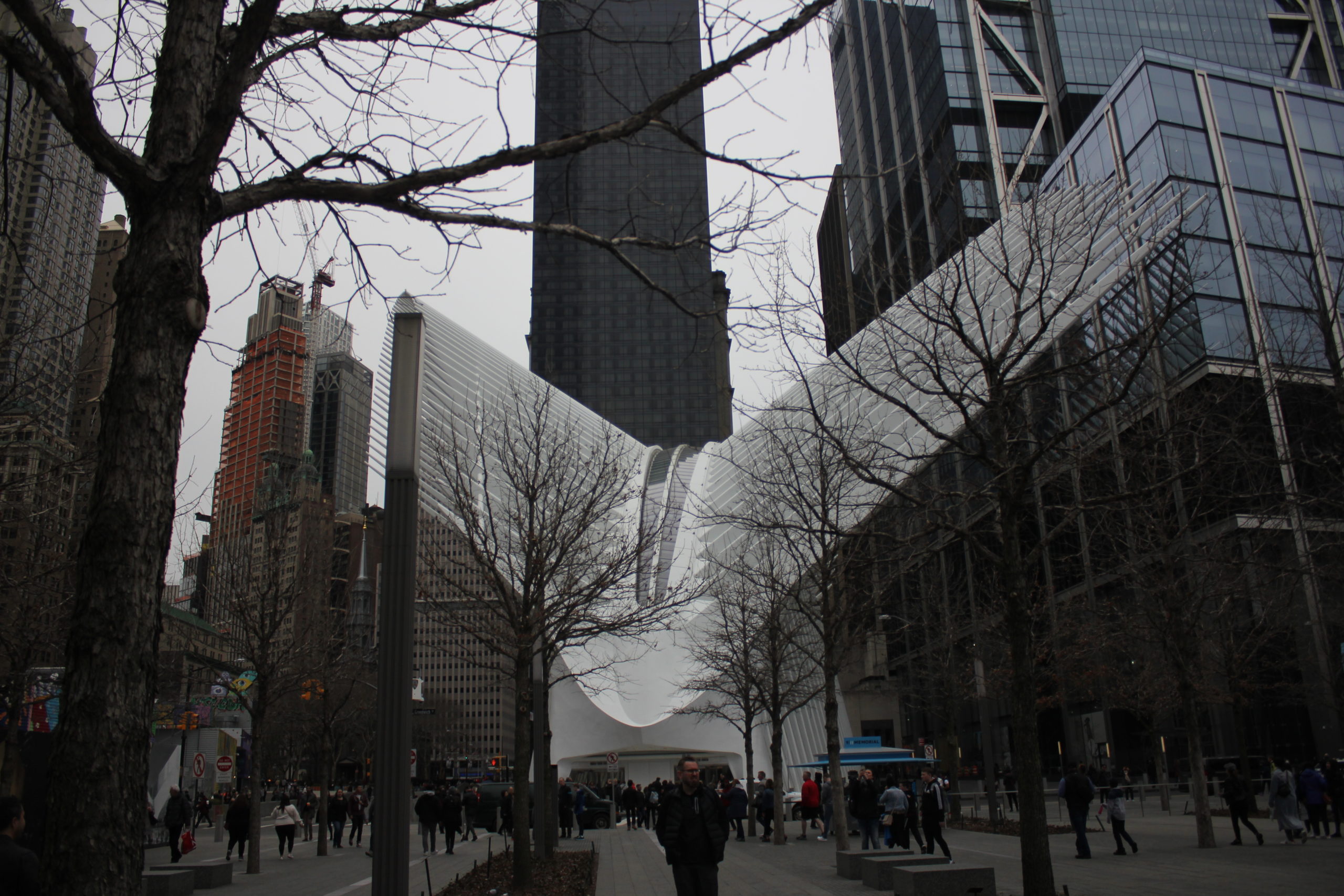
To watch everything on tv and to get live updates, was a tragedy, but to witness and feel this area for the first time in my life was something else. The names of the victims engraved, the falling water which made such a silent sound, the Oculus which looked like it was about to fly, everything so well designed that you feel sad and helpless; and content and strong at the same time.
View of the memorial complex from the liberty tower – south pool and the museum, also some part of the Oculus
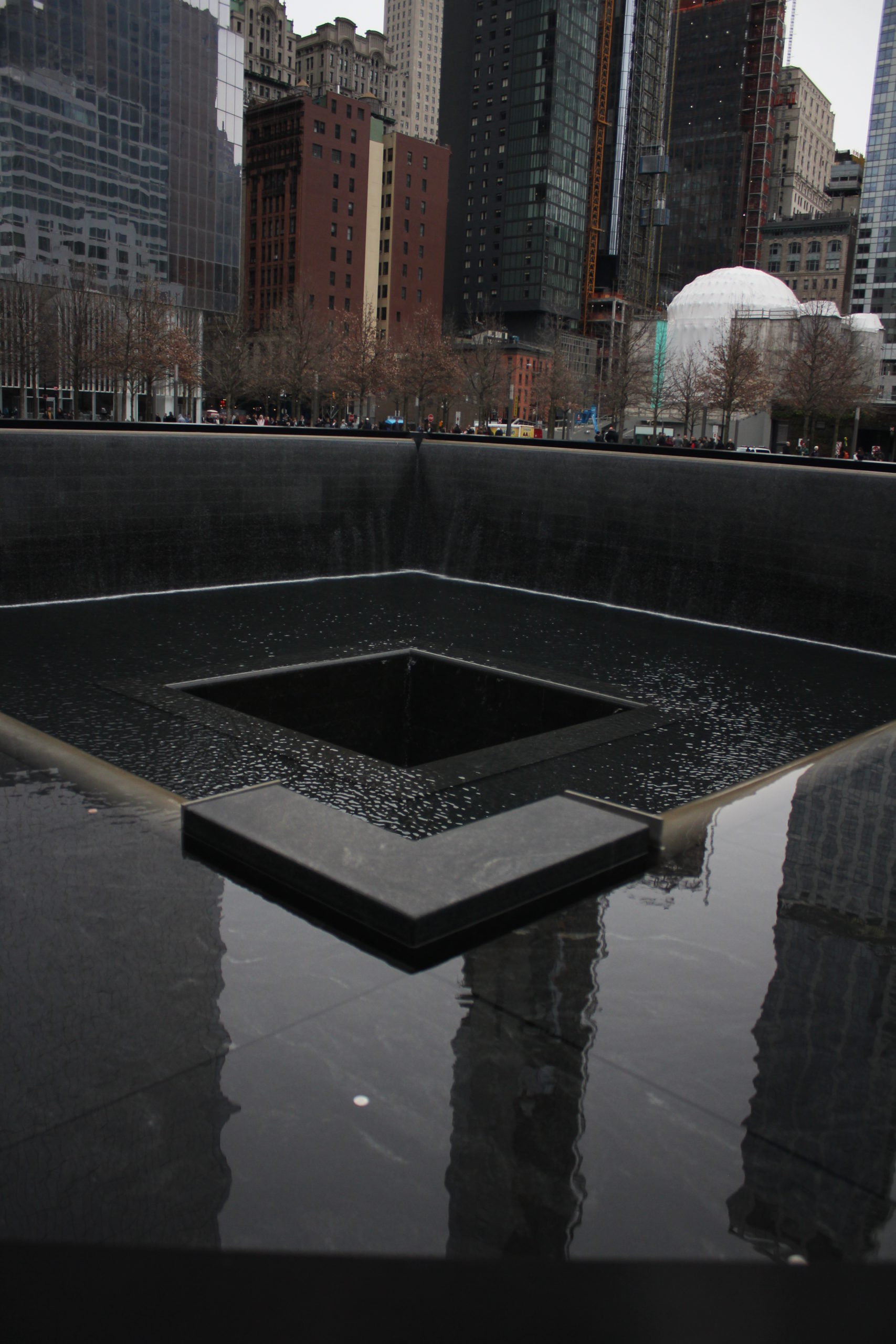
The main features of the memorial were the two reflecting
pools – north and south, each on the site of the fallen twin towers, the museum
and the freedom tower. There is liberty park when you walk further down towards
the liberty street after you cross the south pool. The later addition was the
oculus – a bird shaped structure. The reflecting pools square in shape, have
parapet level boundary where the names of the people who lost their lives are
engraved. In the inner walls, water is falling from all sides, then the water
flows through a flat surface on this level which falls further down into
another square hole, after that one cannot not see where the water goes, it
just goes down deep into the hole which looks infinite. Looking at that hole
gave me the thrills of sitting in a roller coaster or standing on the edge of a
high-rise building.
Reflecting pool – northReflecting pool – south
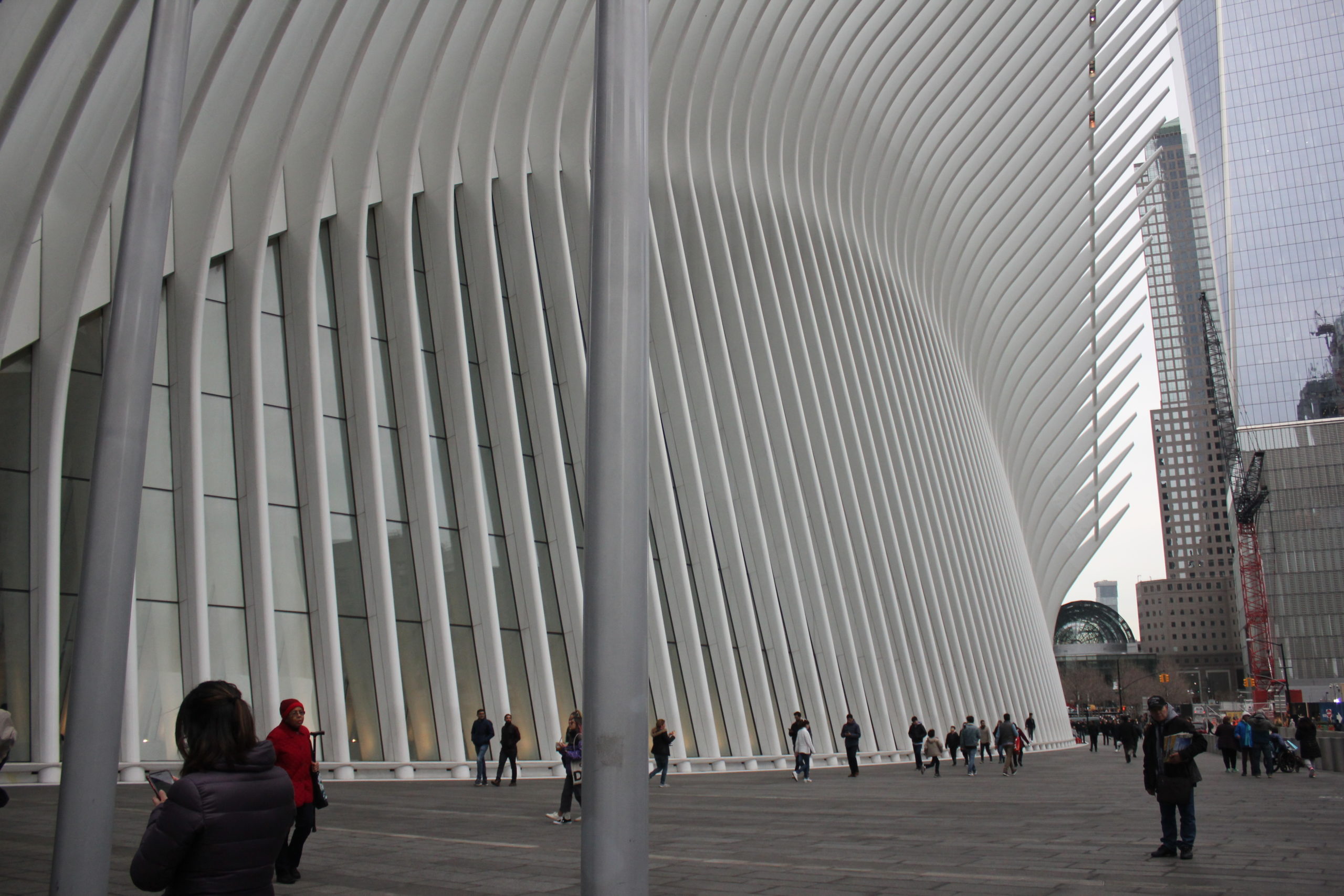
We entered the site through the Church Street, on the Fulton Street. While walking towards the memorial, along the Church Street, on the left there was Saint Paul Chapel. Leaving it behind we approached the Fulton Street. The first thing we saw was therefore the Oculus. The Oculus designed by architect Santiago Calatrava is one of a kind. It served as a metro station as well as a mall. Though devised a long time back it was constructed a lot later compared to the other structures there. This structure from outside was a bird ready to fly. At first the huge organic structure may seem a bit overwhelming.
The Oculus and the human scale
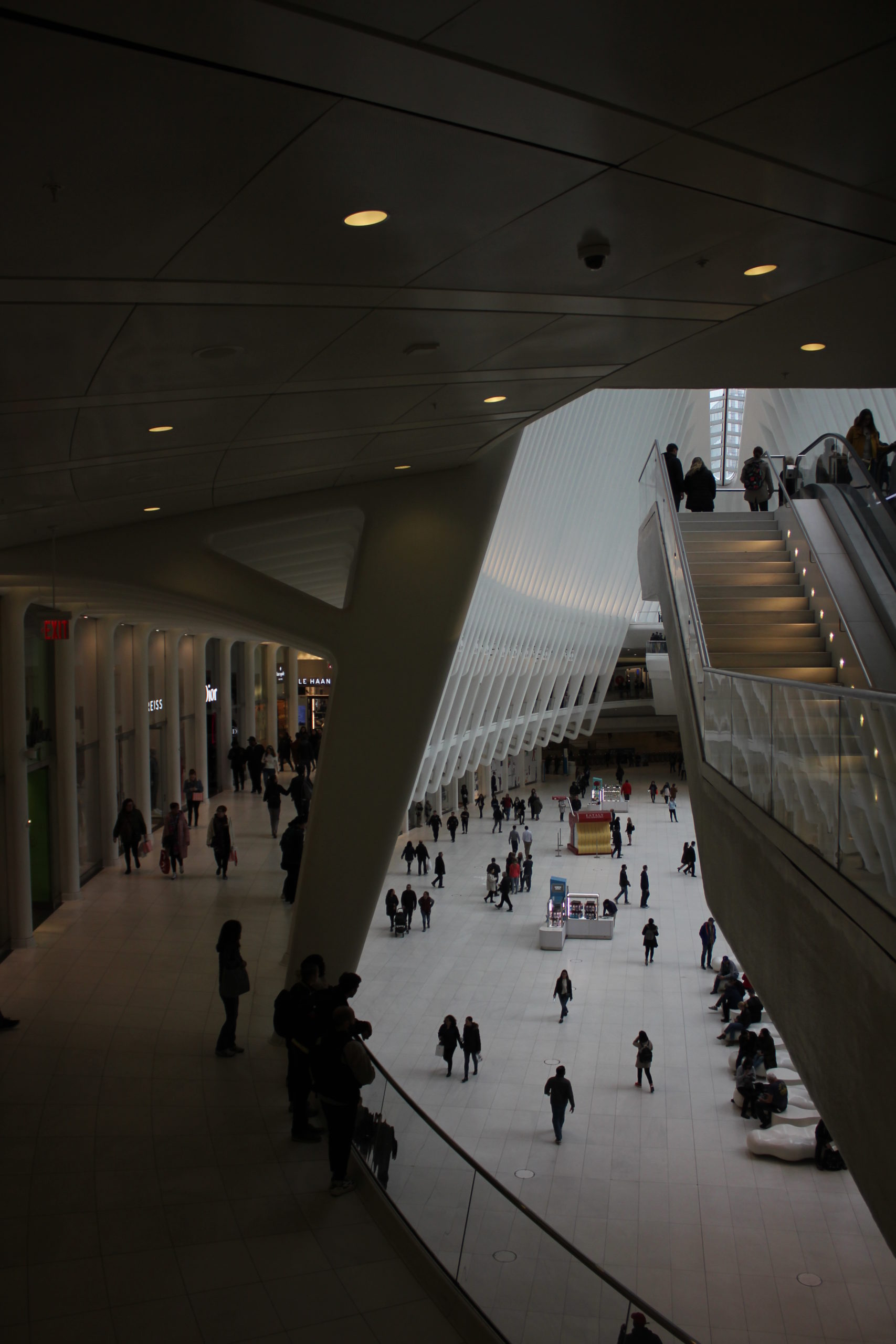
Once you are at site and also inside this huge conclave with wings ready to fly, you feel its enormous potential as a structure perfect to be lying along the memorials. It feels like a soul that can rise to eternity. Like I said before this memorial site gives both the feeling of grief and hope. The Oculus plays the part of giving hope. Though conceived as a metro station and a mall, it adds its rightful value to the complex. It looks grand from outside and when you enter the complex, it goes underground two more floors. This gives the feeling that it is grounded and not yet ready to escape. The structure of the Oculus is like the ribs. The hollow parts let the natural light enter the buildings as well as it gives the view of the outside. So, at different spots you see different perspective of the outside. From the central glass, one can see the freedom tower, rising high. The cantilevered stairs on the both sides of the structure help the visitor to admire the beauty of the structure, you come one step closer to the core. The fact that it is so white also adds onto its light structural design which could fly at any moment. This form speaks freedom, it speaks liberation. Freedom to speak and express and to have a life not threatened by some unfortunate incidents. The only way to move forward is to think positive and this does justice to the collective feeling of moving on. As Sadhguru had said ‘do you want to be part of the problem or do you want to be part of the solution’. The choice is yours, I have always felt my try is not enough. When I looked at the Oculus, I felt that ‘there will be someone witnessing what you have done in your life and admiring it from the core’. Feeling that and smiling, I moved on.
The Oculus from insidePeek a boo from inside the Oculus to the outsideInterplay of different levels inside the Oculus
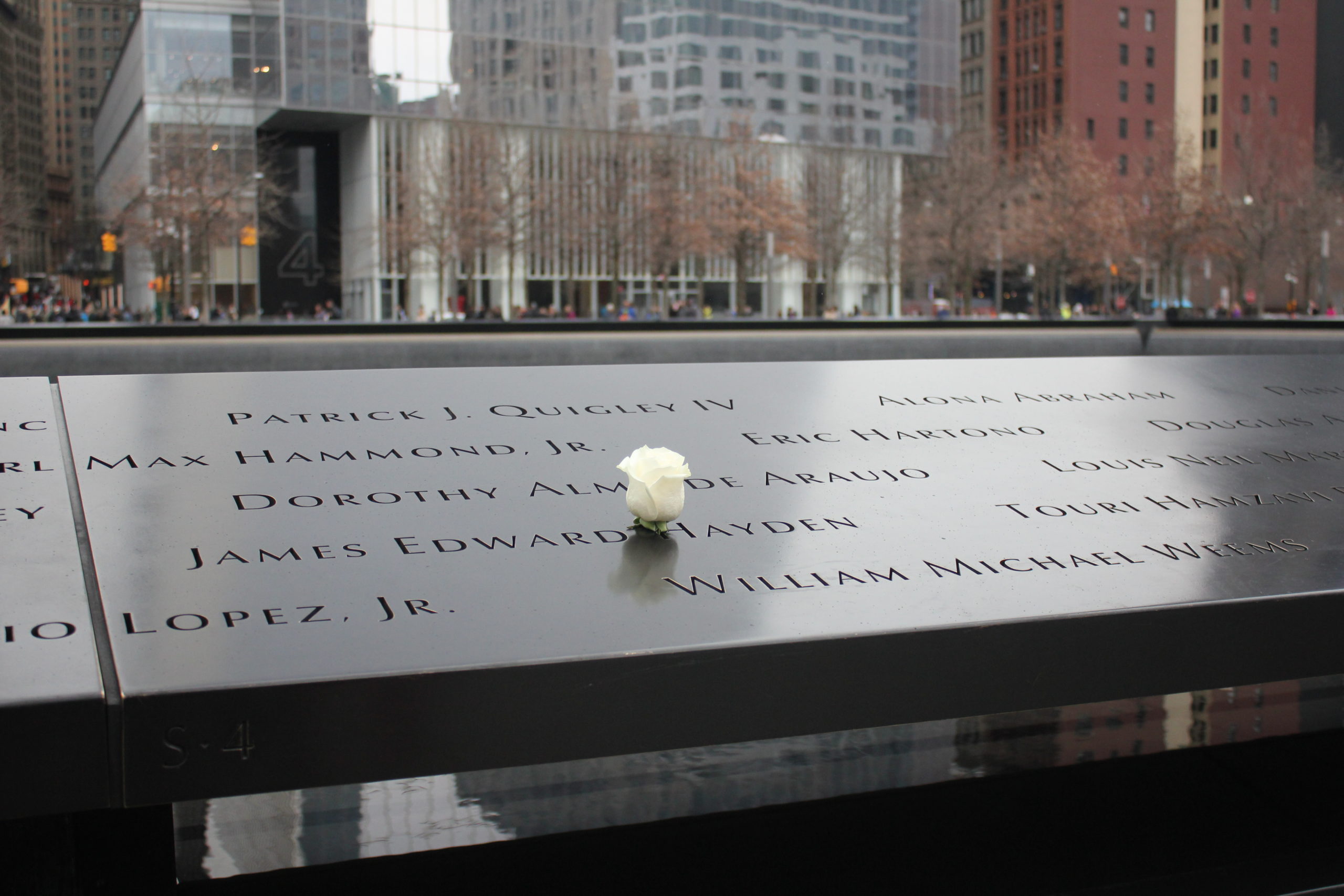
When I came out of the Oculus from the other side, I started walking towards the first reflecting pool – the north pool, I could see the continuous water fall. When you reach closer to it, the depth of the reflecting pool catches all your attention. It looked like an infinite well so deep inside that you will never reach the core. The sound of the water falling from the concrete into the deep well added to its deep drama. Probably the sorrow the world witnessed that day could be symbolised in such a way only. The names of all the people who lost their lives was engraved there in a marble slab surrounding the pool. A white rose was placed in the name of the person whose birthday fell on the corresponding day. We saw few white roses that day too. The white rose, the sound of the water, all the tourists there respectful of the surrounding added the perfect soul and unity to the place.
Names of the people who lost their livesThe white rose marking the birthday of the person
When I turned back from there, I saw the Oculus again, with all its virtue, shining and rising high. Nothing can break me, and nothing can make us fall if we stand united. It felt like it was giving this message to all the people who were there. I could sit there in silence and hear the silence. I have tried capturing it through my lenses too but like I have said before, words could have bigger impact in some cases. I hope I am able to do justice to the memorial with my words.
The Oculus – ready to fly
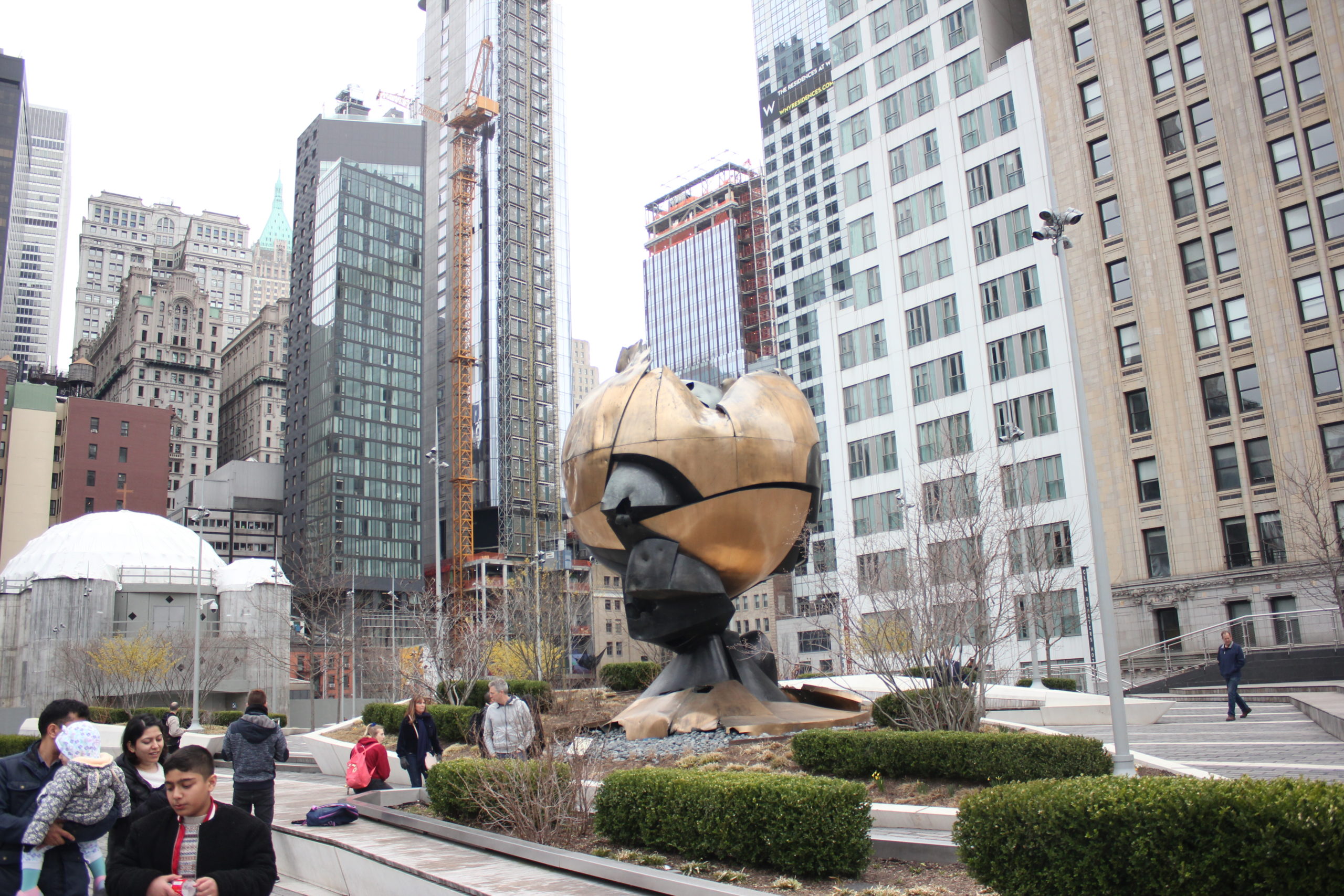
We then went to the other reflecting pool – the south pool, had the same feeling, not a slight lesser grief. Stayed there for some time. The whole site of the pools and the museum was supposed to be complex together like an urban park. There was some construction going on there, so we could not see the exact design of it from the outside. After that we headed to the liberty park. This was across the street from the memorial complex and from here you could have a view of the pools and other parts of the memorial. This park was also a fine example of a landscape design. With very urbanistic approach, there were seating, at different levels that came up and merged to the ground. There was on display an art piece ‘The Sphere’ sculptured by a german artist Fritz Koenig. Rightfully known as Koenig’s sphere, this sculpture shares its own story as the only existing artwork from the 9/11 attack. There is also a documentary about it called ‘Koenigs kugel’ in german. We climbed the liberty park from the west end and when we walked across, on the east end was the Saint Nicholas Greek orthodox church. Leaving them all behind we camouflaged into the concrete jungle of Manhattan one more time.
The Koenig Sphere in liberty parkDesign detail in liberty park
There were seven buildings there before the 2001 incident. Now they are planning to make 5 more with one freedom tower already erected. This time, we could not go inside the museum as the queue was huge and we did not have time. Next time, I will try to visit inside, though I know I will be sad, though I know I might cry but I am sure, it will make me stronger and braver to tackle life as it comes.
Colorful installation next to the Oculus – leaving a positive note
I have seen in Kathmandu barren pieces of lands. I have seen them being empty most of the times. Kathmandu valley has six seasons, it is the most dynamic place in terms of weather. Summer is not too hot, winter during the days are so pleasant, rainy seasons splash can make the humid air more fun, still, I do not see any kids playing outside freely. We have believed always in communal living, we understand the need to socialisation. We have understood that neighbours are the greatest assets one could possess. There is a saying also in Nepali ‘chimeki vaneko parda ko janti marda ko malami’. It simply means neighbours participate with us in our happiest moments- weddings and the saddest ones- cremation. Till this generation, we still see the connectedness, in most of the places in the city. There is some level of communication though everybody in the city is busy nowadays. We still manage to socialise by going to restaurants, meeting in shopping malls, movie theatres, guys going for futsal, ladies marching towards the spas. We are intelligent and we know how to manage our needs with the changing times.
But then, what about our kids? Do they get to fulfil their needs? Do they get enough space and time to grow? Of course, we are sending them to the best schools that we can afford to, we are buying them what they want, we are taking them also to the movies, we take them to the fun play spaces inside the malls and pay a lot for it, we buy them lots of toys which assist their cognitive development, and the list goes on.
Hold on! Stop! Please! One thing you could do best for your child is not doing anything at all. Let them just be and grow!
In this scheduled world, children are losing their freedom. And this is the most important ingredient for their wellbeing. Let them freely play, understand themselves, don’t interrupt when they have a conflict with each other, let them solve it by themselves, they are capable of doing it. Let them observe nature and understand the change that is happening in nature. Let them explore and learn by themselves. Free play is what they need every day. For this, it is very important to develop the concept of parks and play area for children where they can explore their creativity. Let the empty piece of land become their retreat. Let them engage in various activities mastered by themselves while you witness how intense their thinking can get once you let them just be.
These spaces where children find maximum freedom and play is where their creativity expands and their physical needs are fulfilled as well. These spaces not only serve the children but all the people from the area or locality can enjoy such places and we could get back the neighbourhood that once existed within us. Wherever in your neighbourhood, you find a public area, empty, try to talk to the local governing body of that area, develop them as parks and playgrounds. If you have these spaces in between your communities, children can themselves go and play there. Put some night lights there so that they feel safe and you feel comfortable letting your child play there. It is not good when you have to take your child in your car some miles away from your home so that they can play. Let their homes be their play area, let their neighbourhood be their play area.
Let them belong and let them explore! They need this to become a creative and responsible human being in the future.
I have always considered place in different scales, mainly two: a place which a person can conceive through his or her all senses, that is, be in a place, holding something, eating something, hearing, smelling and seeing as far as naked eyes can perceive.
This place is, in general, a three-dimensional object. What about a place as an identity, which you cannot see as a whole picture yet, your feelings for it defines an understanding of a place? This place is a feeling, feeling of love, hatred, identity, character. In this understanding of two types of places, all the spaces come. The range can be from a small chair or outdoor lawn to a room with equipment or a building’s corridor to a local neighbourhood, a city altogether or a unique geographical region.
A child’s place was a womb for 9 months of his life, then a small bed for 1-2 years of his life and it starts increasing in this ascending scale. Also, the understanding of place starts to change in this context. Place where you sit, sleep, place where you run and play, a place where you to go study and so on. Places where you belong to you, your neighbourhood with small colourful shop, and your city with the ancient monument or your country with the unique bird in the world. The perspective of place hence changes.
Time plays a major role in outlining the function of public-private spaces. Influence of cultural exchange, political scenarios, economy and technological advancement has brought change in the use and understanding of public spaces in different centuries. (Dhungel, 2015 cited from Carr, 1992). In the twenty-first century, we need parks as a salad bowl where each culture has its individual expression even though they are mixed together. In the twentieth century, this was not idealized instead, the concept of democratic society was a melting pot where all the cultures were brought together and homogenized into one expression of national culture (Dhungel, 2015 cited from Thompson, 2002). This approach though had been a commendable process to reach a just society, at some point we all will be losing our identity and culture. Uniqueness of an individual, identity of a certain culture gives vibrancy to living. Hence, to bring together the views of different social and cultural groups, a participatory approach must be considered. Designers play a huge role in bringing this heterogeneity into the society. We must listen and understand. Universal approach does not always work, context is the key.
If we tell a German to eat their bread with chopstick, or we give fork and knife to a Japanese to cut their soup noodles, we sure will make a fool out of ourselves!
Inspired from:
Dhungel, A. (2015). IDENTITY, LIVEABILITY and RESILIENCE: Open Space Categorisation and Management in Kathmandu Valley. Master’s Thesis: Weihenstephan-Triesdorf University of Applied Sciences, Freising, Germany.