We need to rethink our notion of ‘Who plans and shapes our cities?’

One can simply say ‘planners, designers, architects are responsible to make a city liveable’, but there is an overarching theory to it, – ‘who has the finances, who sponsors the projects, who have vested interest and power’ are the ones who build the cities. Most of the projects being funded by the government take a big political influence.

Being an architect myself and with expertise in open space planning, I have bagged many projects through multiple links and experiences as an architect. But when it comes to landscape planning and public space designs, my expertise is not valued as much as the local representative’s interests. The private projects related to construction are more resource-dominated. An architect’s knowledge is dominated hugely by vested interests, majorly political, financial as well as lack of respect for the profession, the cities are massively impacted. Especially when it comes to open space planning, we have to take a different approach altogether. There is no perfect design but we should let the space develop as the people start using it, we allow freedom and expression. We should not tap into our expertise but we should tap into humanity as Amanda Burden, an American urban planner said. This does not mean we do not do anything, we actually have to create the canvas where the public can do their art with their movement, we create a theatre where the public will perform their acts, we create a universe where public create their own ecosystem along with other species. There is no institution here in Nepal, which prepares such experts and the ones who have studied abroad and come back to give their knowledge and learning to their community are not welcomed. This makes experts like us sad and frustrated because we can see that what is happening in the city is not right and it will have a long-term impact to all of us but we are not in the position to change it and nobody is ready to listen.

The discussion put forth is in itself controversial because in Asian cities, particularly in Kathmandu, I have seen the professionals who are supposed to shape and plan the cities – planners, architects, construction managers and conservationists not being able to use their expertise but more playing the roles of activists when the authorities are not able to make good plans and proper management policies for the city. These government authorities do not consult and hire the experts but they rely on their resources who come to work in government jobs through a common IQ-based entry examination. The module of exams is outdated and those who pass these examinations come through tough competition of not argumentation and creativity but more of the banking system of education. I believe these government officers should play the role of managers and let external experts do the technical jobs. But as soon as they are in a position to make decisions, they want to implement their own ideas without much research and planning. Even when they hire experts, they try to impose their own understanding and solutions. Most of the time, its not even a lack of expertise, it’s the lack of a good mindset. This lag in the system is making the city pay a huge price when it comes to sustainable development and regenerative green spaces. I have worked both as an architect as well as a community planner. I have experienced there is no democratic decision-making and planning approach when it comes to planning open spaces. People, especially children lose connection to their environment, both natural and social, and are deprived of their basic needs. We need to expose them to their environment so that they explore and reach their potential with social, physical, and psychological development and later become responsible citizens. When this happens they understand the need of the city and use their skills and knowledge to make it better, that too, with collaborative approach.

So how do we pierce through the bureaucrats as well as elected members in the local community? After I completed my master’s I came back to Nepal to share my knowledge and implement it through various agencies. Initially, I tried to go to the local areas with solutions and it did not work. As an expert, I could not convince them with my strategies. Then I worked out a way to work together with them but the adults who are in the position to implement the plans were not ready to accept my ideas, they were not even ready to work together. Then I took the approach of working with children. This approach has been widely used in many cities of the world now. The contemporary urban planners and researchers in children spaces and development both believe that children can act as catalyst for urban innovation. Their views are more diverse and they can bring solutions to their communities if they can have meaningful participation. Hence, I also used it contextually in different neighbourhoods of Kathmandu, successfully.

Though this has been realised in urban planning community globally, how to do this was not the issue raised by many contemporary researchers. I, therefore, moved towards the solutions, not by proposing the solution but by taking the actual steps which could lead to the solutions involving the main stakeholders.

As a researcher hence I tried to find a balance between research and action. I went into the community, especially to the vulnerable groups, in this context the urban middle-class children and worked with them, co-researched with them to find out the actual situation of community spaces and how they are shaped and how the issues can be solved. I conducted participatory action research with the children in different communities in Kathmandu to find out the situation of their environment through their lenses and also to propose a solution for the same. Participatory action research is an approach which believes in critical pedagogy which means giving voice to the ones who are oppressed, which is in line with the concept of Paulo Freire who believed that education must aid in developing critical consciousness and the learners or the participants must act to liberate themselves and the society also from the injustice, their engagement is crucial for this.

I believe that this type of grassroots intervention can actually bring forth solutions to the existing problems, as people who are actually living in such situations will be able to identify the genuine problem and in turn, propose solutions for the same, and in the process, empower themselves. If we continue such efforts, we can really bring about a change in the community, then in the city and in the country as a whole. But the process should be continuous as well as there should be a genuine concern for the well-being of the community through planned neighbourhoods and action-oriented interventions. I say this always and each time, that the people are not supposed to be fed, they are to be taught to grow and prepare their own meals.

As the city is a dynamic built, anyone who wants a city to thrive, must study it, make plans for it and then act upon it – not once but in a continuous cycle. There must be support from the government and local bodies for these types of interventions and research.

Coming back to the topic of this article ‘who plans and shapes the cities?’

I would like to add my favourite quote from a very famous urbanist/author/activist whose theories and observations are the holy book for architects and urban planners –

‘Cities have the capability of providing something for everybody, only because, and only when, they are created by everybody.’ – Jane Jacobs

Are we ready as experts, as authorities, as people in the position to play our roles to give the citizens especially children, their rights to a healthy and thriving city, in the process also make them responsible? or do we want to create more constraints and thus make our society ever more ill? Do we want to make a win-win in the battle or do we want to lose our society?
Phuket – way to the old town and around – a different perspective!

When I think about it now, maybe I might have escaped this trip if I had gone to Phuket for just few days to explore some beaches and the night life there. Luckily, I was there for a month, of course, I had some extra days to mingle around. I somehow, from the beginning was interested in this old town because for me, architecture speaks out loud with these beautiful old settlements more than any fascinating buildings around the world.

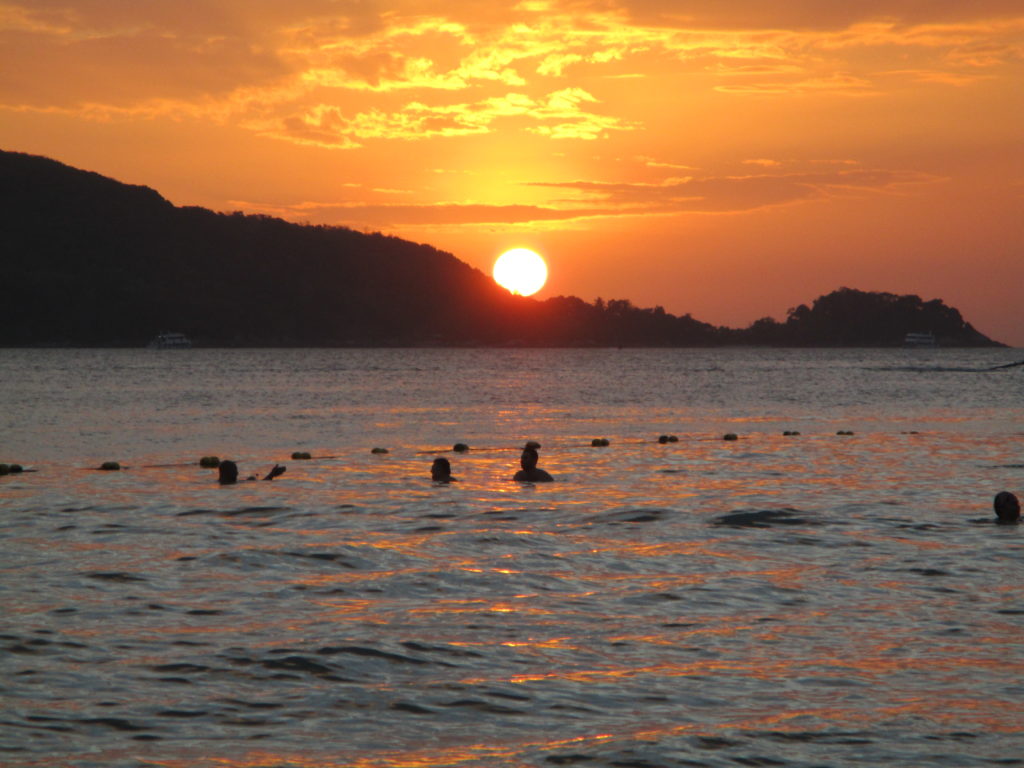
Phuket first sunset – Patong beach

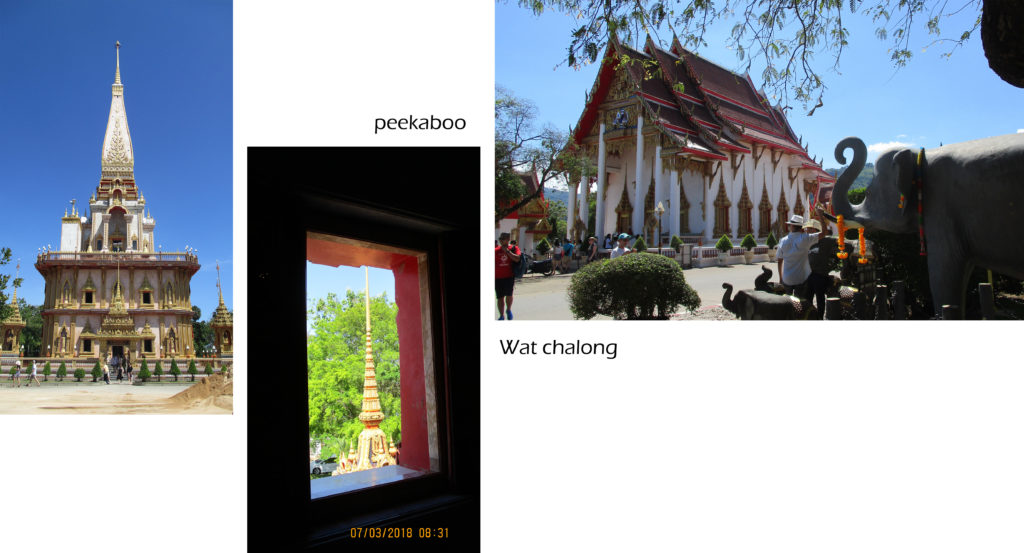
The ride from Patong beach to the old Phuket town was already promising. Furthermore, sightseeing in different locations of Phuket, the Wat Chalong temple, Big Buddha, Promthep Cape are sights worth mentioning.

Let me share with you a short story before that. It is very easy to travel around in Phuket by scooter (motorbike). If you are staying there for a week or more, it is actually a very convenient and cheapest way to get around. That’s what we thought when we planned our trip to Thailand from Germany. In Bangkok, it was easier to reach most of the places without getting stuck in traffic with the metro line. It was very convenient, and the AC worked well. But, in Phuket as we were thinking of staying there for a month, we thought we will rent a bike. As we are used to going around in Kathmandu in our motorbikes we found that a very good option. Having said that, after a few days in Phuket and few consultations at the bike rentals as well as with the owner of the resort we were staying in, we finally decided to rent a bike for the remaining days. This would mean that we could go around anytime anywhere. We talked to the bike rentals which had the best option, we wanted a lighter bike so that I could ride it as my partner’s license was expired and we could only renew it when we were in Nepal. We came back to our resort, I suddenly instinctively decided to check my wallet and there you go, my license was not there. I brought a travel friendly wallet with me for this trip and I realised that I had left my license in the old wallet back in my apartment in Germany. Welcome to the world of surprises!! It was so annoying that we had to change our plan again to adjust to the ‘no license mode’.

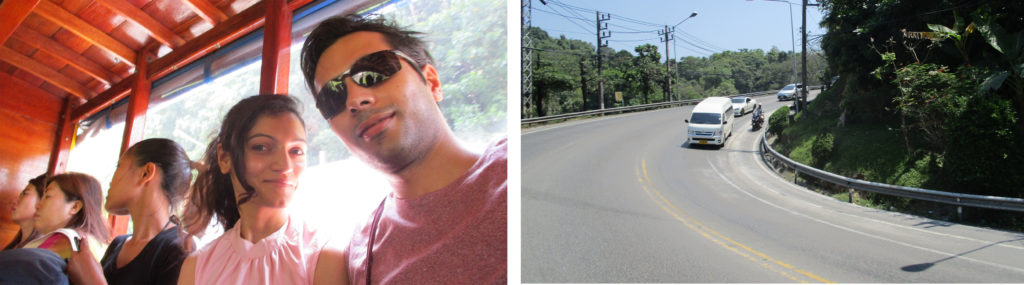
This is how we ended up going to the old town in a bus. But I won’t say I regretted it. The bus was with open windows so we could get some natural wind flowing in from between us. The ride was fun with around 15 more people, mostly tourists, eager to visit the old town as well. Few of them took off in several other places like the way to go to Kalim beach, some shopping malls in between and so on. There were few school children also in the bus, probably returning home after school. There was an old lady, very old, she could not even stand straight but she was travelling alone and there were few other locals who were chatting with her and helping here. It was a quite an interesting ride. When we reached the last stop, the old town, there were still two more people in the bus. We asked them if this was the last stop, they did not know, and they did not know English as well. They looked a bit lost themselves and it was hard to communicate with them. Then we asked the driver if this is our stop, he said yes and he also told us what time is the last bus to return and where it comes. And we were very thankful to him.

Phuket being a bit hilly with its landscape, the roads had a lot of twists and turns. The roads were narrow and sometimes, the bus had to wait a long time in the traffic to get through. At that time, there were many bikes passing by us and then again we thought, oh no! why did I forget my license. But when we were returning back, we saw an accident and many bikes lined up on the road and the police were checking their licenses. Apparently, there was a collision between a bike and a bus. When we talked to the passenger next to us, he told us that there are many such accidents happening on this way as the bike riders are speeding in the curvature makes it difficult for them to control once the centrifugal force starts acting upon them. Alas, we were thankful that we did not rent a bike. I am not a kind of person who is so scared and afraid of taking risks, but this was a different scenario altogether. We did not know the road, we did not know the riders there, we did not know the traffic. I mean even if we drove safely, we cannot guarantee that there won’t be an idiot in too much rush and too much in need to show off overtaking us in a turning where it is impossible to control the force radiating from the centre.  We would have definitely rented a bike if we had license and drove safely but not being able to do so also left us with no regrets.

Bus ride and the the curved road

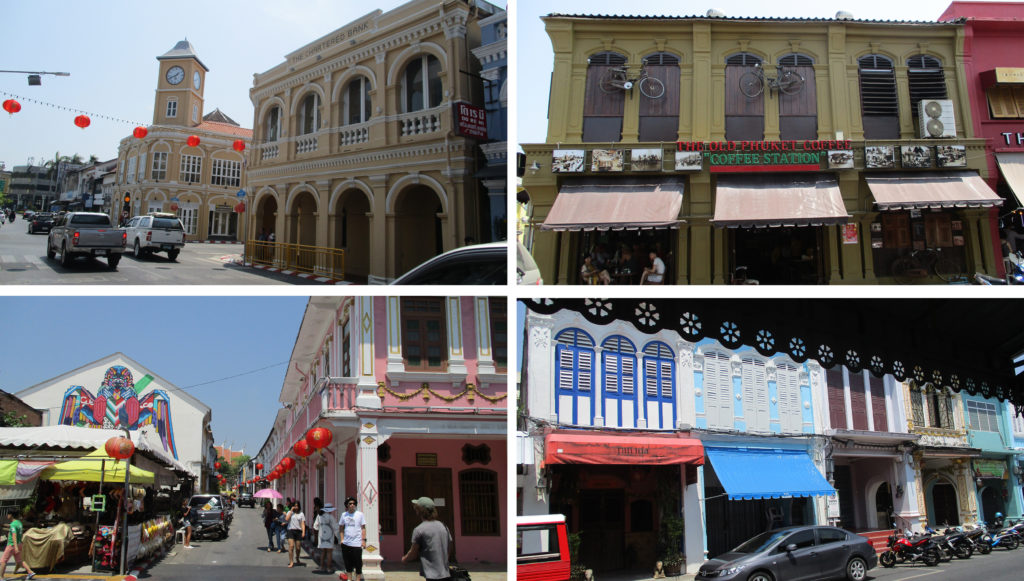
Wow the old town! What could I say about it! A perfect blend of art and architecture. A mixture of Portuguese building form and Chinese art that decorated the beautiful proportion of two storey and one storey buildings. They call it Sino-Portuguese architecture. Portugal had invaded many countries in the past, mostly South America, India and Africa. But in this place, it was not invasion, it was pure trade. They came to Phuket old town for business.  I will write more about the history, architecture style and mixture of how it all happened together and created a magical town, for now I would like to add some more regarding the travel options and experience.

Phuket old town!

There is also Tuktuk, which you must try once when you are in Phuket. Tuktuk is better when you are in a group of 5 or 6 people. There was also a van where you could reserve a seat. This was mostly helpful for going to the airport and if you are alone or a couple. Instead of taking taxi, you could book a seat there, and they come to the place where you live to pick you up. There are many people going around in Phuket in bikes, tourist and locals equally. It is always the cheaper and efficient option. Even if you are staying in one locality you can easily go to others as the town is very small and compact. Taxis are a bit expensive for a single journey. But if you decide to rely on taxi, you should take it as we did. You should hire it for a whole day. One day we went for sightseeing to other places around Phuket. Like I mentioned before, you should not miss this as well, some of the temples there, for example, Wat Chalong was very intriguing. You could also go to the Big Buddha. Though statue itself is not so impressive, the view from there overlooking the Phuket town is beautiful. The huge statue built legally in national conserved forest in somewhat a very new addition to the town. You could check out this website for details.

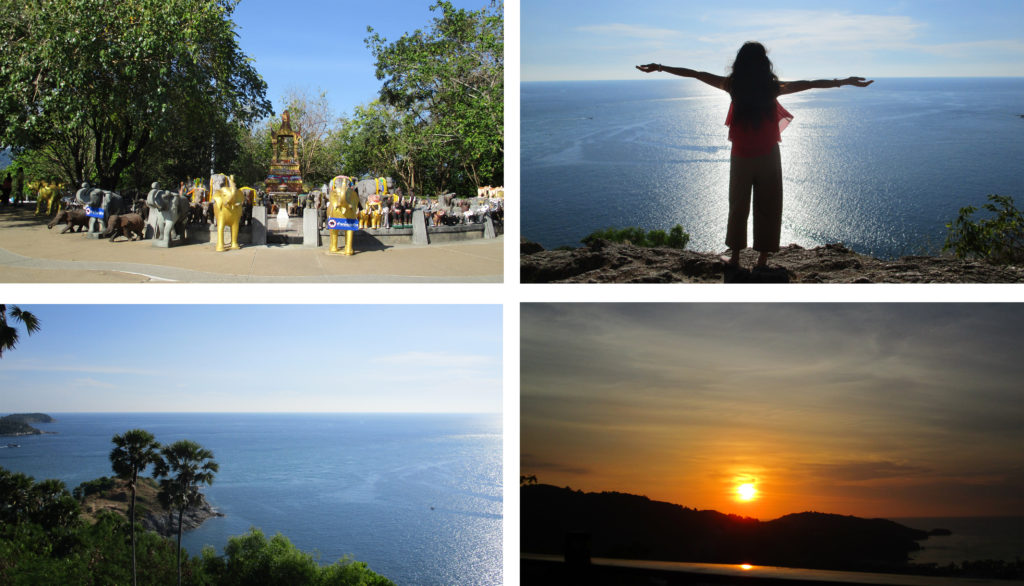
Also, worth mentioning was the Promthep Cape which I would suggest you go in the evening to see the beautiful sunset that everyone claims mesmerises your senses. Though we reached there during the day and we had to leave before the sunset, still this place with the captivating views and connectedness with the ocean made each breath as magical as the blue water indulging its pretty land. Fun part was there was a couple having their lovely wedding photoshoot.

Promthep Cape – tranquil to the ocean and sunset view.
Sunset view from my lens.

Ps. this trip was made in the starting of 2018. I wish I could go there again and get lost in the ocean and views.

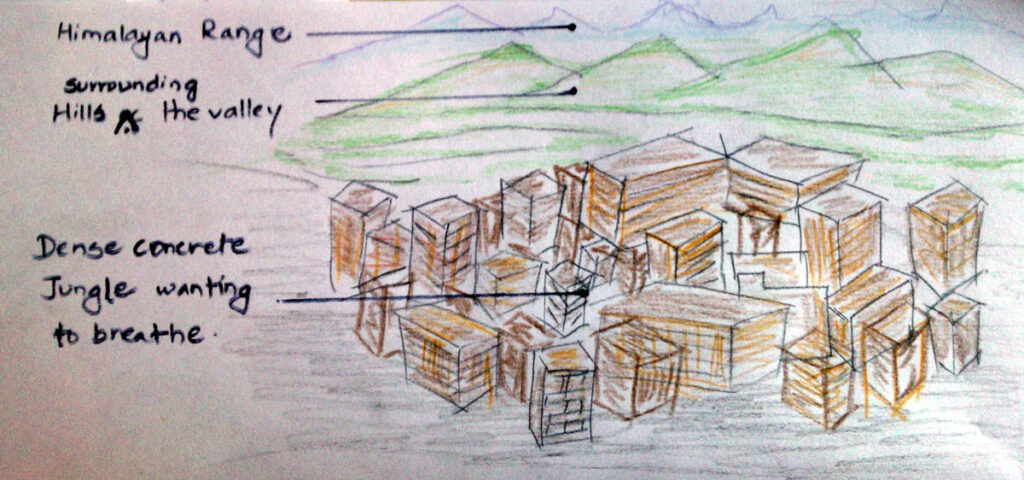
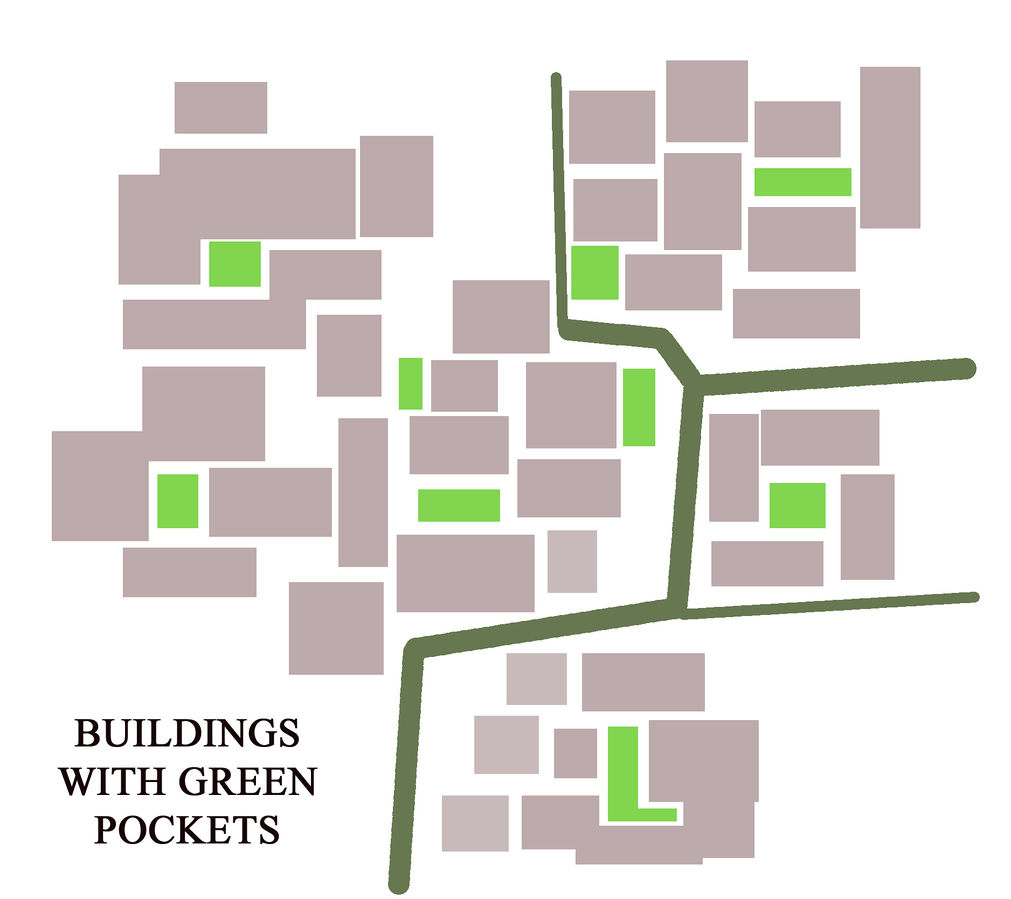
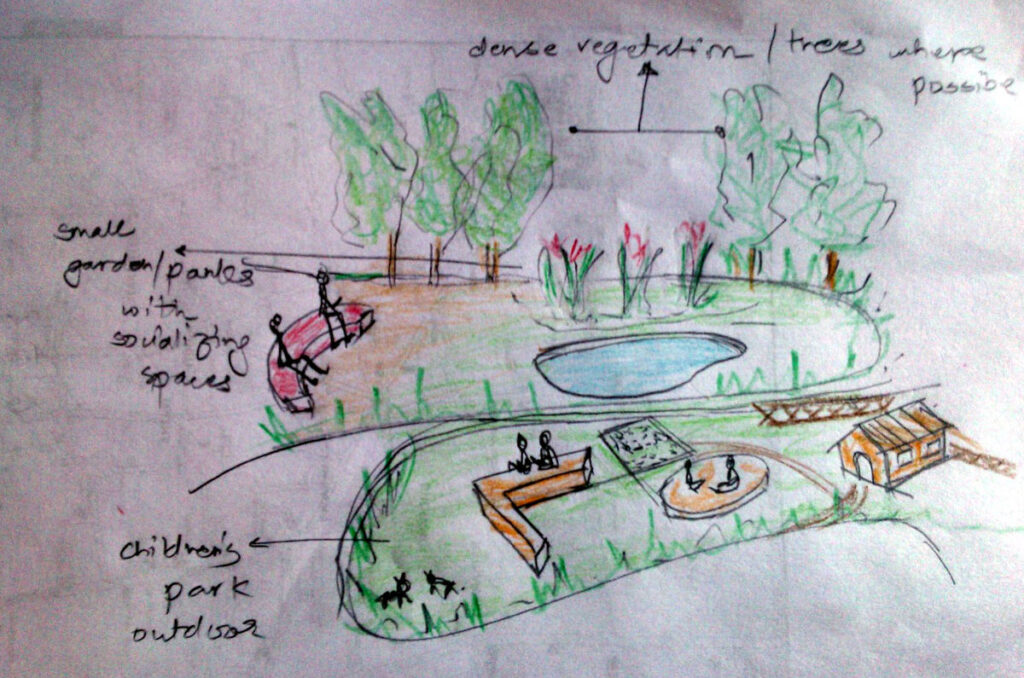
Green Pockets might provide some relief to the concrete jungle

This is a link to my very initial project of providing better green/open spaces in Kathmandu Valley when I had just started my Master’s degree in Landscape Architecture. After almost 5 years, how strongly I still believe in the vision I had back then. Surely, my horizon has expanded and I am able to look at it through many perspectives and dimensions. Hence, making me more focused on how to achieve my goal. Do click in the link below to find out more.

https://fluswikien.hfwu.de/index.php?title=Planting_Design_2013_Working_Group_14_-_Case_Study_D

A monument that deserves respect and a memorial that could unite – Dharahara

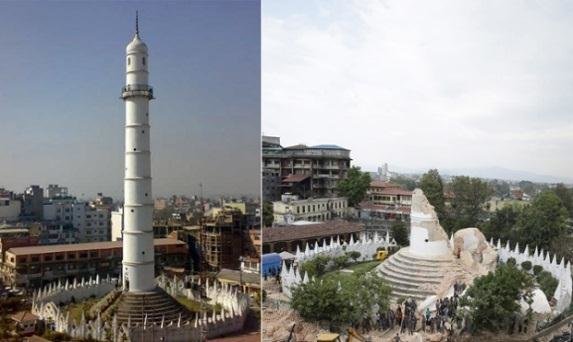
Dharhara Tower at Kathmandu, Nepal before and after the earthquake of April 25, 2015 (Source: http://www.theguardian.com)

Dharahara Tower: also known as Bhimsen Tower. This tower was built in 1832 by then Prime Minister Bhimsen Thapa of Nepal under the orders of the Queen. In 1934 earthquake, this tower almost collapsed and it was renovated by then prime minster Juddha Shamsher. It was opened for public in 2005 for viewing from the eighth floor holding a circular balcony which provided a panoramic view of the whole Kathmandu Valley. (Dharahara, n.d.) Sadly, it fell down completely, along it many people also fell and lost their lives.

It has not been there for 4 years. It seems like it will not stand any time soon. Will it re-acquire its dignity if it stands tall again through the rubbles? Will the people who lost their lives in the disaster be remembered? Will the new generation be able to feel the pain and grief that was risen by its fall? All these questions will be answered differently with different perspectives. Here is my perspective on how to rebuild or how to make a memorial that will last for generations to come and to connect in a way that will slowly heal the wound and make each one of us stronger from inside.

Dharahara complex as a whole could be defined as a city’s public space. Hence while redesigning, it could be taken as an innovative public open space which speaks history, at the same time, a lot of emotions attached after it collapsed in 2015 earthquake.

The best remembrance in this city core area could be a museum or a memorial to remind everybody of the disaster that took place on 25th April, 2015. This is very important because people tend to forget the past and remind the new generations about the events. If this is presented as a remembrance to the city and devoted towards the loss of heritage and loss of lives of the people, the future generation will also witness it and be more alert and prepared.

The tower shall be constructed again, not above the ground, but underground. The damaged structure remains as it is, and its story will be told in the underground memorial.

The museum could showcase pictures, photographs of the people and also the places that were most affected, how people were sheltering after the earthquake. Each corner will tell different stories of the people who struggled and survived, how bonding among the neighbours increased, how people were there to help each other and many more events that took place during that time that could connect and inspire. Different artists could come together and express their creative perceptions. This museum would be as a shadow on the ground floor to the monument and it would go underground through which people walk and only after the full story is told they reach the collapsed monument to finally feel the grief. The monument was white in colour and the shadow could be with darker (black) effect, lights would pass through different angles for the displays to be seen.

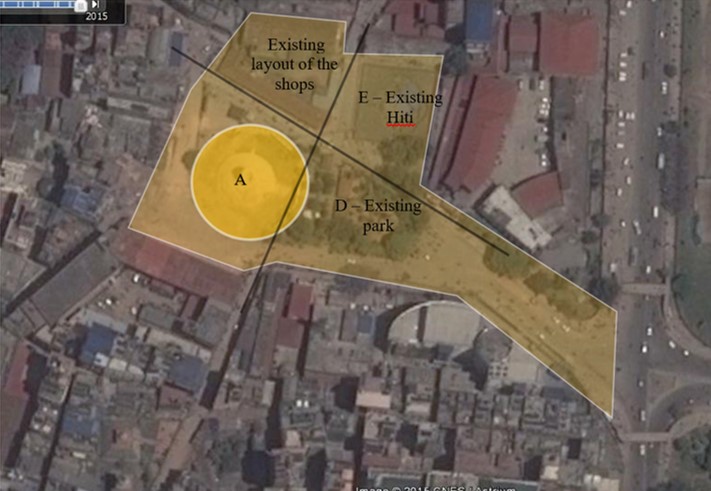
At the outside, surrounding areas will have open spaces as an urban park where people can relax and interact with each other. It already has a sunken water feature (Hiti) which can be revitalised. The existing shopping block could be converted from enclosed space to open space interacting with the Hiti and the Monument zone. With minimal intervention, this outer space could engage the passersby and leave a feeling of grief and affinity.

Site condition of Dharahara complex after the earthquake in 2015 (Photo source - Google earth)
Site condition of Dharahara complex after the earthquake in 2015 (Photo source – Google earth)
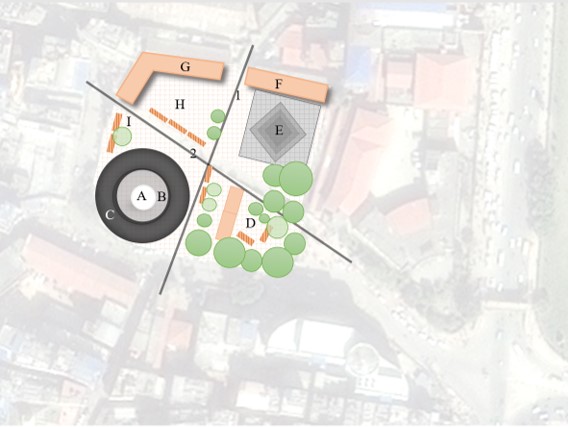
Proposed Design of Dharahara complex as a whole
Proposed Design of Dharahara complex as a whole.

Legend:

  • A – The collapsed monument as it is;
  • B – The transition between the monument and museum;
  • C – The underground museum/memorial which symbolises as shadow of the monument;
  • D – Existing park area;
  • E – Existing historic Sunken water body (Hiti);
  • F – Shaded rest area (Pati);
  • G – New layout of the existing street shops (to make the spaces more connected and vibrant);
  • H – The Open space achieved after the alteration;
  • I – Seating area outside the museum; and
  • 1 and 2 are the axes that are created by the existing routes and entrance.

Proposed design derived from :
Dhungel, A. (2015). IDENTITY, LIVEABILITY and RESILIENCE: Open Space Categorisation and Management in Kathmandu Valley. Master’s Thesis: Weihenstephan-Triesdorf University of Applied Sciences, Freising, Germany.

A hope – 9/11 Memorial

Peace, serenity, togetherness, bonding, grief but enormous strength. This is how I saw ground zero on my first visit. There is nothing to complain about this complex of monuments that is dedicated to all those lost their lives in 9/11 incident. One of the most unfortunate events of 21st century remains as a bruise in every living being’s heart connected directly and indirectly to this incident. I knew it made impact on everybody’s life, but now standing at this point, still, made me realise why it made such an impact. That day, humanity was in stake. Every human being with a heart and soul will not accept what happened here that day.

To watch everything on tv and to get live updates, was a tragedy, but to witness and feel this area for the first time in my life was something else. The names of the victims engraved, the falling water which made such a silent sound, the Oculus which looked like it was about to fly, everything so well designed that you feel sad and helpless; and content and strong at the same time.

View of the memorial complex from the liberty tower – south pool and the museum, also some part of the Oculus

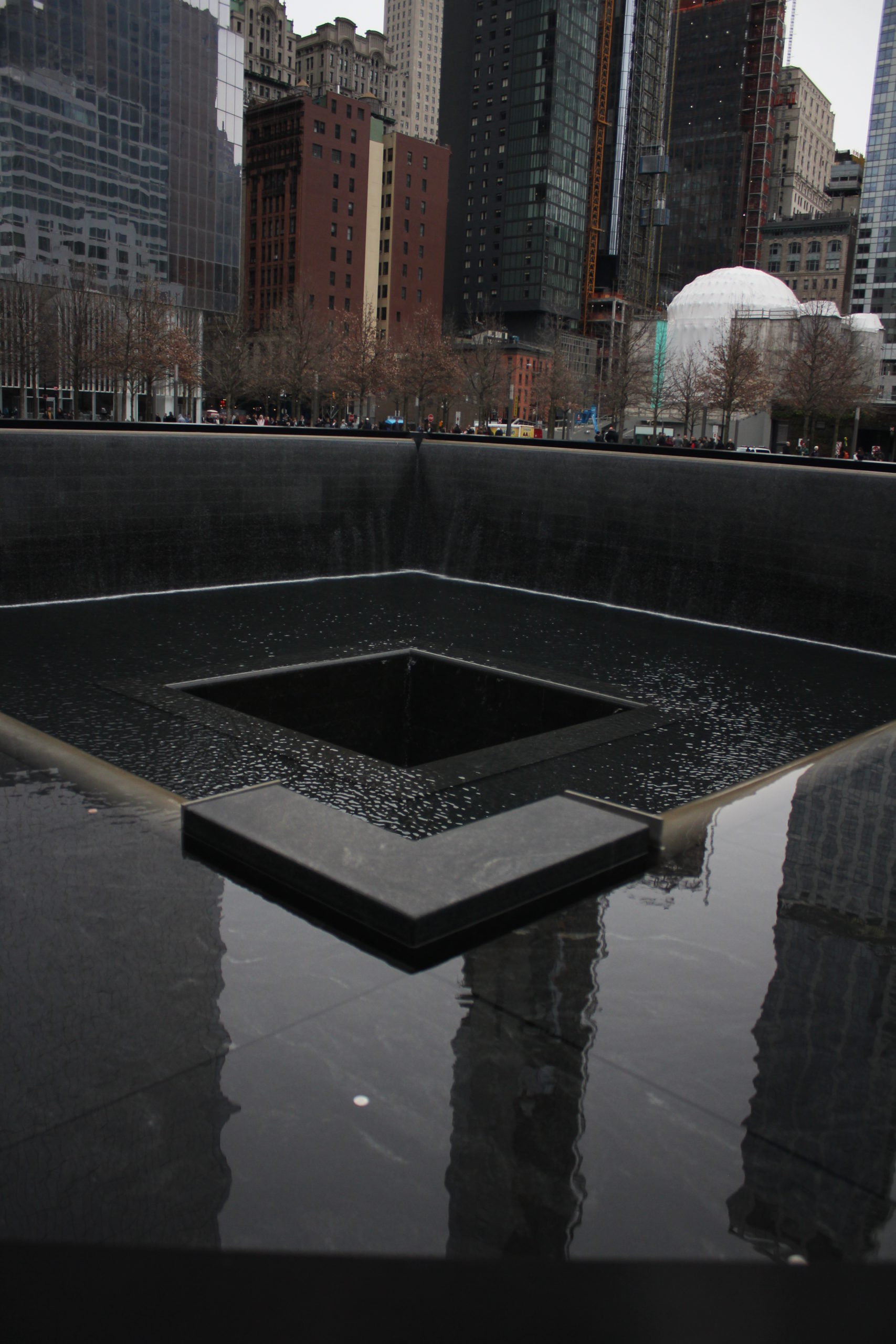
The main features of the memorial were the two reflecting pools – north and south, each on the site of the fallen twin towers, the museum and the freedom tower. There is liberty park when you walk further down towards the liberty street after you cross the south pool. The later addition was the oculus – a bird shaped structure. The reflecting pools square in shape, have parapet level boundary where the names of the people who lost their lives are engraved. In the inner walls, water is falling from all sides, then the water flows through a flat surface on this level which falls further down into another square hole, after that one cannot not see where the water goes, it just goes down deep into the hole which looks infinite. Looking at that hole gave me the thrills of sitting in a roller coaster or standing on the edge of a high-rise building.

Reflecting pool – north
Reflecting pool – south

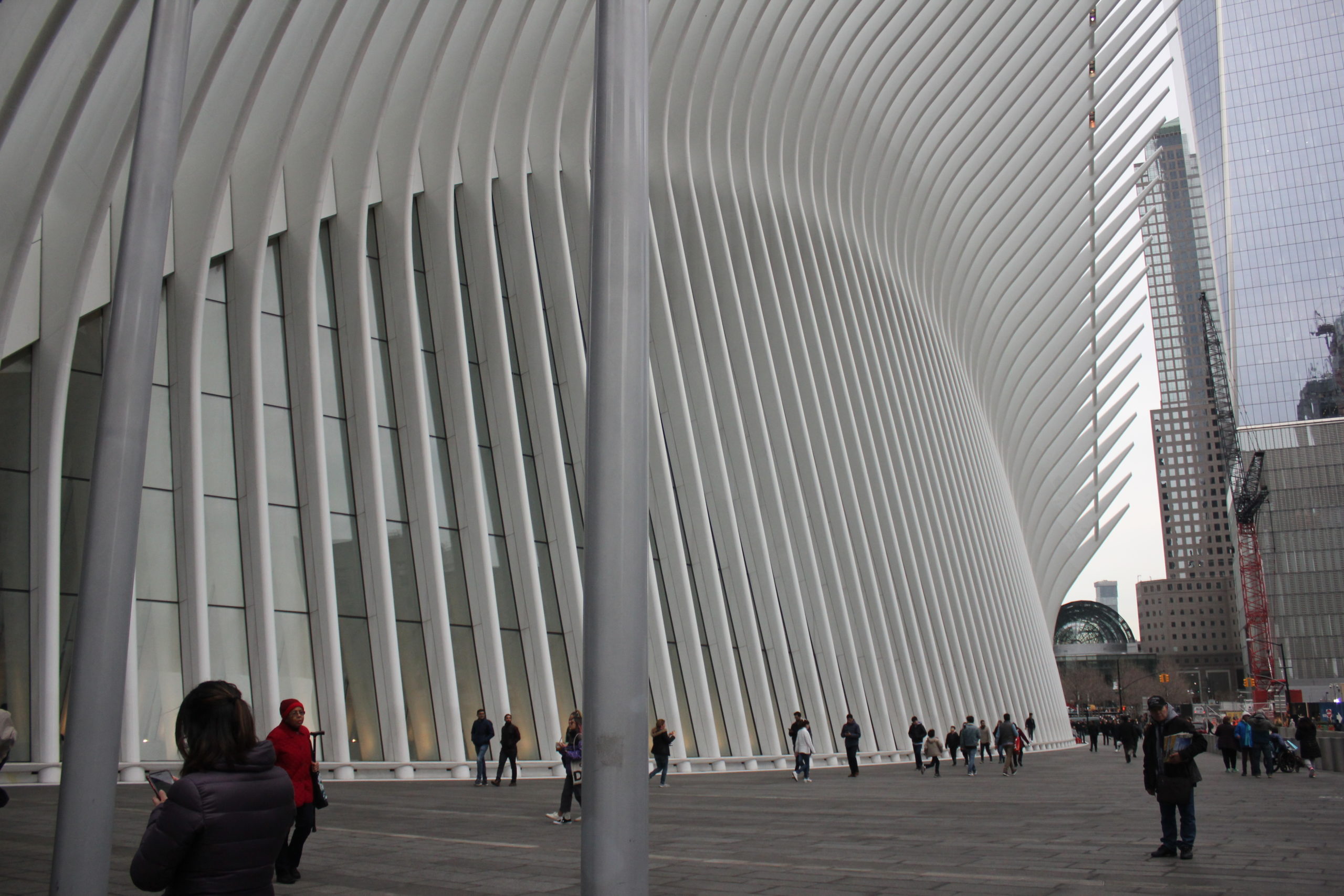
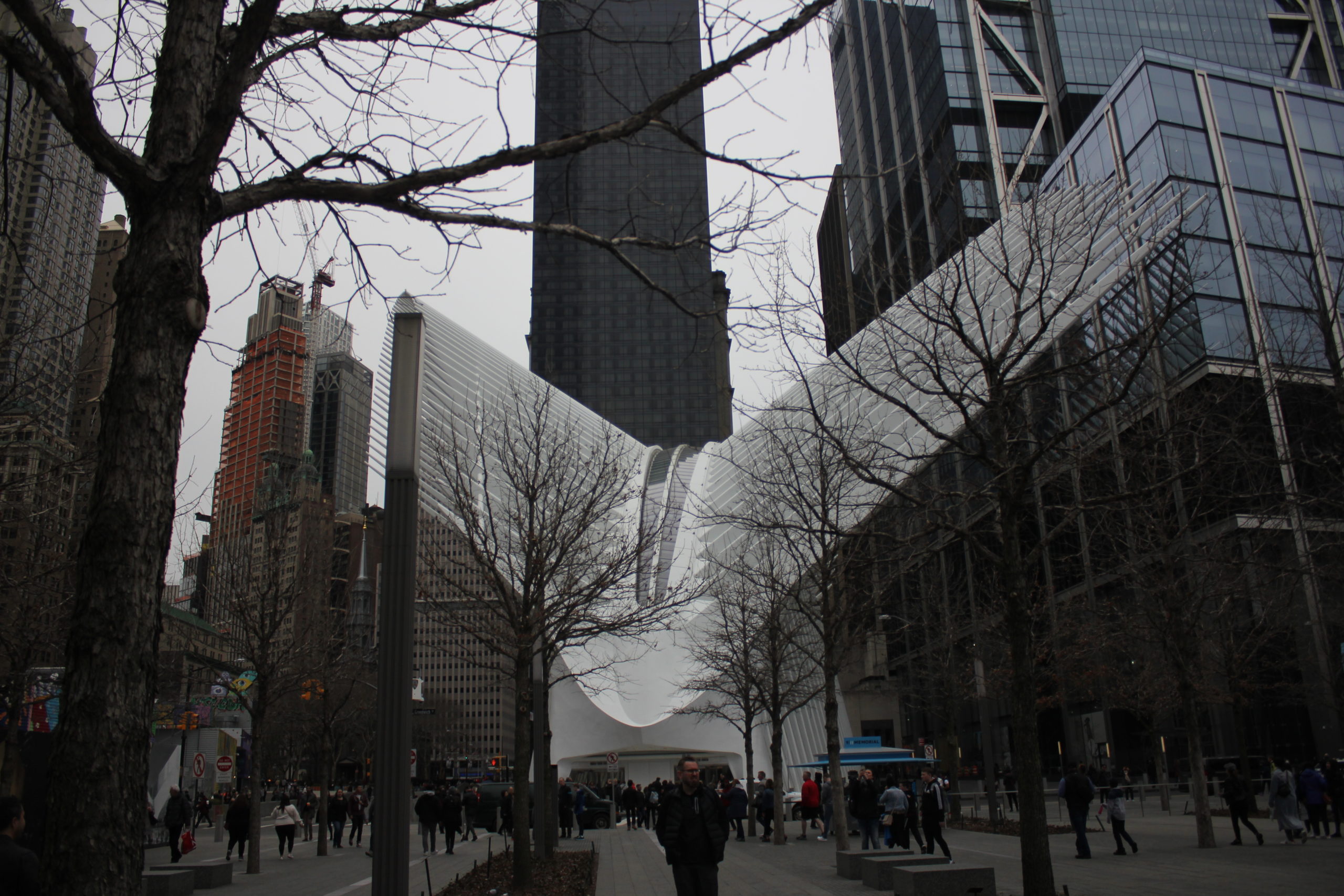
We entered the site through the Church Street, on the Fulton Street. While walking towards the memorial, along the Church Street, on the left there was Saint Paul Chapel. Leaving it behind we approached the Fulton Street. The first thing we saw was therefore the Oculus. The Oculus designed by architect Santiago Calatrava is one of a kind. It served as a metro station as well as a mall. Though devised a long time back it was constructed a lot later compared to the other structures there. This structure from outside was a bird ready to fly. At first the huge organic structure may seem a bit overwhelming.

The Oculus and the human scale

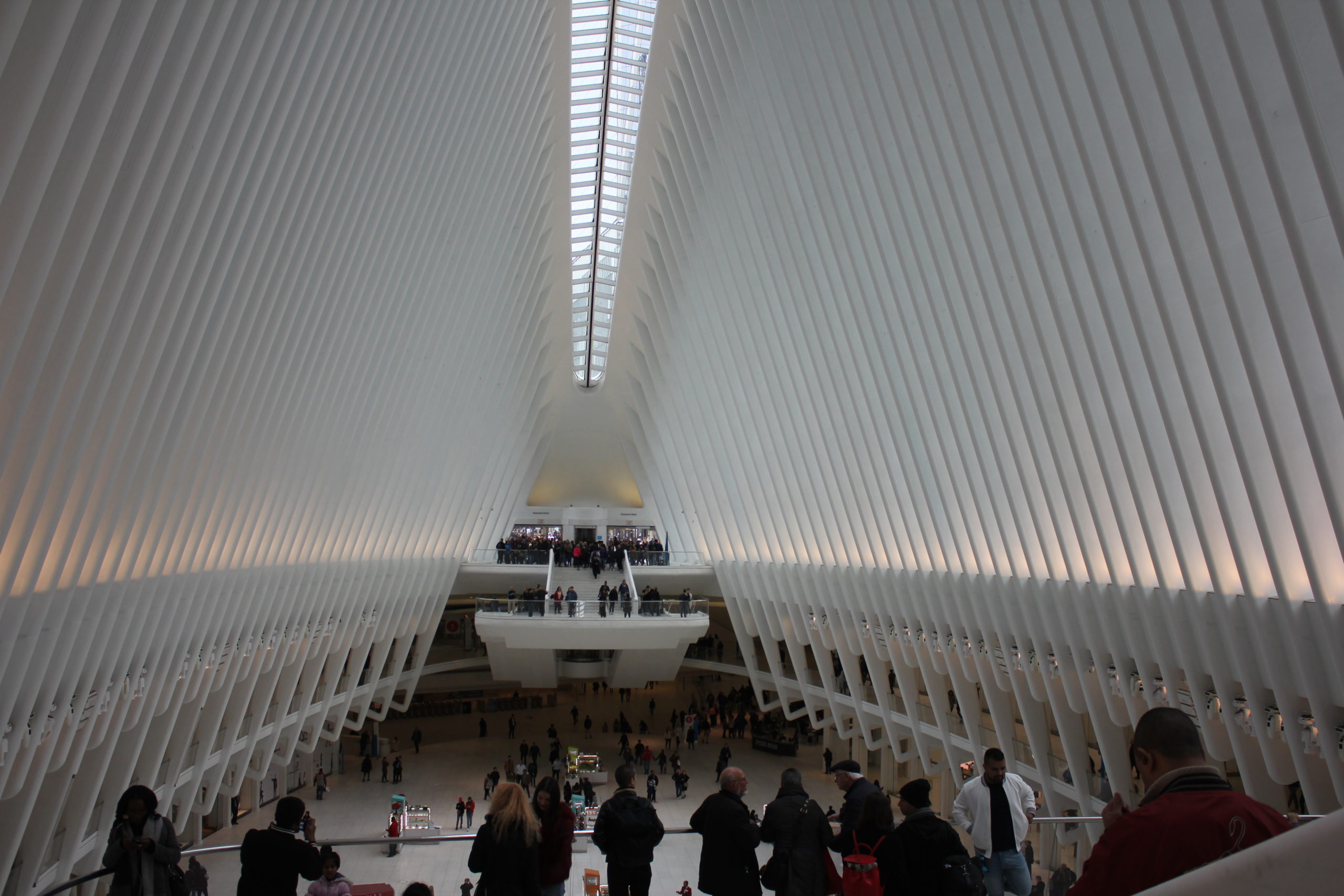
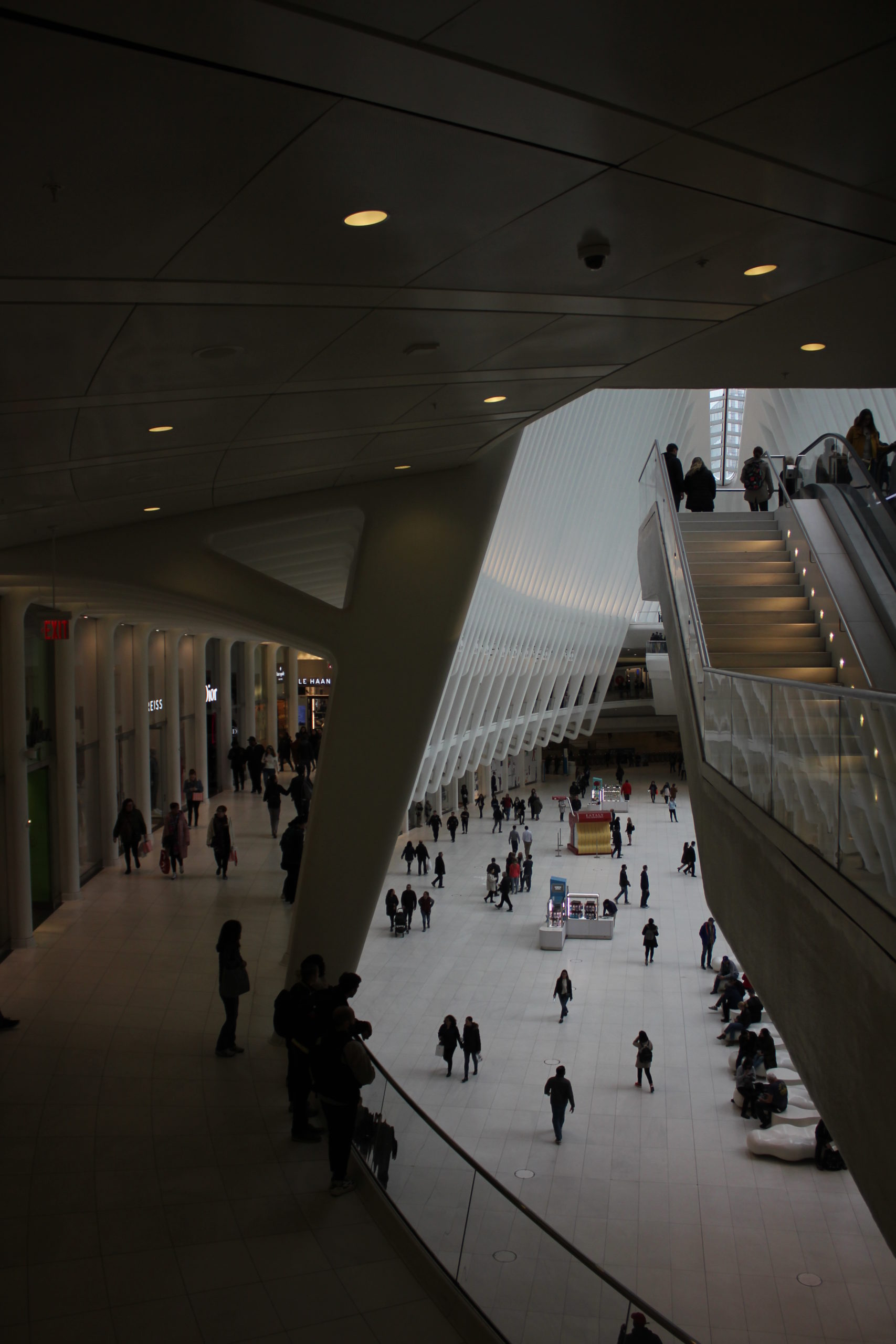
Once you are at site and also inside this huge conclave with wings ready to fly, you feel its enormous potential as a structure perfect to be lying along the memorials. It feels like a soul that can rise to eternity. Like I said before this memorial site gives both the feeling of grief and hope. The Oculus plays the part of giving hope. Though conceived as a metro station and a mall, it adds its rightful value to the complex. It looks grand from outside and when you enter the complex, it goes underground two more floors. This gives the feeling that it is grounded and not yet ready to escape. The structure of the Oculus is like the ribs. The hollow parts let the natural light enter the buildings as well as it gives the view of the outside. So, at different spots you see different perspective of the outside. From the central glass, one can see the freedom tower, rising high. The cantilevered stairs on the both sides of the structure help the visitor to admire the beauty of the structure, you come one step closer to the core. The fact that it is so white also adds onto its light structural design which could fly at any moment.  This form speaks freedom, it speaks liberation. Freedom to speak and express and to have a life not threatened by some unfortunate incidents. The only way to move forward is to think positive and this does justice to the collective feeling of moving on. As Sadhguru had said ‘do you want to be part of the problem or do you want to be part of the solution’. The choice is yours, I have always felt my try is not enough. When I looked at the Oculus, I felt that ‘there will be someone witnessing what you have done in your life and admiring it from the core’. Feeling that and smiling, I moved on.

The Oculus from inside
Peek a boo from inside the Oculus to the outside
Interplay of different levels inside the Oculus

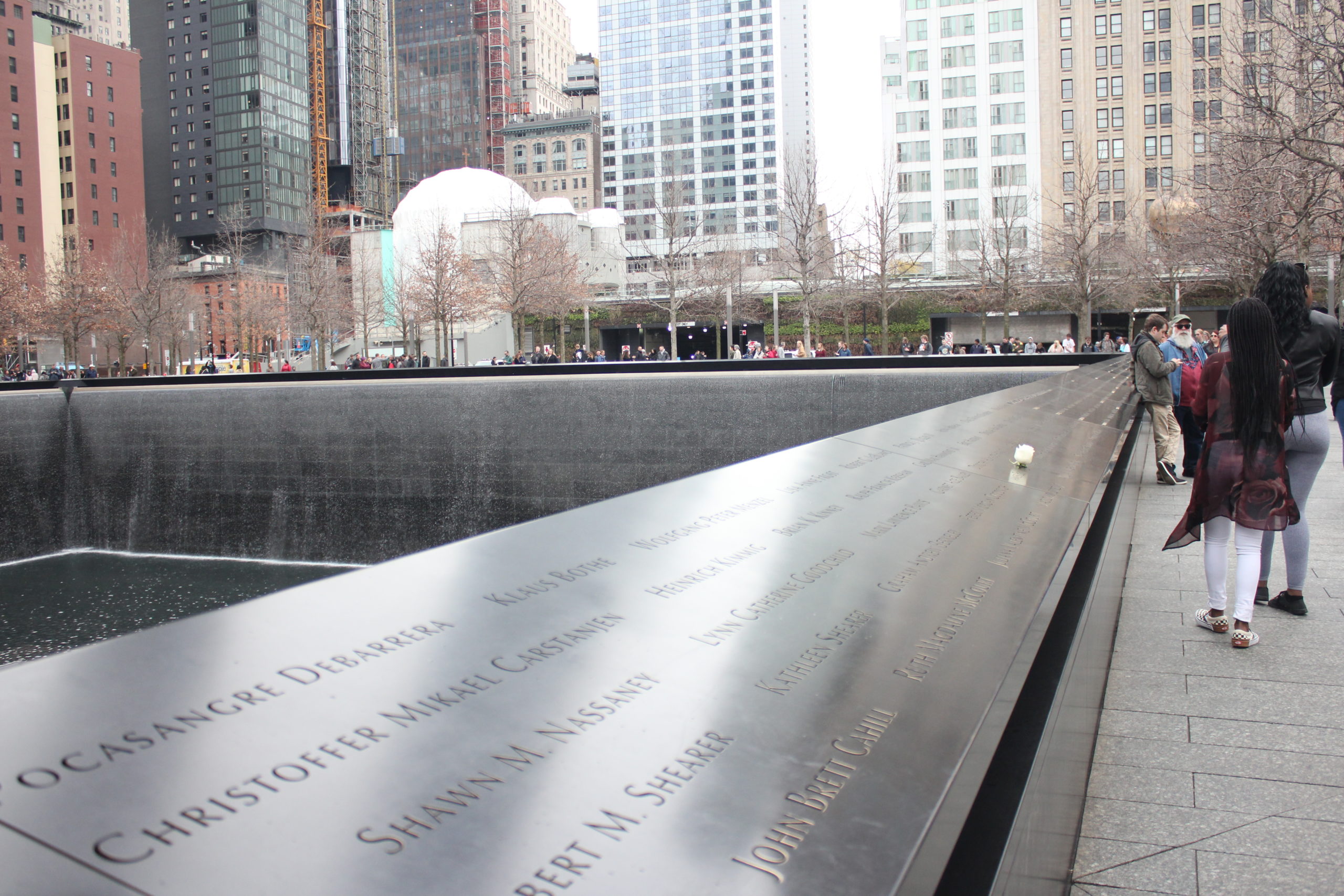
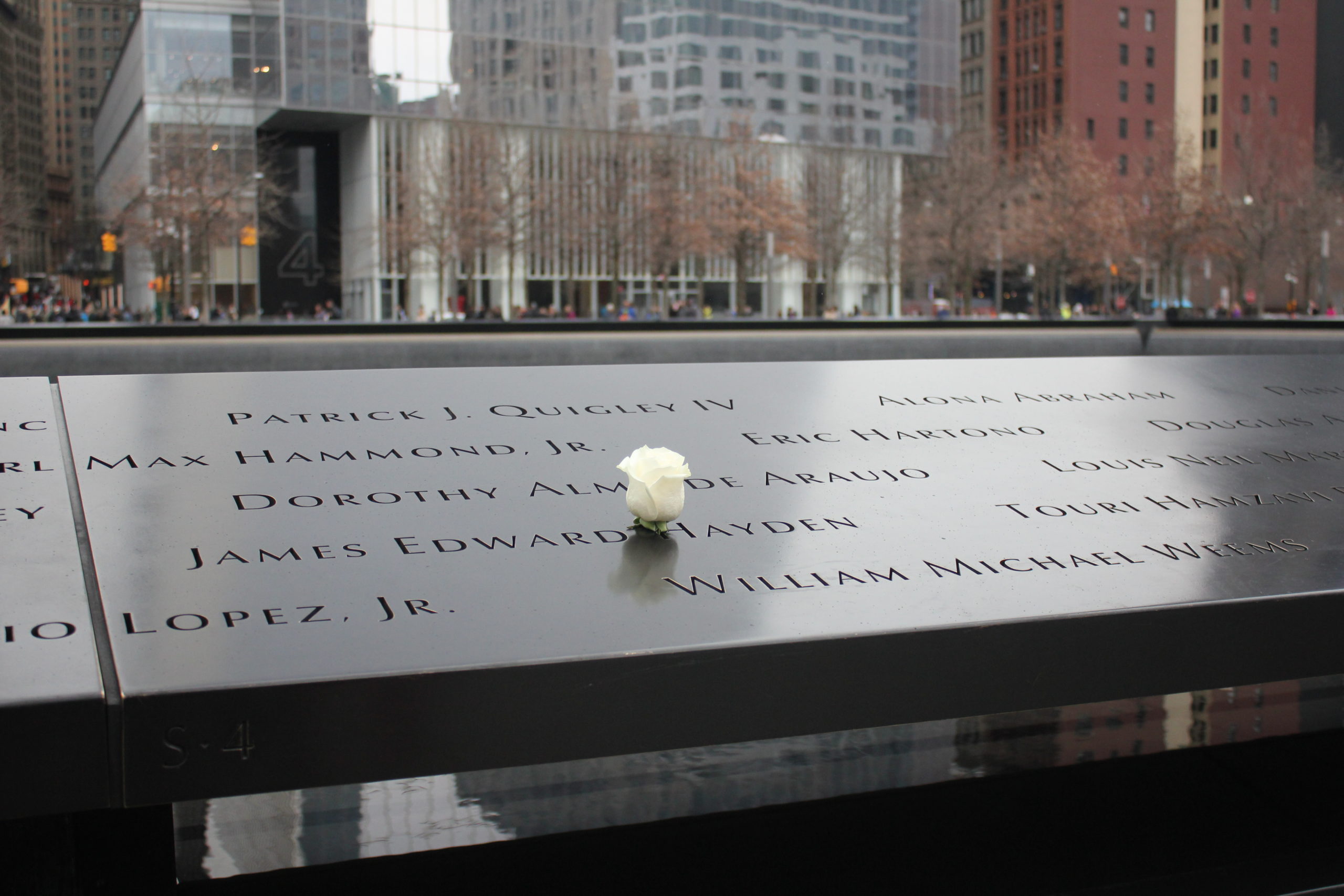
When I came out of the Oculus from the other side, I started walking towards the first reflecting pool – the north pool, I could see the continuous water fall. When you reach closer to it, the depth of the reflecting pool catches all your attention. It looked like an infinite well so deep inside that you will never reach the core. The sound of the water falling from the concrete into the deep well added to its deep drama. Probably the sorrow the world witnessed that day could be symbolised in such a way only. The names of all the people who lost their lives was engraved there in a marble slab surrounding the pool. A white rose was placed in the name of the person whose birthday fell on the corresponding day. We saw few white roses that day too. The white rose, the sound of the water, all the tourists there respectful of the surrounding added the perfect soul and unity to the place.

Names of the people who lost their lives
The white rose marking the birthday of the person

When I turned back from there, I saw the Oculus again, with all its virtue, shining and rising high. Nothing can break me, and nothing can make us fall if we stand united. It felt like it was giving this message to all the people who were there. I could sit there in silence and hear the silence. I have tried capturing it through my lenses too but like I have said before, words could have bigger impact in some cases. I hope I am able to do justice to the memorial with my words.

The Oculus – ready to fly

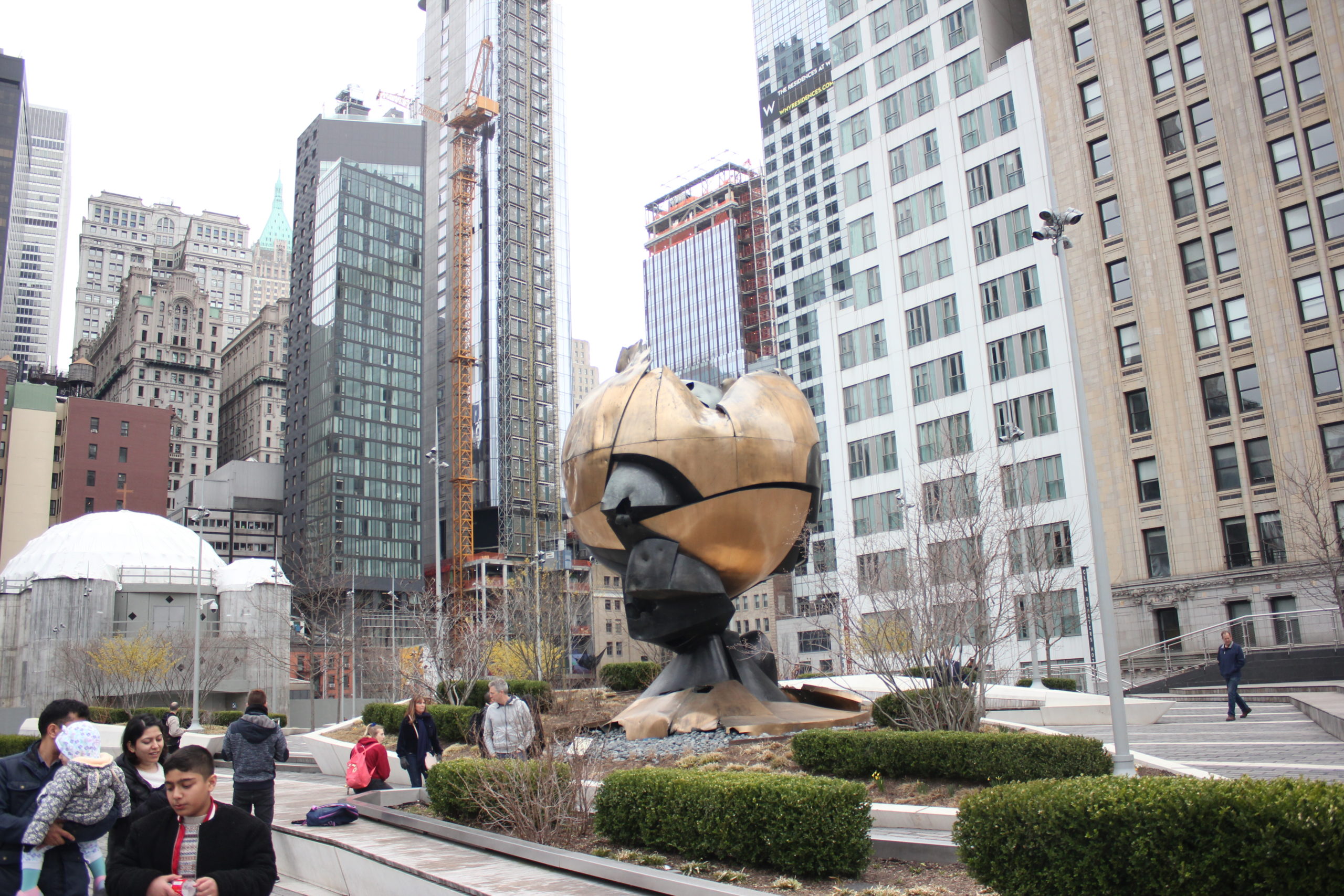
We then went to the other reflecting pool – the south pool, had the same feeling, not a slight lesser grief. Stayed there for some time. The whole site of the pools and the museum was supposed to be complex together like an urban park. There was some construction going on there, so we could not see the exact design of it from the outside. After that we headed to the liberty park. This was across the street from the memorial complex and from here you could have a view of the pools and other parts of the memorial. This park was also a fine example of a landscape design. With very urbanistic approach, there were seating, at different levels that came up and merged to the ground. There was on display an art piece ‘The Sphere’ sculptured by a german artist Fritz Koenig. Rightfully known as Koenig’s sphere, this sculpture shares its own story as the only existing artwork from the 9/11 attack. There is also a documentary about it called ‘Koenigs kugel’ in german. We climbed the liberty park from the west end and when we walked across, on the east end was the Saint Nicholas Greek orthodox church. Leaving them all behind we camouflaged into the concrete jungle of Manhattan one more time.

The Koenig Sphere in liberty park
Design detail in liberty park

There were seven buildings there before the 2001 incident. Now they are planning to make 5 more with one freedom tower already erected. This time, we could not go inside the museum as the queue was huge and we did not have time. Next time, I will try to visit inside, though I know I will be sad, though I know I might cry but I am sure, it will make me stronger and braver to tackle life as it comes.

Colorful installation next to the Oculus – leaving a positive note

Importance of Heterogeneity in Public Spaces

Time plays a major role in outlining the function of public-private spaces. Influence of cultural exchange, political scenarios, economy and technological advancement has brought change in the use and understanding of public spaces in different centuries. (Dhungel, 2015 cited from Carr, 1992). In the twenty-first century, we need parks as a salad bowl where each culture has its individual expression even though they are mixed together. In the twentieth century, this was not idealized instead, the concept of democratic society was a melting pot where all the cultures were brought together and homogenized into one expression of national culture (Dhungel, 2015 cited from Thompson, 2002). This approach though had been a commendable process to reach a just society, at some point we all will be losing our identity and culture. Uniqueness of an individual, identity of a certain culture gives vibrancy to living. Hence, to bring together the views of different social and cultural groups, a participatory approach must be considered. Designers play a huge role in bringing this heterogeneity into the society. We must listen and understand. Universal approach does not always work, context is the key.

If we tell a German to eat their bread with chopstick, or we give fork and knife to a Japanese to cut their soup noodles, we sure will make a fool out of ourselves!

Inspired from:

Dhungel, A. (2015). IDENTITY, LIVEABILITY and RESILIENCE: Open Space Categorisation and Management in Kathmandu Valley. Master’s Thesis: Weihenstephan-Triesdorf University of Applied Sciences, Freising, Germany.

Research under progress…