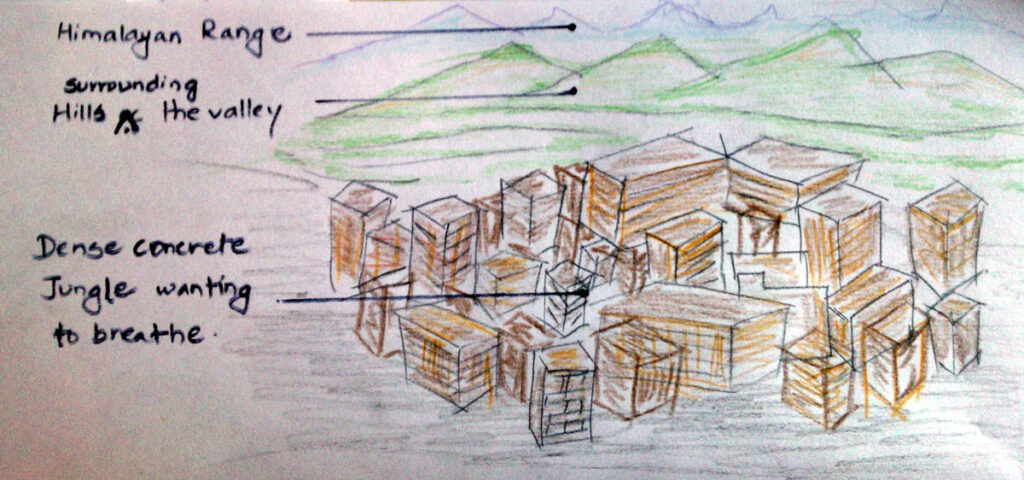
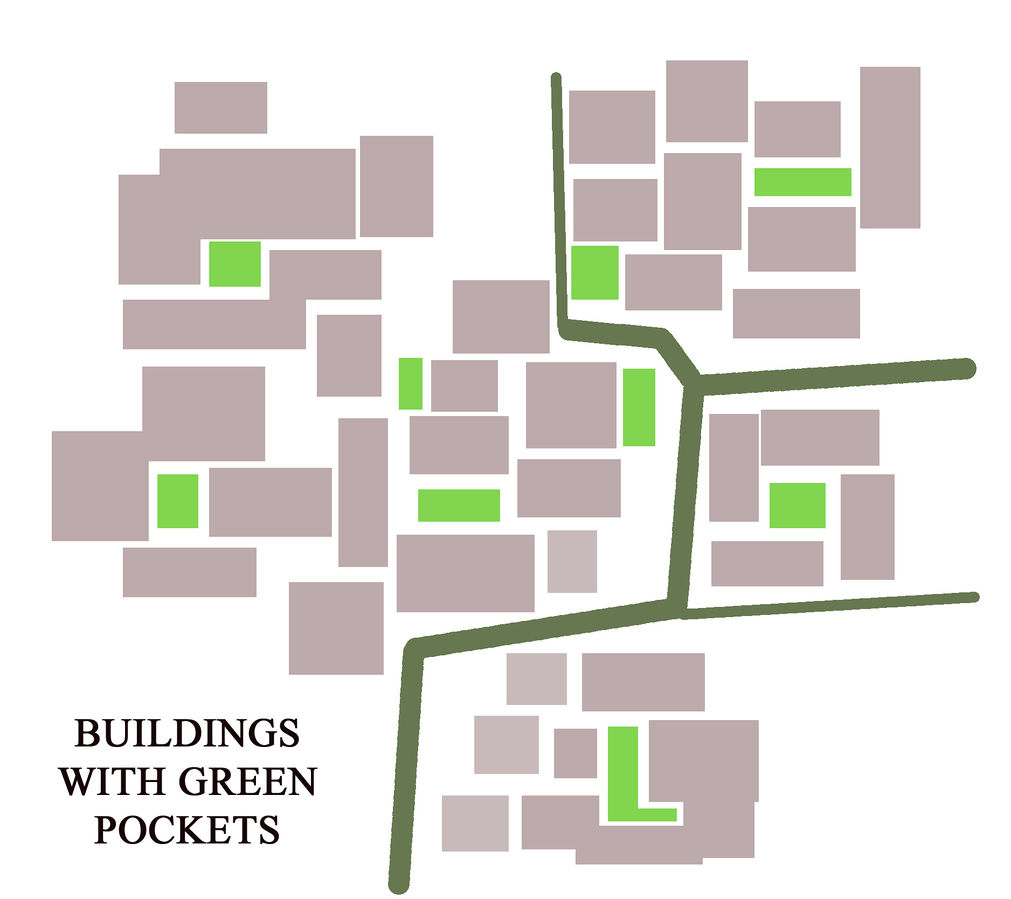
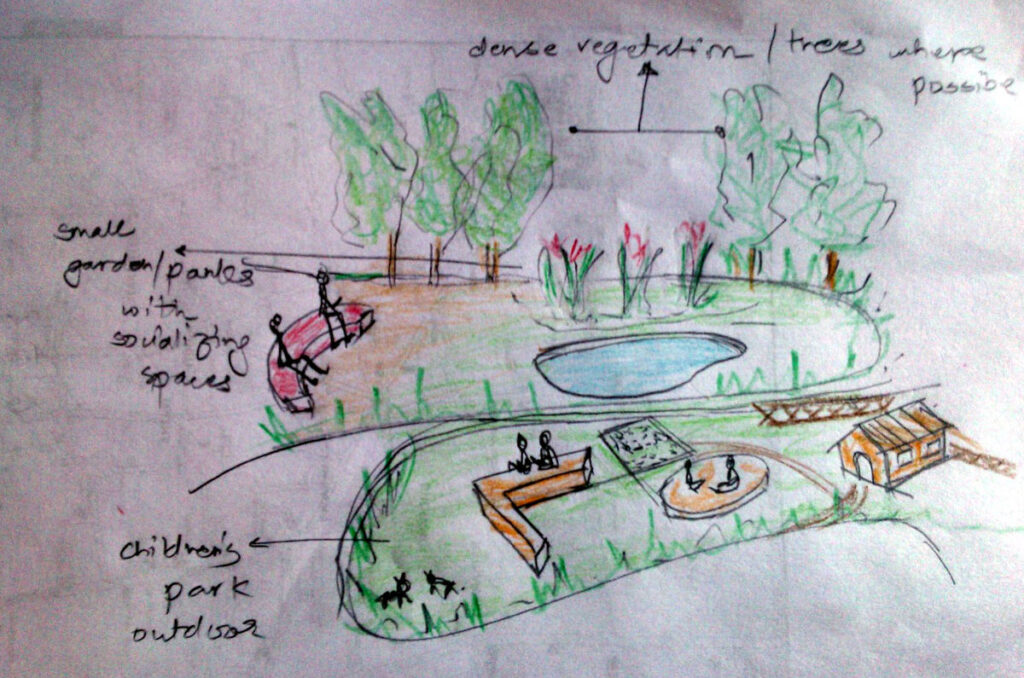
This is a link to my very initial project of providing better green/open spaces in Kathmandu Valley when I had just started my Master’s degree in Landscape Architecture. After almost 5 years, how strongly I still believe in the vision I had back then. Surely, my horizon has expanded and I am able to look at it through many perspectives and dimensions. Hence, making me more focused on how to achieve my goal. Do click in the link below to find out more.
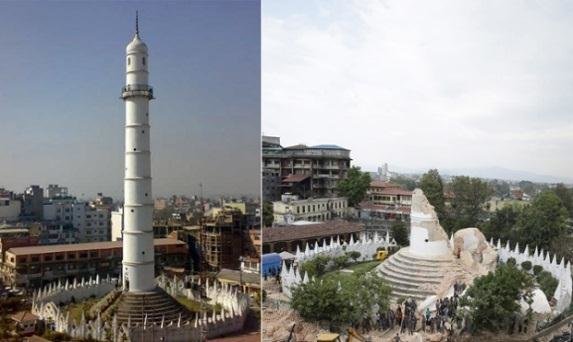
Dharhara Tower at Kathmandu, Nepal before and after the earthquake of April 25, 2015 (Source: http://www.theguardian.com)
Dharahara Tower: also known as Bhimsen Tower. This tower was
built in 1832 by then Prime Minister Bhimsen Thapa of Nepal under the orders of
the Queen. In 1934 earthquake, this tower almost collapsed and it was renovated
by then prime minster Juddha Shamsher. It was opened for public in 2005 for
viewing from the eighth floor holding a circular balcony which provided a
panoramic view of the whole Kathmandu Valley. (Dharahara,
n.d.)
Sadly, it fell down completely, along it many people also fell and lost their
lives.
It has not been there for 4 years. It seems like it will not stand any time soon. Will it re-acquire its dignity if it stands tall again through the rubbles? Will the people who lost their lives in the disaster be remembered? Will the new generation be able to feel the pain and grief that was risen by its fall? All these questions will be answered differently with different perspectives. Here is my perspective on how to rebuild or how to make a memorial that will last for generations to come and to connect in a way that will slowly heal the wound and make each one of us stronger from inside.
Dharahara complex as a whole could be defined as a city’s public
space. Hence while redesigning, it could be taken as an innovative public open
space which speaks history, at the same time, a lot of emotions attached after
it collapsed in 2015 earthquake.
The best remembrance in this city core area could be a
museum or a memorial to remind everybody of the disaster that took place on 25th
April, 2015. This is very important because people tend to forget the past and
remind the new generations about the events. If this is presented as a
remembrance to the city and devoted towards the loss of heritage and loss of
lives of the people, the future generation will also witness it and be more
alert and prepared.
The tower shall be constructed again, not above the ground, but underground. The damaged structure remains as it is, and its story will be told in the underground memorial.
The museum could showcase pictures, photographs of the
people and also the places that were most affected, how people were sheltering
after the earthquake. Each corner will tell different stories of the people who
struggled and survived, how bonding among the neighbours increased, how people
were there to help each other and many more events that took place during that
time that could connect and inspire. Different artists could come together and
express their creative perceptions. This museum would be as a shadow on the
ground floor to the monument and it would go underground through which people
walk and only after the full story is told they reach the collapsed monument to
finally feel the grief. The monument was white in colour and the shadow could
be with darker (black) effect, lights would pass through different angles for
the displays to be seen.
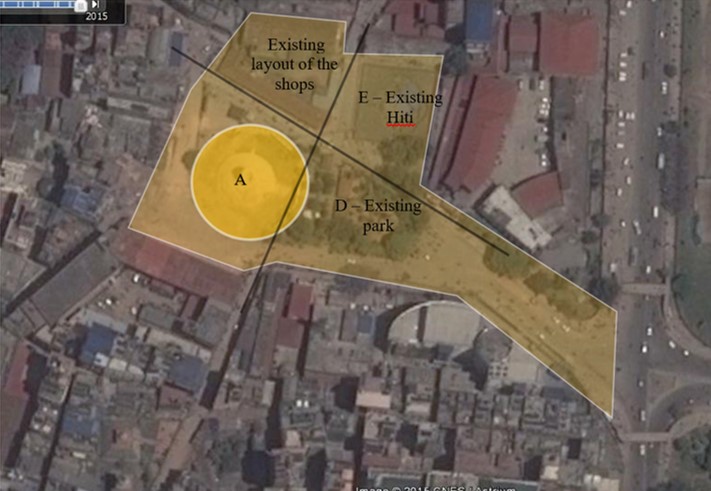
At the outside, surrounding areas will have open spaces as an urban park where people can relax and interact with each other. It already has a sunken water feature (Hiti) which can be revitalised. The existing shopping block could be converted from enclosed space to open space interacting with the Hiti and the Monument zone. With minimal intervention, this outer space could engage the passersby and leave a feeling of grief and affinity.
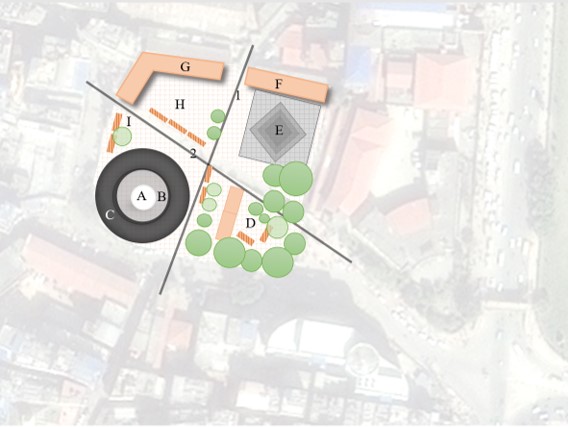
Site condition of Dharahara complex after the earthquake in 2015 (Photo source – Google earth)Proposed Design of Dharahara complex as a whole.
Legend:
A – The collapsed monument as it is;
B – The transition between the monument and museum;
C – The underground museum/memorial which symbolises as shadow of the monument;
D – Existing park area;
E – Existing historic Sunken water body (Hiti);
F – Shaded rest area (Pati);
G – New layout of the existing street shops (to make the spaces more connected and vibrant);
H – The Open space achieved after the alteration;
I – Seating area outside the museum; and
1 and 2 are the axes that are created by the existing routes and entrance.
Proposed design derived from : Dhungel, A. (2015). IDENTITY, LIVEABILITY and RESILIENCE: Open Space Categorisation and Management in Kathmandu Valley. Master’s Thesis: Weihenstephan-Triesdorf University of Applied Sciences, Freising, Germany.
I have seen in Kathmandu barren pieces of lands. I have seen them being empty most of the times. Kathmandu valley has six seasons, it is the most dynamic place in terms of weather. Summer is not too hot, winter during the days are so pleasant, rainy seasons splash can make the humid air more fun, still, I do not see any kids playing outside freely. We have believed always in communal living, we understand the need to socialisation. We have understood that neighbours are the greatest assets one could possess. There is a saying also in Nepali ‘chimeki vaneko parda ko janti marda ko malami’. It simply means neighbours participate with us in our happiest moments- weddings and the saddest ones- cremation. Till this generation, we still see the connectedness, in most of the places in the city. There is some level of communication though everybody in the city is busy nowadays. We still manage to socialise by going to restaurants, meeting in shopping malls, movie theatres, guys going for futsal, ladies marching towards the spas. We are intelligent and we know how to manage our needs with the changing times.
But then, what about our kids? Do they get to fulfil their needs? Do they get enough space and time to grow? Of course, we are sending them to the best schools that we can afford to, we are buying them what they want, we are taking them also to the movies, we take them to the fun play spaces inside the malls and pay a lot for it, we buy them lots of toys which assist their cognitive development, and the list goes on.
Hold on! Stop! Please! One thing you could do best for your child is not doing anything at all. Let them just be and grow!
In this scheduled world, children are losing their freedom. And this is the most important ingredient for their wellbeing. Let them freely play, understand themselves, don’t interrupt when they have a conflict with each other, let them solve it by themselves, they are capable of doing it. Let them observe nature and understand the change that is happening in nature. Let them explore and learn by themselves. Free play is what they need every day. For this, it is very important to develop the concept of parks and play area for children where they can explore their creativity. Let the empty piece of land become their retreat. Let them engage in various activities mastered by themselves while you witness how intense their thinking can get once you let them just be.
These spaces where children find maximum freedom and play is where their creativity expands and their physical needs are fulfilled as well. These spaces not only serve the children but all the people from the area or locality can enjoy such places and we could get back the neighbourhood that once existed within us. Wherever in your neighbourhood, you find a public area, empty, try to talk to the local governing body of that area, develop them as parks and playgrounds. If you have these spaces in between your communities, children can themselves go and play there. Put some night lights there so that they feel safe and you feel comfortable letting your child play there. It is not good when you have to take your child in your car some miles away from your home so that they can play. Let their homes be their play area, let their neighbourhood be their play area.
Let them belong and let them explore! They need this to become a creative and responsible human being in the future.
I have always considered place in different scales, mainly two: a place which a person can conceive through his or her all senses, that is, be in a place, holding something, eating something, hearing, smelling and seeing as far as naked eyes can perceive.
This place is, in general, a three-dimensional object. What about a place as an identity, which you cannot see as a whole picture yet, your feelings for it defines an understanding of a place? This place is a feeling, feeling of love, hatred, identity, character. In this understanding of two types of places, all the spaces come. The range can be from a small chair or outdoor lawn to a room with equipment or a building’s corridor to a local neighbourhood, a city altogether or a unique geographical region.
A child’s place was a womb for 9 months of his life, then a small bed for 1-2 years of his life and it starts increasing in this ascending scale. Also, the understanding of place starts to change in this context. Place where you sit, sleep, place where you run and play, a place where you to go study and so on. Places where you belong to you, your neighbourhood with small colourful shop, and your city with the ancient monument or your country with the unique bird in the world. The perspective of place hence changes.
Time plays a major role in outlining the function of public-private spaces. Influence of cultural exchange, political scenarios, economy and technological advancement has brought change in the use and understanding of public spaces in different centuries. (Dhungel, 2015 cited from Carr, 1992). In the twenty-first century, we need parks as a salad bowl where each culture has its individual expression even though they are mixed together. In the twentieth century, this was not idealized instead, the concept of democratic society was a melting pot where all the cultures were brought together and homogenized into one expression of national culture (Dhungel, 2015 cited from Thompson, 2002). This approach though had been a commendable process to reach a just society, at some point we all will be losing our identity and culture. Uniqueness of an individual, identity of a certain culture gives vibrancy to living. Hence, to bring together the views of different social and cultural groups, a participatory approach must be considered. Designers play a huge role in bringing this heterogeneity into the society. We must listen and understand. Universal approach does not always work, context is the key.
If we tell a German to eat their bread with chopstick, or we give fork and knife to a Japanese to cut their soup noodles, we sure will make a fool out of ourselves!
Inspired from:
Dhungel, A. (2015). IDENTITY, LIVEABILITY and RESILIENCE: Open Space Categorisation and Management in Kathmandu Valley. Master’s Thesis: Weihenstephan-Triesdorf University of Applied Sciences, Freising, Germany.