Contrast of bike paths in New York City and Copenhagen

Big city, big road, yet bigger cars, narrow or no bike lanes. The places you could safely ride bikes were the central park, the Brooklyn’s bridge, Hudson river greenway, east river greenway and may be a few other places, which we couldn’t visit. At least what I am trying to say here is, there are some bike paths and you could see some people riding bikes, but when one talks about the connectedness, its hard to find. In Manhattan area, there is bike lane but it was very rare to see anyone riding bikes in those areas. In the city core area, one struggles to find his/her way in the traffic. Also we took a bike for a day when we wanted to explore central park. This day we realised as was said by one random guy on the street in Harlem, that we “looked pathetic with the bikes” and nobody rides bike around these areas. Believe me, having lived in Germany for a while, where even university professors, people in their 70s-80s ride bikes everywhere, it was a strange thing to encounter. And also when people say that New York City is so vibrant, it’s a people’s city, I found it little hard to digest on couple of encounters we had. And the bikers biking in their bike ways, they weren’t the nicest people, you could get seriously hurt if you come in their way.
Pedestrians out of the way of the bike way!

In Copenhagen, every street, every neighbourhood, any place that you could see or walk, you could see bike lanes. The amount of people cycling there had definitely made the traffic so well managed. And in this city we decided not to rent a bike because it was just too hot and we had to be outside to explore all the time. So we definitely had to spare some energy and water inside our bodies. But the sight was amazing. To see so many bikes passing and crossing everywhere, everything so well managed nobody was suffering.
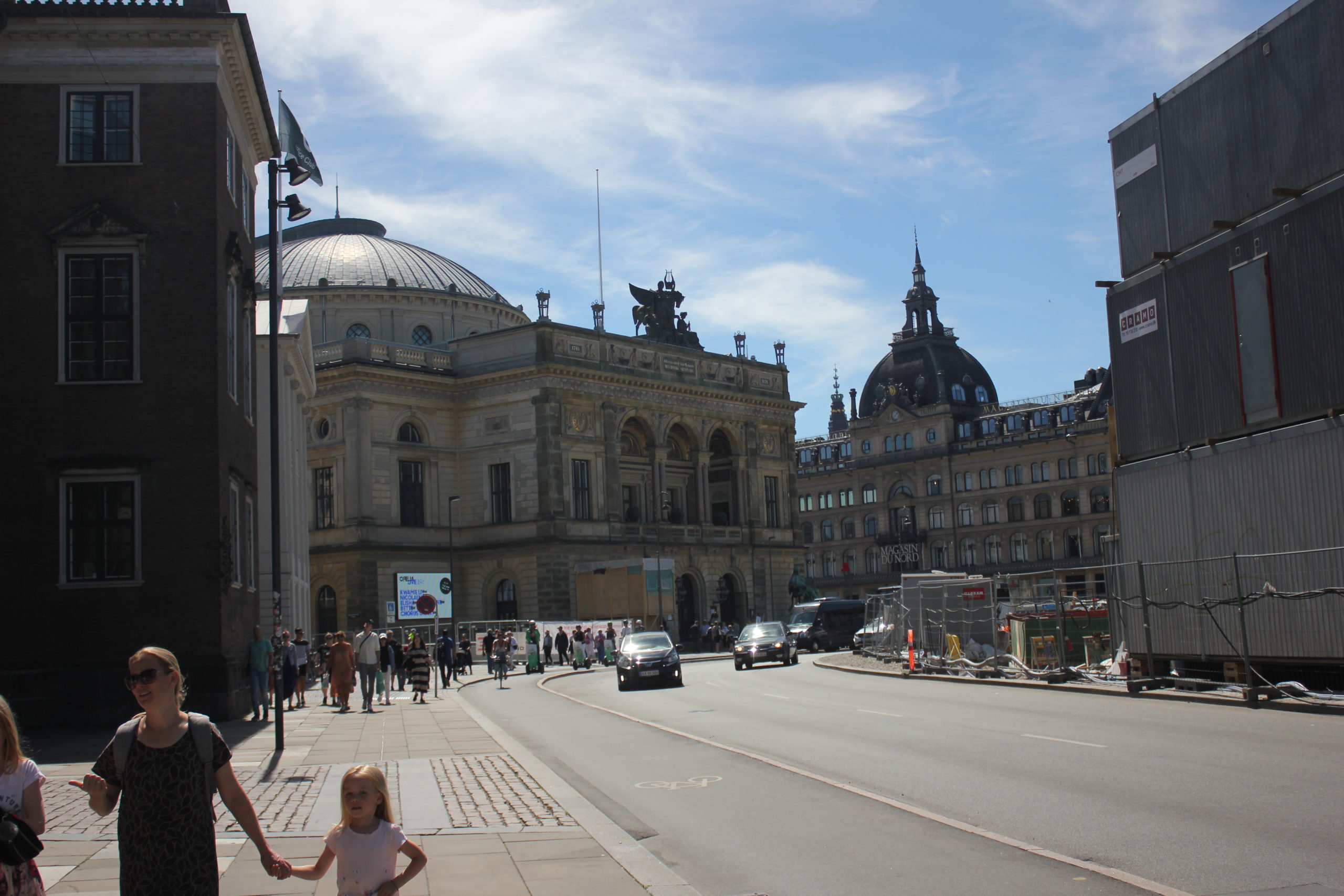
Elevated bike path along the road of Copenhagen.

The cyclists knew what they were doing, the pedestrians also valued each others path, nothing was going wrong. As this was happening in daily basis, there was a silent rule that was followed by everyone. Cycling was not for leisure, not just a quicker alternative to walking, it was a means of transportation. No wonder it is the most bike friendly city in the world. A whooping 62 percent of the residents ride bikes to work and education with only 9 percent of the population driving. They are doing a lot more than this. You can check out this site. Isn’t that something for cities which are expanding their infrastructures to accommodate more cars.

Thinking about my hometown Kathmandu in this context. Such a small city, where you could reach everywhere by bikes, wouldn’t it have been better to prioritise bike lanes than expanding roads for more cars. Anyways, the traffic congestion will not go unless we have underpasses and overhead bridges. So why not go for some feasible options. And for people who would say the pollution will make it hard to ride bikes, I would say if they have noticed the city during strikes and Dashain & Tihar festivals. Anyway, this is just a thought, I haven’t done any detailed study or research to talk about this any more than I just did. But when I was doing a study with the children of Kathmandu for my project, I found out that not even 1 percent of the students whom I asked were going to school by bike, not even riding bikes as leisure. May be road safety is the concern for the parents.

When I was in Copenhagen, I could feel the city enjoying riding bikes and when I asked someone who was living there if it’s the same during cold and dark winter days, she said it’s the same, they wont stop riding bikes. The paths are cleared off the snow and made bikeable all the time.
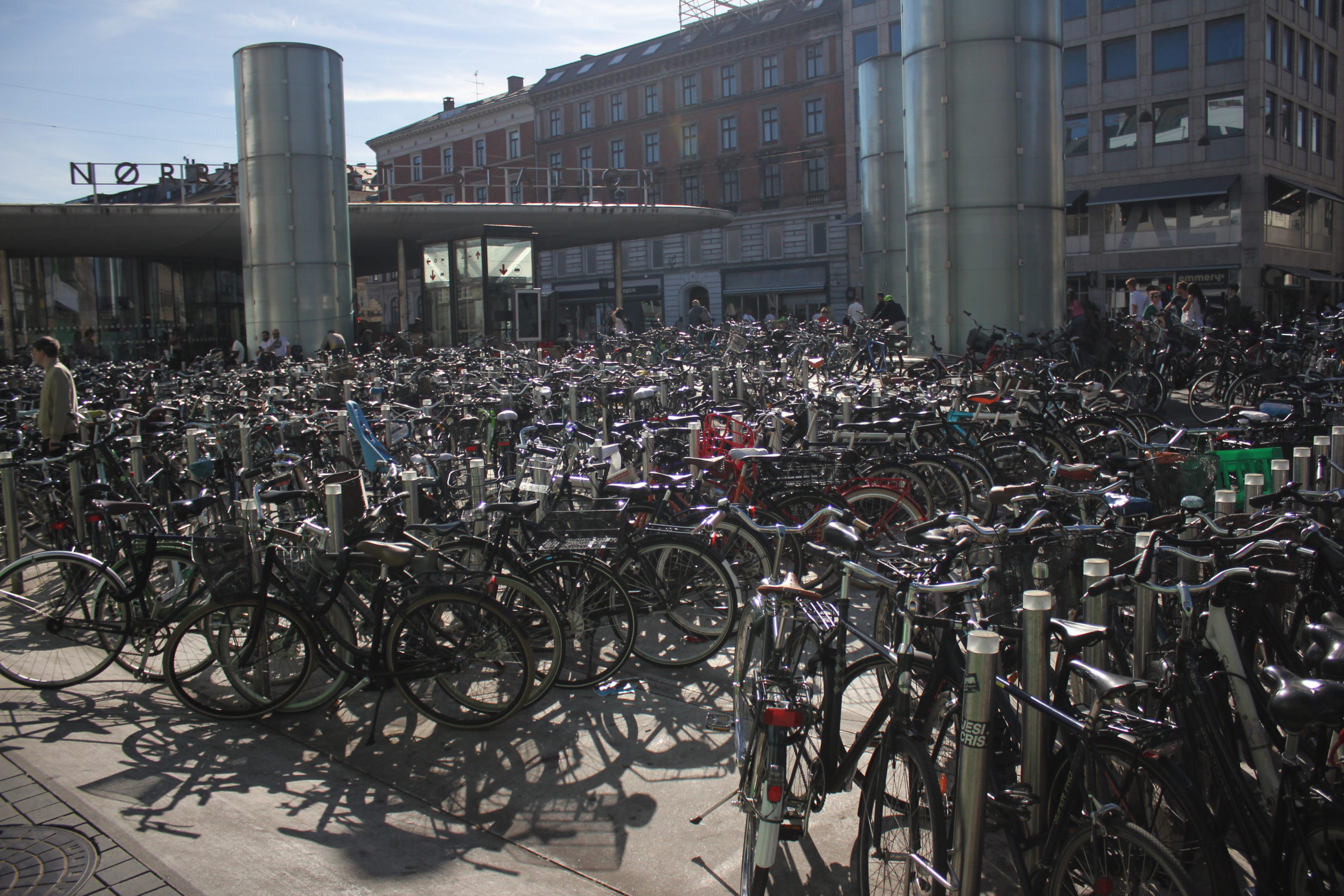
Look, a bike parking! Nørreport station, Copenhagen.

In New York City, even in places where bike lanes were integrated with the landscape, for example central park, the convenience level was a bit low. We hired the bikes to stroll around the park and we were not even allowed to enter all the paths that were only meant for “walking”. The bike lanes were with all the traffic lights and strongly disconnected with the park. So most of the time, we had to just move around with our bikes by our side. The bikers were just biking around the park and nobody would dare to cross their paths. So for the tourist it could be a bit overwhelming to go around in the park with bikes, maybe walking would be a better option.
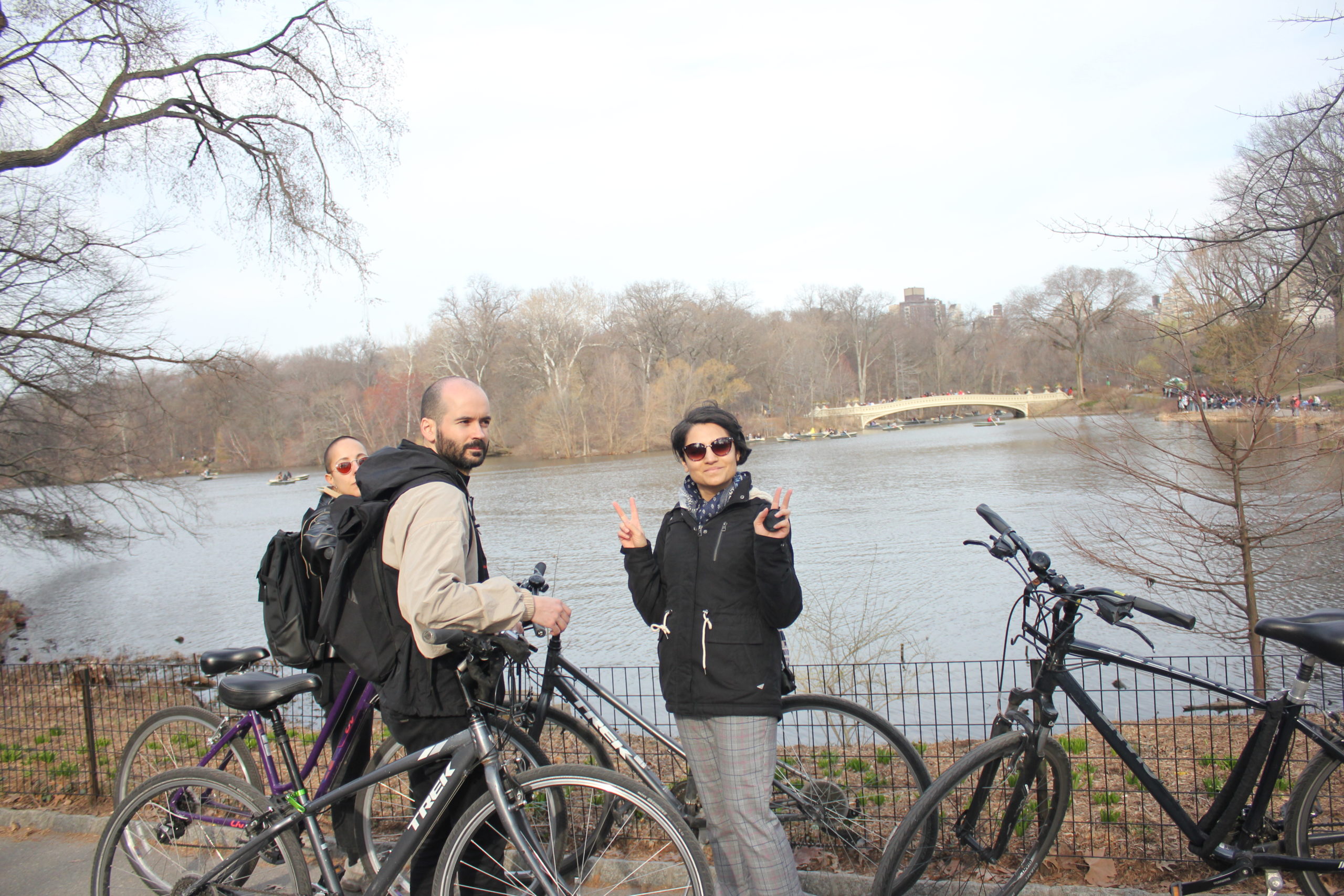
We found our way!

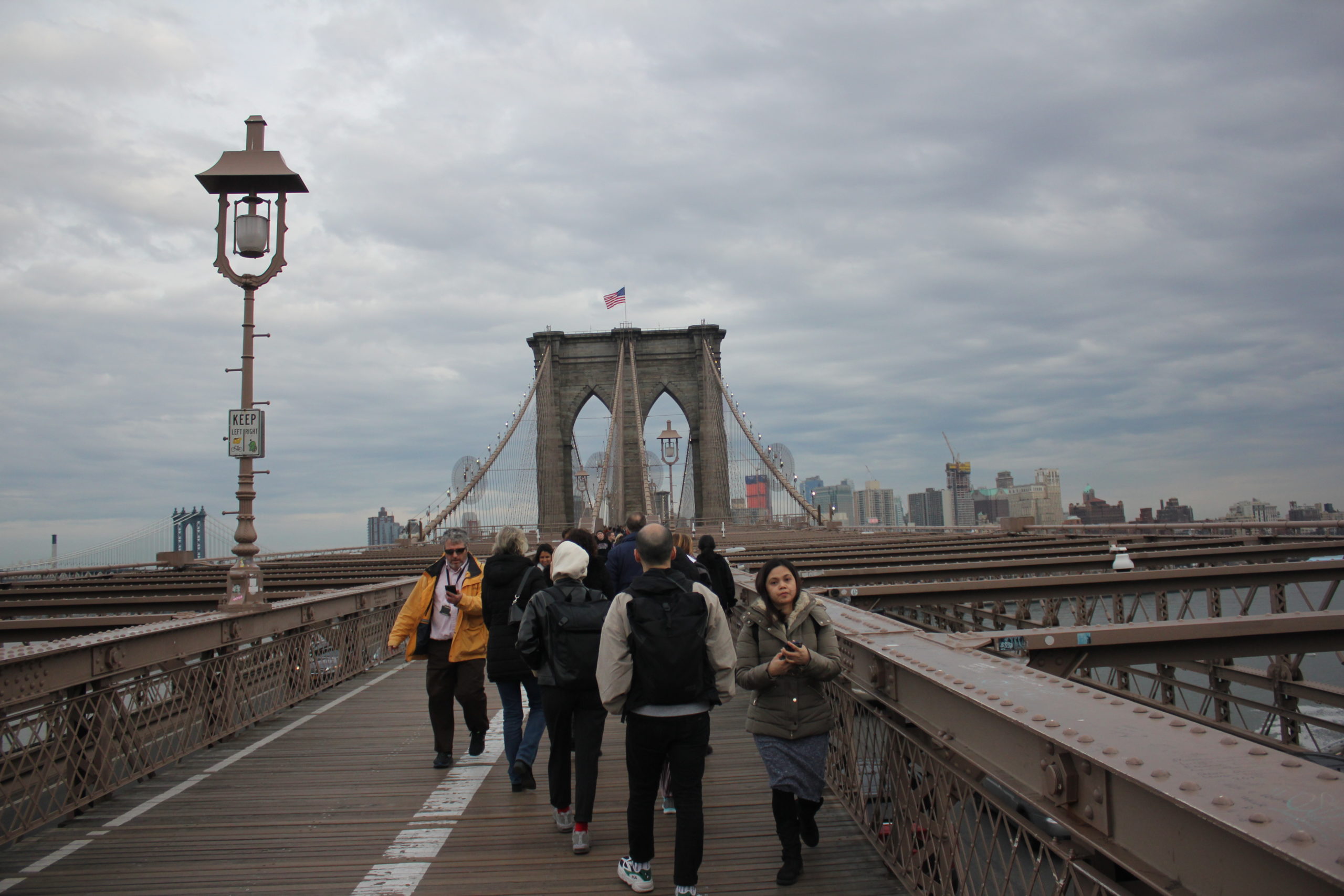
Nonetheless, we really enjoyed our bike rides for the day. The bike paths were very nice to see around the outside areas of the park as well, you could also bike through the east river greenway to have a pleasant view of that side. It depends on what is your motive of riding a bike. There it was definitely not to integrate bikers to the park. At least in touristic spots like Brooklyn bridge, it could have been a little friendlier. The bike lanes did provide a lot of positive impacts. One could have a view of the beautiful scenery around the park as well as have some workout with pleasure. The rules were easy to follow and not misguiding. It is strange how back in the late 80s and 90s, when we were watching TV shows like Seinfeld, they were always complaining about scarce parking spots, grotesque subway lines, and till date they are still facing these problems. May be these are part of the “big city living”.

There is a bike lane, if you can see.

It was contrasting to see New York City and Copenhagen in their bike friendliness. Of course, we can argue that Copenhagen is small, New York City is way too big to be bikeable. Still there are people who ride bikes half way to work and then take trains too. Its all about how you want to live and make impact in the society. Cities sure are providing a lot of alternatives and provisions when it comes to bikers in Europe. In Copenhagen one could really witness that. Riding bikes is a good exercise if you are looking for a personal benefit too. In the long term one must not even mention that it helps in less carbon emission, friendlier neighbourhood, place attachment due to slower movement and openness than cars, just to name a few.

It cannot be done only by people’s will or by government’s efforts. Government must encourage people with such infrastructures and the public should also be aware and enthusiast towards it. Would you consider riding bikes around your city to go to work or to just travel around?

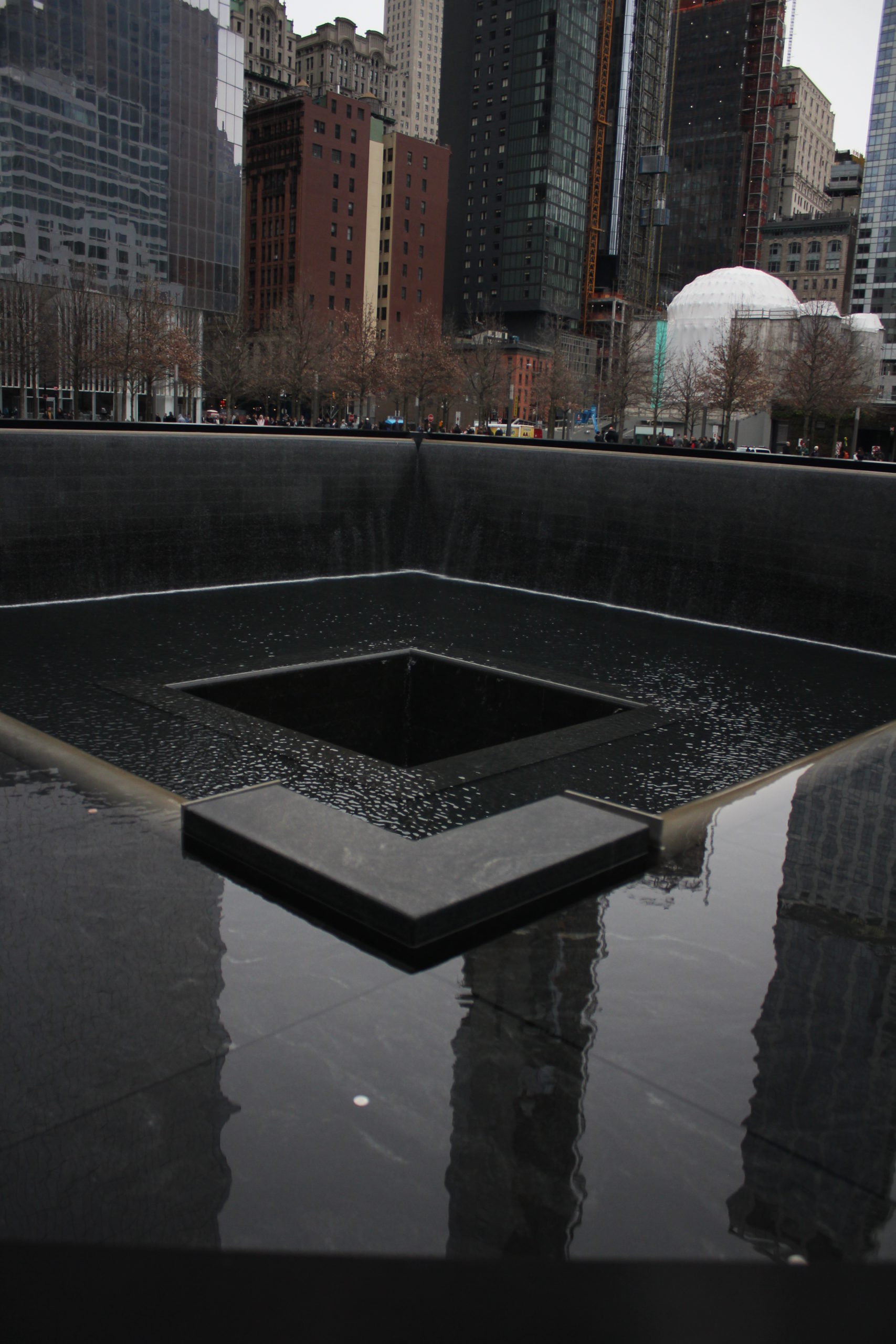
A hope – 9/11 Memorial

Peace, serenity, togetherness, bonding, grief but enormous strength. This is how I saw ground zero on my first visit. There is nothing to complain about this complex of monuments that is dedicated to all those lost their lives in 9/11 incident. One of the most unfortunate events of 21st century remains as a bruise in every living being’s heart connected directly and indirectly to this incident. I knew it made impact on everybody’s life, but now standing at this point, still, made me realise why it made such an impact. That day, humanity was in stake. Every human being with a heart and soul will not accept what happened here that day.

To watch everything on tv and to get live updates, was a tragedy, but to witness and feel this area for the first time in my life was something else. The names of the victims engraved, the falling water which made such a silent sound, the Oculus which looked like it was about to fly, everything so well designed that you feel sad and helpless; and content and strong at the same time.

View of the memorial complex from the liberty tower – south pool and the museum, also some part of the Oculus

The main features of the memorial were the two reflecting pools – north and south, each on the site of the fallen twin towers, the museum and the freedom tower. There is liberty park when you walk further down towards the liberty street after you cross the south pool. The later addition was the oculus – a bird shaped structure. The reflecting pools square in shape, have parapet level boundary where the names of the people who lost their lives are engraved. In the inner walls, water is falling from all sides, then the water flows through a flat surface on this level which falls further down into another square hole, after that one cannot not see where the water goes, it just goes down deep into the hole which looks infinite. Looking at that hole gave me the thrills of sitting in a roller coaster or standing on the edge of a high-rise building.

Reflecting pool – north
Reflecting pool – south

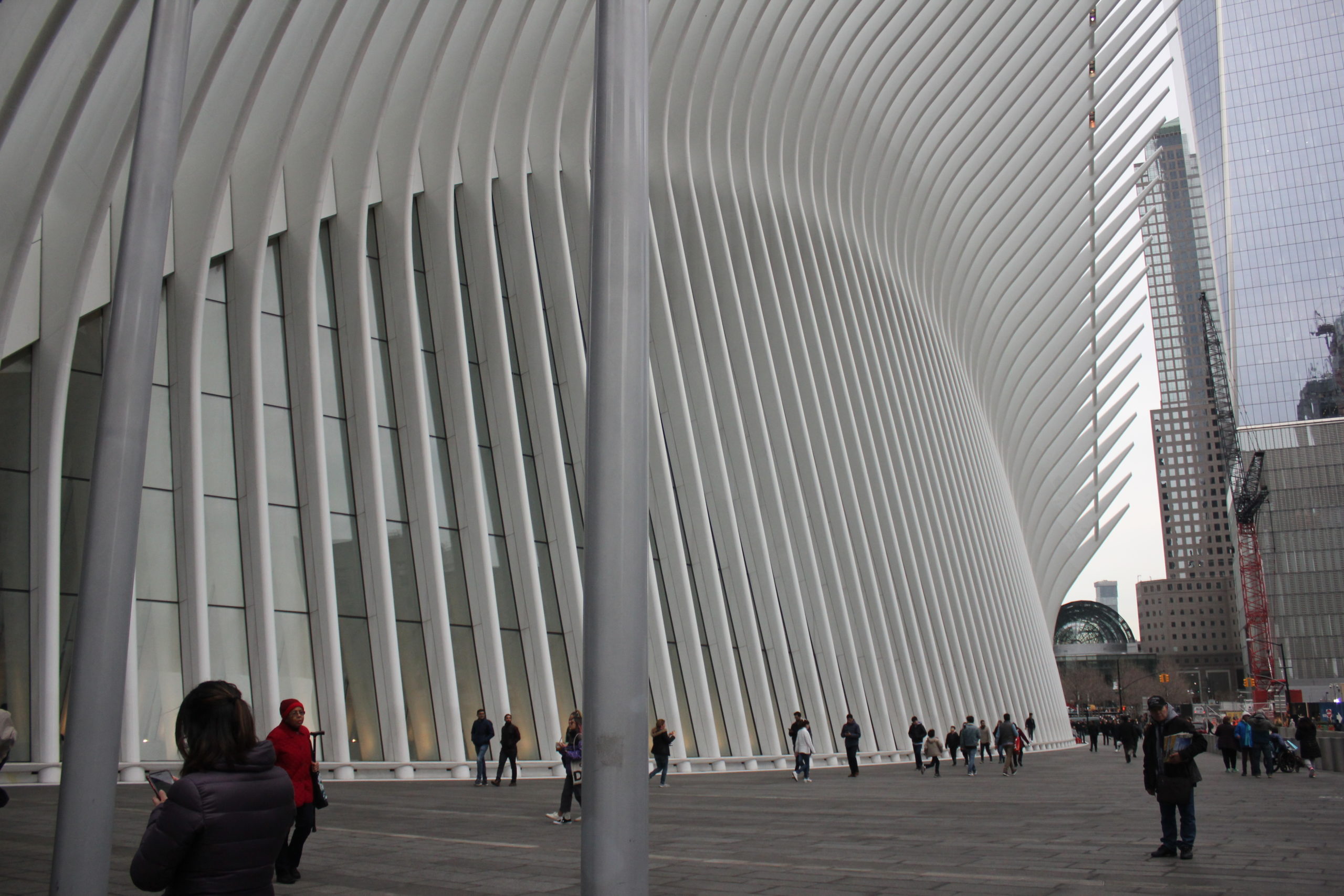
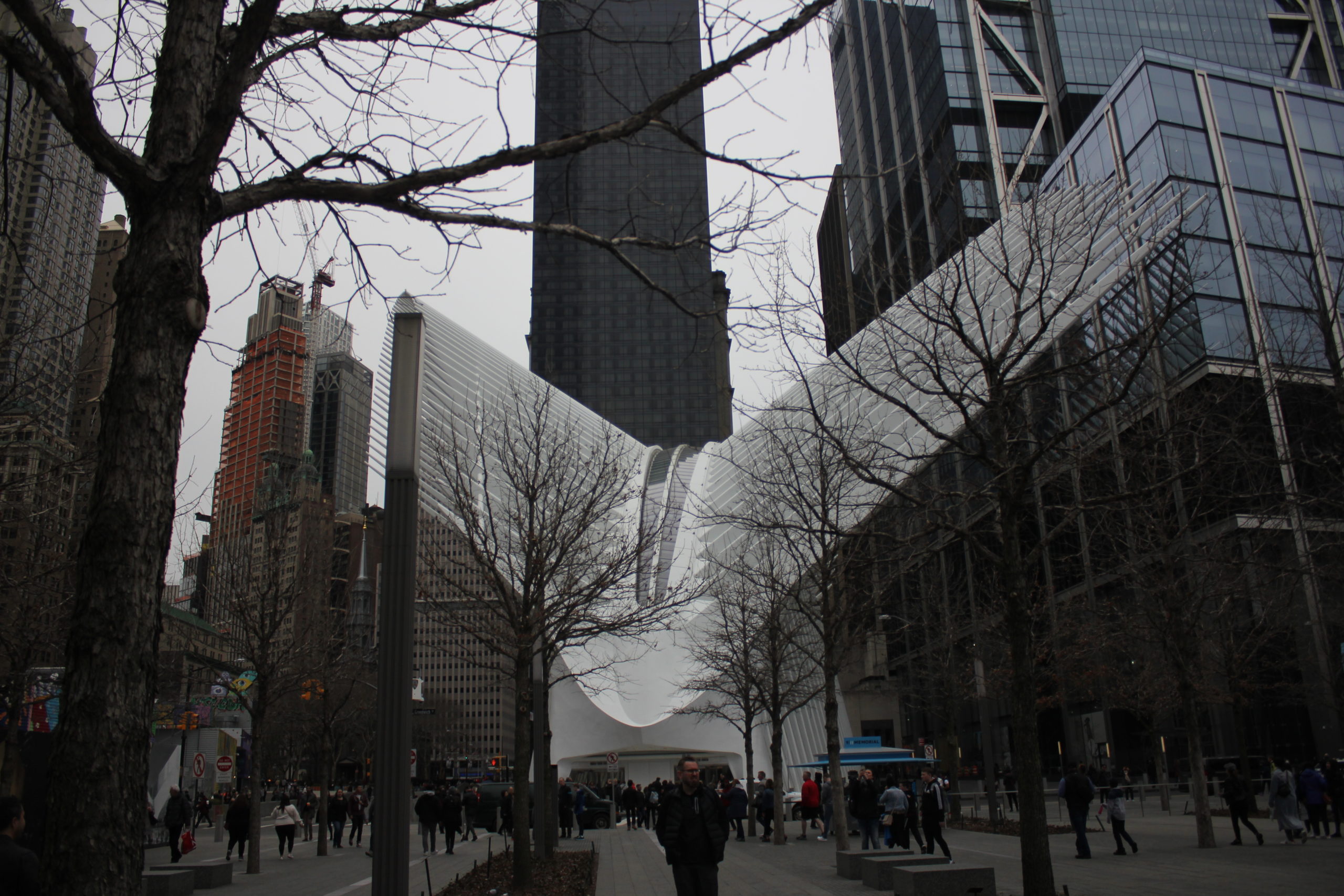
We entered the site through the Church Street, on the Fulton Street. While walking towards the memorial, along the Church Street, on the left there was Saint Paul Chapel. Leaving it behind we approached the Fulton Street. The first thing we saw was therefore the Oculus. The Oculus designed by architect Santiago Calatrava is one of a kind. It served as a metro station as well as a mall. Though devised a long time back it was constructed a lot later compared to the other structures there. This structure from outside was a bird ready to fly. At first the huge organic structure may seem a bit overwhelming.

The Oculus and the human scale

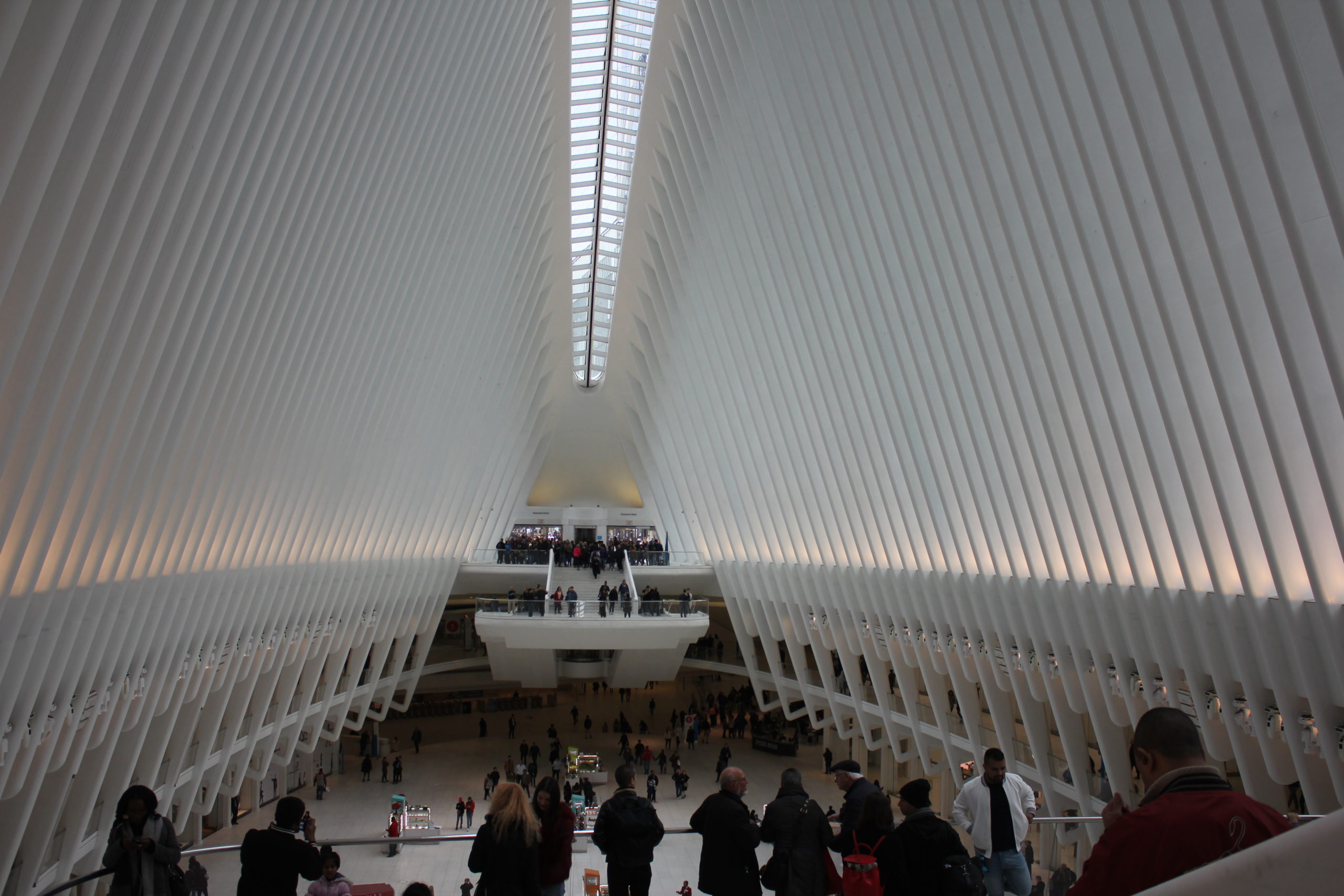
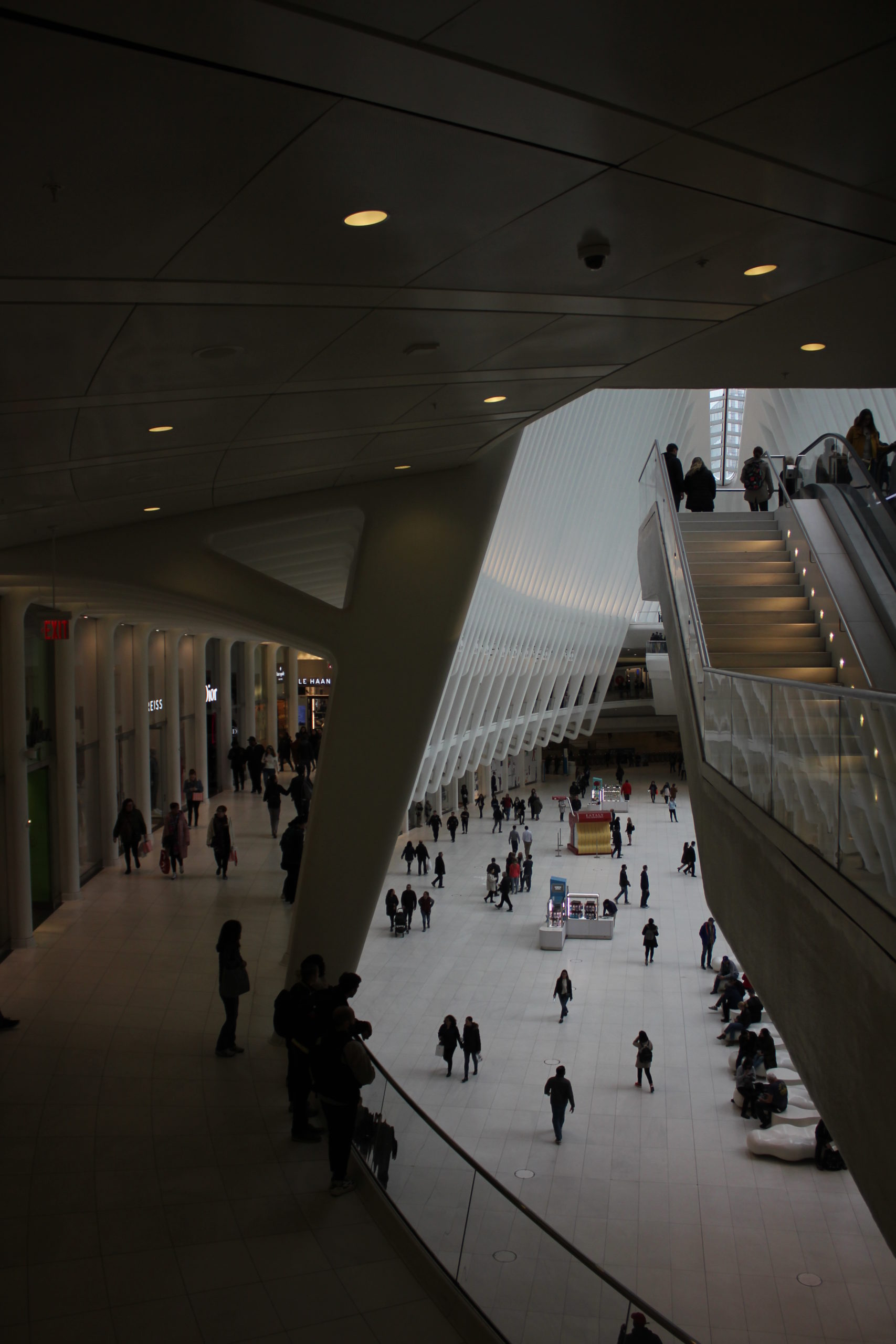
Once you are at site and also inside this huge conclave with wings ready to fly, you feel its enormous potential as a structure perfect to be lying along the memorials. It feels like a soul that can rise to eternity. Like I said before this memorial site gives both the feeling of grief and hope. The Oculus plays the part of giving hope. Though conceived as a metro station and a mall, it adds its rightful value to the complex. It looks grand from outside and when you enter the complex, it goes underground two more floors. This gives the feeling that it is grounded and not yet ready to escape. The structure of the Oculus is like the ribs. The hollow parts let the natural light enter the buildings as well as it gives the view of the outside. So, at different spots you see different perspective of the outside. From the central glass, one can see the freedom tower, rising high. The cantilevered stairs on the both sides of the structure help the visitor to admire the beauty of the structure, you come one step closer to the core. The fact that it is so white also adds onto its light structural design which could fly at any moment.  This form speaks freedom, it speaks liberation. Freedom to speak and express and to have a life not threatened by some unfortunate incidents. The only way to move forward is to think positive and this does justice to the collective feeling of moving on. As Sadhguru had said ‘do you want to be part of the problem or do you want to be part of the solution’. The choice is yours, I have always felt my try is not enough. When I looked at the Oculus, I felt that ‘there will be someone witnessing what you have done in your life and admiring it from the core’. Feeling that and smiling, I moved on.

The Oculus from inside
Peek a boo from inside the Oculus to the outside
Interplay of different levels inside the Oculus

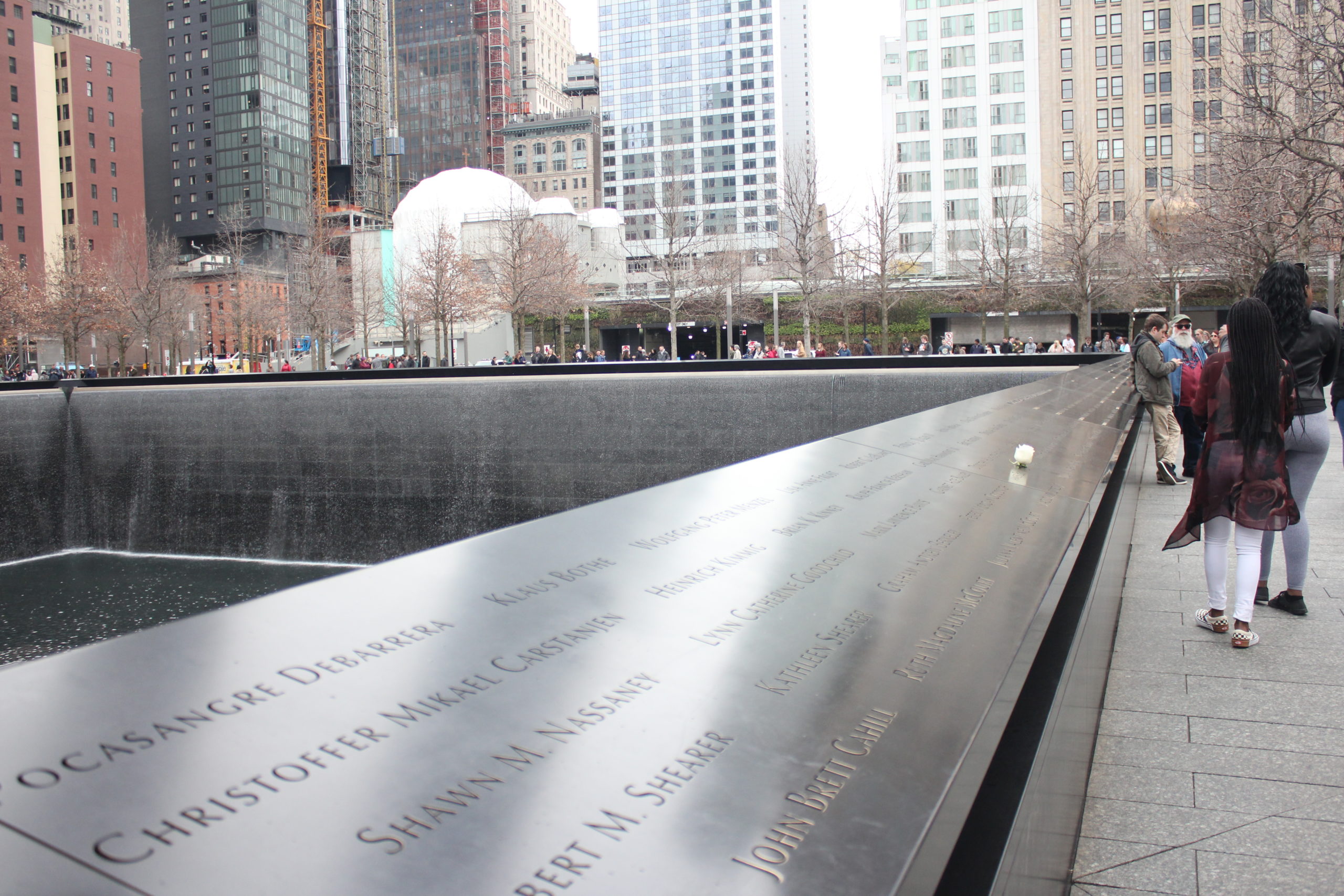
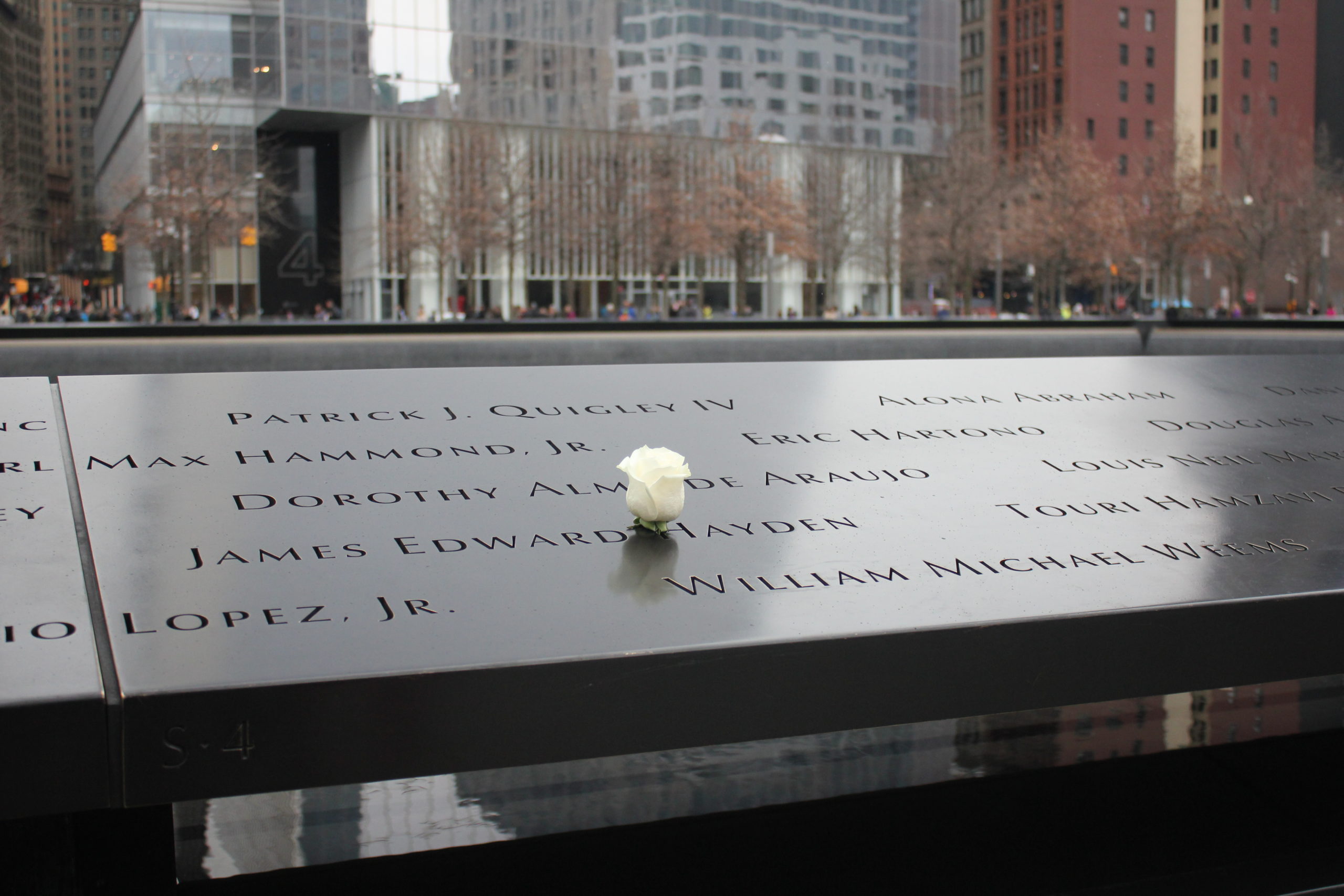
When I came out of the Oculus from the other side, I started walking towards the first reflecting pool – the north pool, I could see the continuous water fall. When you reach closer to it, the depth of the reflecting pool catches all your attention. It looked like an infinite well so deep inside that you will never reach the core. The sound of the water falling from the concrete into the deep well added to its deep drama. Probably the sorrow the world witnessed that day could be symbolised in such a way only. The names of all the people who lost their lives was engraved there in a marble slab surrounding the pool. A white rose was placed in the name of the person whose birthday fell on the corresponding day. We saw few white roses that day too. The white rose, the sound of the water, all the tourists there respectful of the surrounding added the perfect soul and unity to the place.

Names of the people who lost their lives
The white rose marking the birthday of the person

When I turned back from there, I saw the Oculus again, with all its virtue, shining and rising high. Nothing can break me, and nothing can make us fall if we stand united. It felt like it was giving this message to all the people who were there. I could sit there in silence and hear the silence. I have tried capturing it through my lenses too but like I have said before, words could have bigger impact in some cases. I hope I am able to do justice to the memorial with my words.

The Oculus – ready to fly

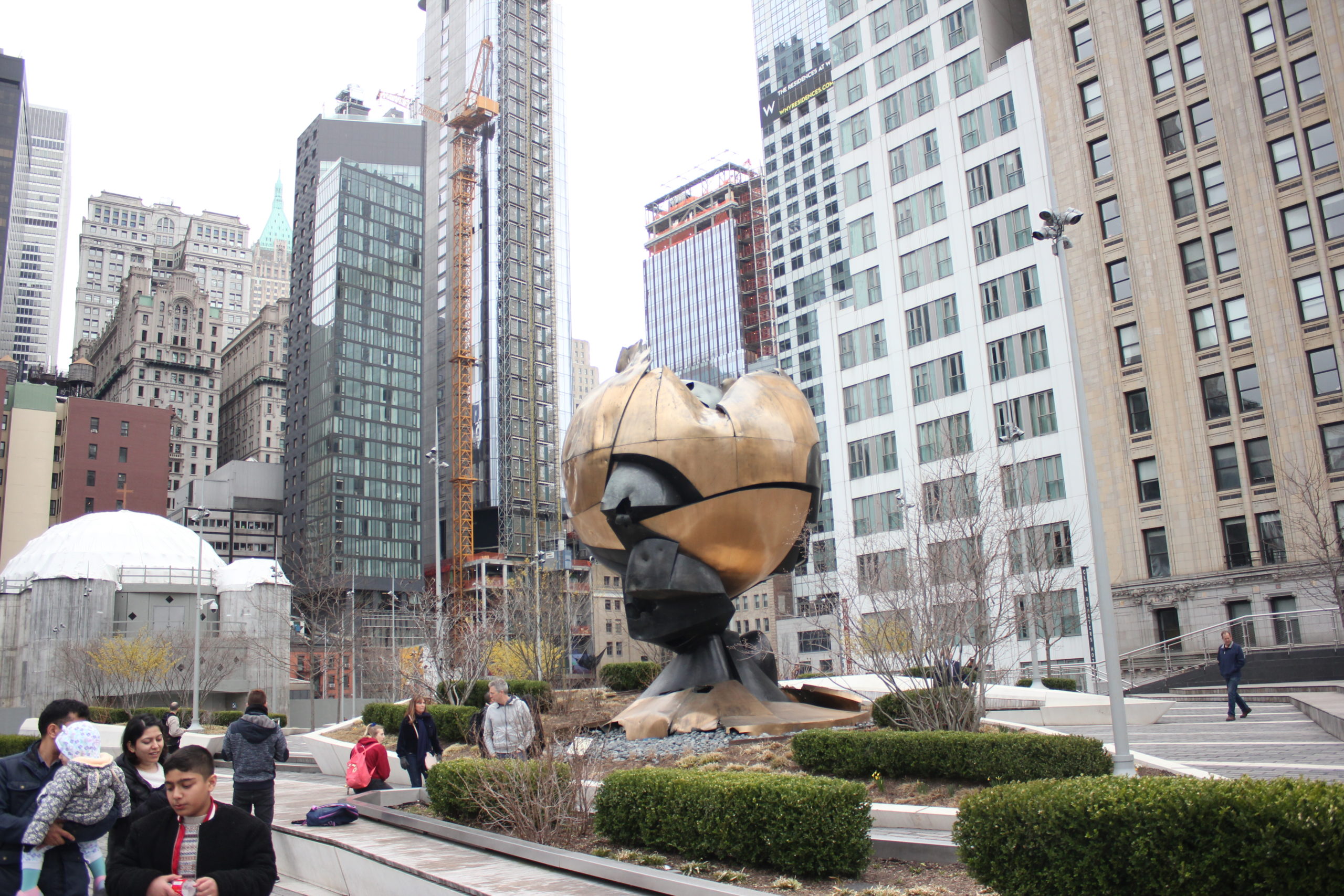
We then went to the other reflecting pool – the south pool, had the same feeling, not a slight lesser grief. Stayed there for some time. The whole site of the pools and the museum was supposed to be complex together like an urban park. There was some construction going on there, so we could not see the exact design of it from the outside. After that we headed to the liberty park. This was across the street from the memorial complex and from here you could have a view of the pools and other parts of the memorial. This park was also a fine example of a landscape design. With very urbanistic approach, there were seating, at different levels that came up and merged to the ground. There was on display an art piece ‘The Sphere’ sculptured by a german artist Fritz Koenig. Rightfully known as Koenig’s sphere, this sculpture shares its own story as the only existing artwork from the 9/11 attack. There is also a documentary about it called ‘Koenigs kugel’ in german. We climbed the liberty park from the west end and when we walked across, on the east end was the Saint Nicholas Greek orthodox church. Leaving them all behind we camouflaged into the concrete jungle of Manhattan one more time.

The Koenig Sphere in liberty park
Design detail in liberty park

There were seven buildings there before the 2001 incident. Now they are planning to make 5 more with one freedom tower already erected. This time, we could not go inside the museum as the queue was huge and we did not have time. Next time, I will try to visit inside, though I know I will be sad, though I know I might cry but I am sure, it will make me stronger and braver to tackle life as it comes.

Colorful installation next to the Oculus – leaving a positive note