Panauti and its Existing Heritage

There is something about the air in Panauti that makes you calmer, makes you want to sit by the edge of the river near the temple and lets you breathe in the fresh air that you almost miss every second in Kathmandu. I went there just recently and it is a pity that I missed this experience until this stage of my life. I went there, sat by the river, walked on the temple square and listened to the old man who spoke continuously about his old tales. He did not care if anyone listened to him or not, he himself found his stories interesting. So did I.

One Saturday morning and we decided to head towards the south-east of Kathmandu, roughly 36 km. it took us 1 hour and 15 minutes to reach there in our private motorbike. The last 30 minutes was a bumpy ride due to road construction but it is temporary. If you wish to get a public vehicle you can see this link.

Religiously this place has a great value. One of the old residents of the community (Machhenarayan Shrestha) explained that there are more temples here than in Kashi of India so it makes this place religiously important but according to ancient myths if one cannot see mountain (Kailash) view from the holy place it has lesser value. The northern hills which block the view of the mountains still provide the panoramic view towards the town and it also contains herbaceous trees.

One more religiously important factor is the merging of three rivers (Triveni). This is considered to be most auspicious for a pilgrimage. Though one can see two rivers very easily, the third one is hidden. According to myth, Lord Shiva made Ganga flow through this place invisibly so that it became sacred.

Panauti is predominantly a Newari town like most of the towns around Kathmandu and it also celebrates festivals every year like those of Kathmandu with some more unique ones like Panauti Jatra. The chariots of gods and goddesses are taken around the town through the defined alleys. This is one of the most interesting parts of Newari festivals (Jatra). The veins of the street played a major role in defining the town’s form and circulation pattern. These routes and their axes are still identifiable today. The smaller veins lead one towards the bigger street and courtyards and finally towards the central or main open space dominated mostly by temples and palaces, in case of Panauti, by temples.
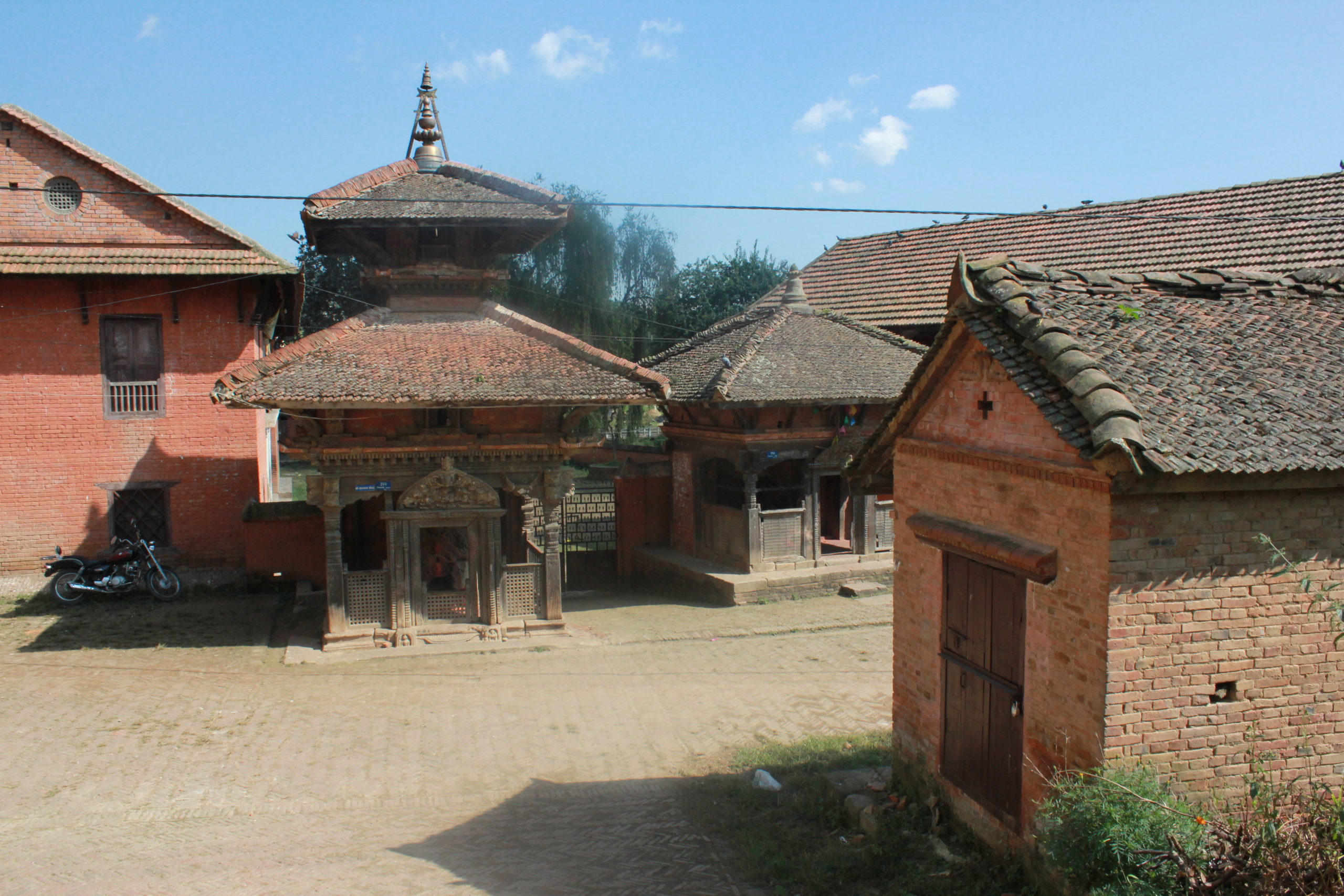
Co-existing private and religious space, a typical example of Newari town.

I started with the ghat (edge of a holy river which is used by devotees for taking bath and prayers as well as for cremation) on the northern part of the town. When I was there, I saw three different cremation spots separated for 3 different castes. On the other side of the river, women were washing their clothes and carpets as it had abundant water directed from Khokana. There on the square, one could witness the history with some of the oldest and unique temples. The small Ram Sita temple was claimed to be the oldest by one of the local residents. A sattal (two stories open rest house) on the west has unique paintings that tell stories of different eras of different Hindu gods. These artistic elements need serious preservation as the paintings are fading away and the building is also at a very critical stage.

Newar communities have been known for communal living with common open spaces for interaction and social functions. Due to rapid urbanisation, these activities have been lessened in these small towns. So was the case for Panauti. Basically, their major profession was agriculture but many youths nowadays have chosen other professions in the cities and hence, the vibrant open spaces during the day are almost empty with few old people drying their grains and smoking hukkas (shisha) in the house front. Amazingly there are many sattals and patis (one storey open resthouse), but mostly they are empty during the day, hopefully, they are occupied during weekends and evenings. Westernisation is the major event that is taking place in our societies and merging all cultures together. This is very important for growth and equality. But we must not forget that each culture has its own identity and uniqueness and that should not be homogenised otherwise we will not have any stories to share to our next generation like the man was doing sitting in the sattal of Ram Mandir.
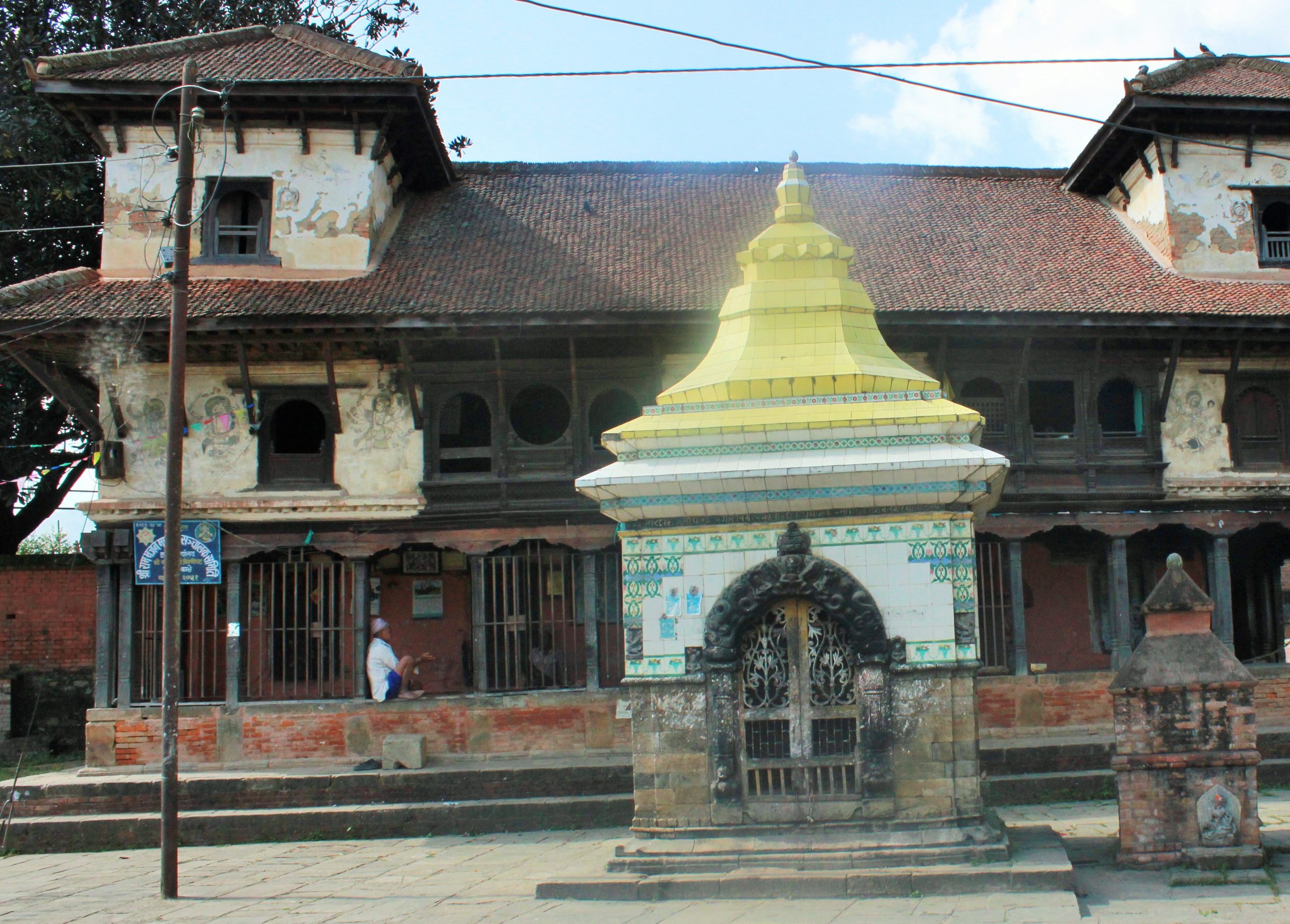
Temple complex with religious paintings on the wall.

Moving towards the old entrance of the town is dominated by the big temple square which proudly houses the Indreshwar Temple. It is one of the largest pagoda style temples in Nepal, which dates back to 1294 CE. It is also the oldest surviving Newar-style temples in Nepal. When you enter the huge square through its narrow gate, you see the extravagance. To see a temple in a small town like Panauti which is taller than Nyatapola of Bhaktapur was an experience in itself. The courtyard is surrounded by other temples and a museum.
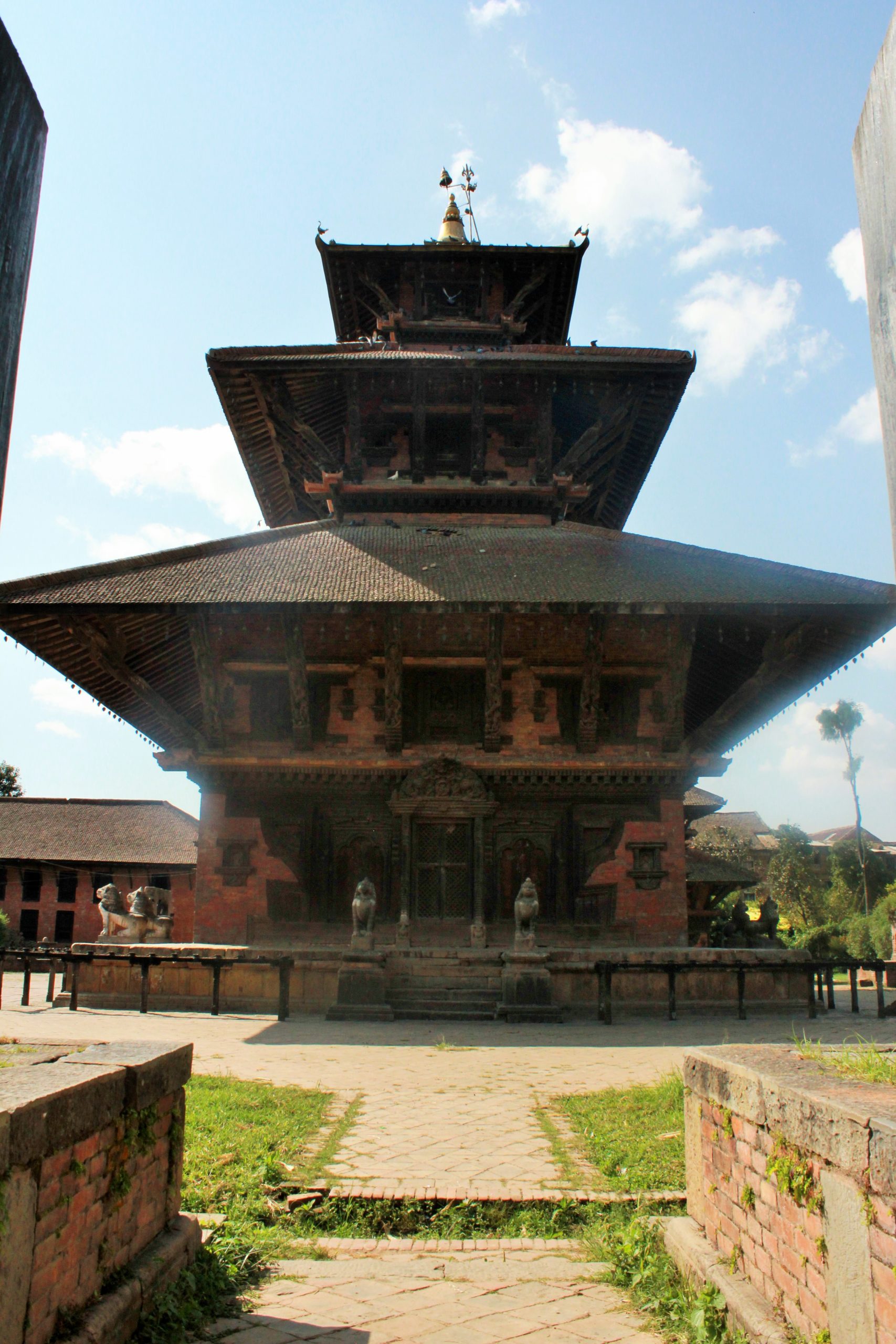
Indreshwar Temple

With many festivals, sattals and streets and courtyards, this town still reflects the vibrancy of old Newari towns. Though it’s an agricultural town, like any other Newari town, arts and artefacts present here to add more intricacy to its uniqueness. Like in any other historical towns in the Kathmandu Valley, Panauti is also at its peak for preservation. As long as the spirit is there, we can still save existence.
A Visit to Neuschwanstein Castle – Schwangau, Germany

Yellow, white, silver grey and blue

Take me again to this wonderful journey with you

Near Neuschwanstein Castle, Germany

I would suggest people visit here in the weekdays if they have time and if they do not want to stay in queue to get inside the crazy castle. The location is amazing. I am not quite amazed by the castle itself, but the way it is standing there gives it its boost. As they say, it’s not what you wear it’s how you wear it. This building also has its own attitude which goes perfectly with its location.

The new addition to the history is the Museum of the Bavarian kings. What an amazing design it is. You cannot tell from outside but each and every space created inside amazes you with its brilliance in space design and execution. The broad glasses with a view towards the lake, the small peak boos to look inside the displays, the elegant stairways that lead you to the main exhibit, each element is complimenting the other.

If you are in Munich, take a one-day Bayern ticket, Neuschwanstein castle is within the Bayern area. It takes 2 hours in total to reach the train station (Fuessen) near to the castle. You can get a direct train or you have to change once in between. After you reach the last train station, you will be guided to take a shuttle bus which will take you to the castle, a ticket for the bus is included in your Bayern ticket. So, within two hours of travel from Munich train station, you will reach the beautiful sight of the castle and lake. Once you reach the last bus stop you see the hills and the two castles standing there admiring each other’s beauty.

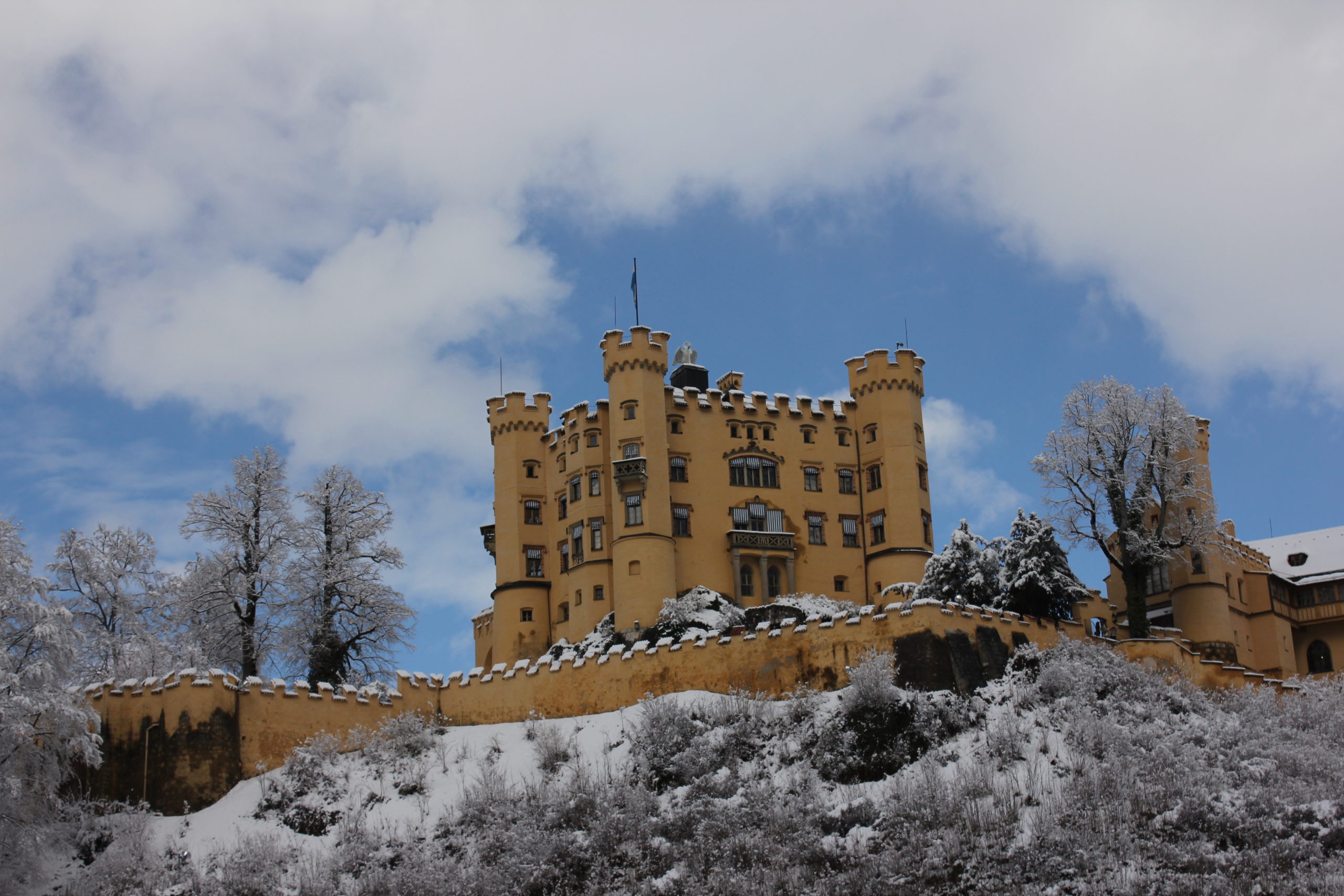
I went there in February and it was snowing. When we started walking towards the Alpsee Strasse where you can buy the tickets to go inside the castles and the Bavarian king’s museum, the yellow castle (Hohenschau) from distance looked promising. The way it was standing on the snow appeared magnificent. From the Alpensee, the main castle (Neuschwanstein) was camouflaged with the snow in the higher hills. When we reached near, I was a bit disappointed because of the crowd. Their faces looked as if they were standing in the queue to win a battle. Then I remembered some of my Bavarian friends, who said they had never visited the castle.

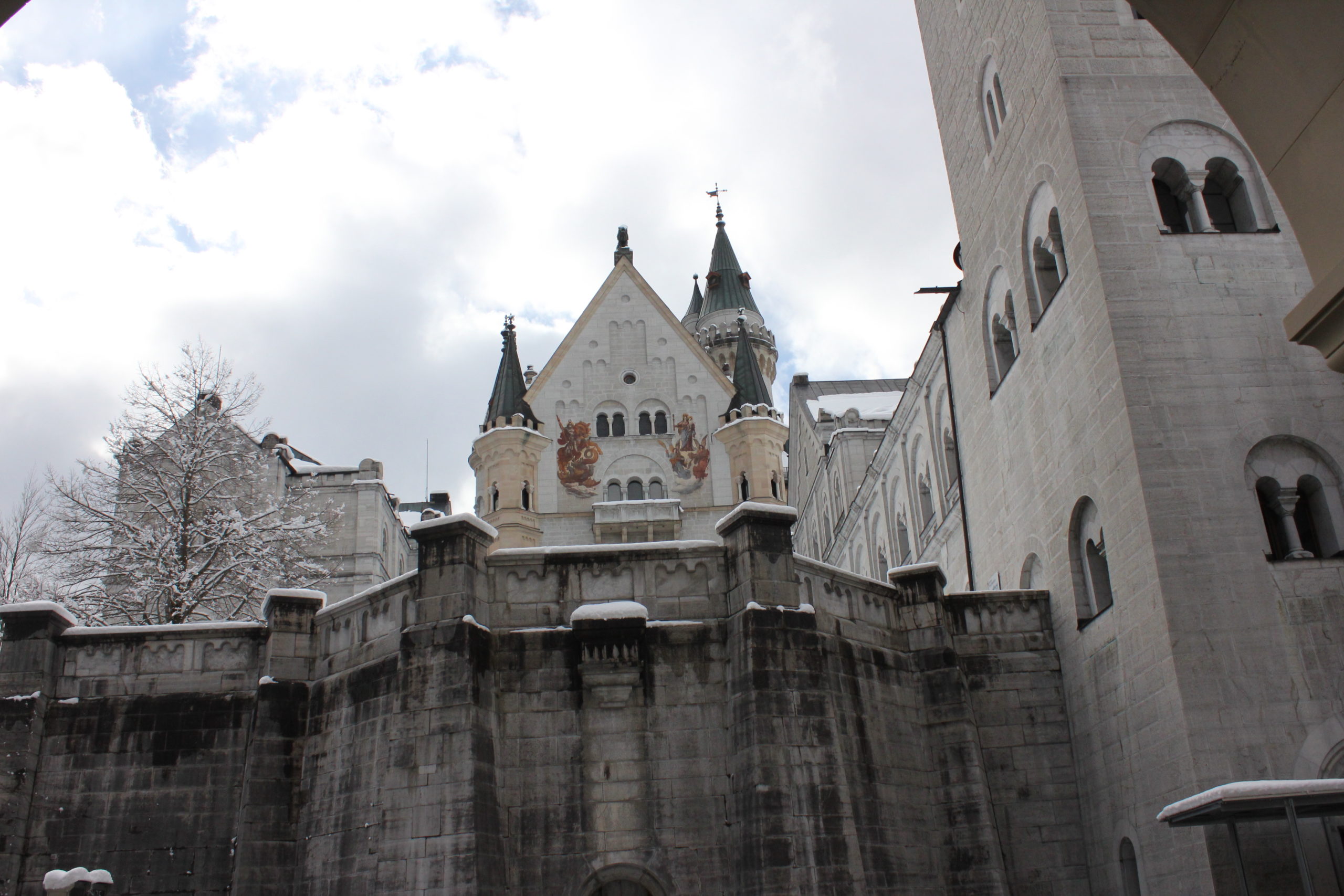
Neuschwanstein Castle, Germany

Too much touristification of any place fades out its actual beauty.

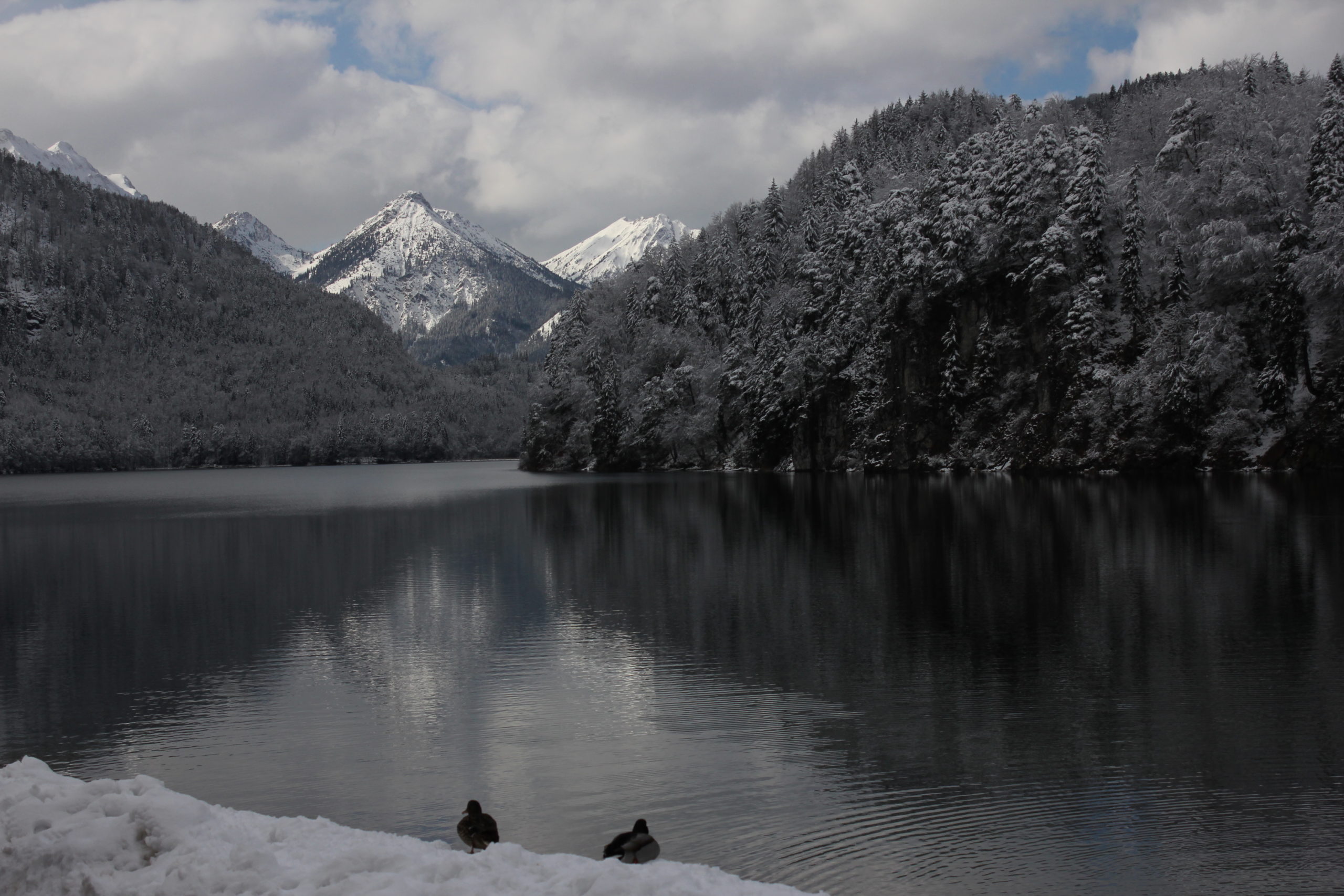
The colours still exist in my mind’s image: white, yellow, silver grey and blue. Once we bought the ticket after standing more than half an hour in the queue, we decided to eat something before we started walking up. When we walked further up from the Alpensee strasse, we could only find one Bavarian restaurant with typical Bavarian menu and typical Bavarian price. We decided not to eat there as it had lesser options for vegetarian food, then we went to an Italian restaurant nearby. After lunch, when we were moving ahead, this spectacular sight I could not take my eyes off, the Alpensee (Lake), which lies beautifully between the two castles and surrounding by the Alps. The still water, little bit of shining sun, snow white and the greyish background, mesmerised all my senses and made me believe heaven lies here.

Neuschwanstein Castle Base

As we had bought tickets to go inside the castle and the museum, we first went inside the museum as it was next to the lake. Lavish, detailed and well integrated, this was my first impression of the museum. We entered through fancy door, put our stuff in the locker, hung our coats in the dressing and started climbing up. Climbing up the wide dark staircase first did not excite me. But then when I climbed the first few steps I could view the main hall of the museum appearing to me from small view to the larger perspective. Then I could feel that this design would fill me with beautiful surprises and I was not disappointed at all. Sad that it was not allowed to take any pictures inside but the picturesque view of the lake from the main hall passage with wide glass opening is still captured in my mind.

The decision to go inside the castle was not so great. Too much ornamentation and unnecessary detailing as demanded by the king has made the interiors suffocating. This is not a place where people would like to sit for a long time and definitely not alone. The irony is that the then king (King Ludwig II) had built the castle as a hideout from the public and seven weeks after his death, it was opened to the public. Now it is one of the most visited castles all over Europe with around 6000 visitors per day in summer. (Source: http://www.neuschwanstein.de/englisch/palace/index.htm)

Nevertheless, I would suggest you to view the castles from outside because their beauty is because of their position in the Alps and their majestic forms portrayed by artist. You can really witness why Walt Disney magic kingdom was inspired from it. But if you also are interested in my kind of architecture with functions and elegance intertwined to create beautiful spaces, I would suggest you to visit inside the new museum. Major beauty on that day was the weather which threw the colours to make the castles look amazing, the lake froze the time and made the heaven and earth stand still with water, hill, snow and the blue sky.

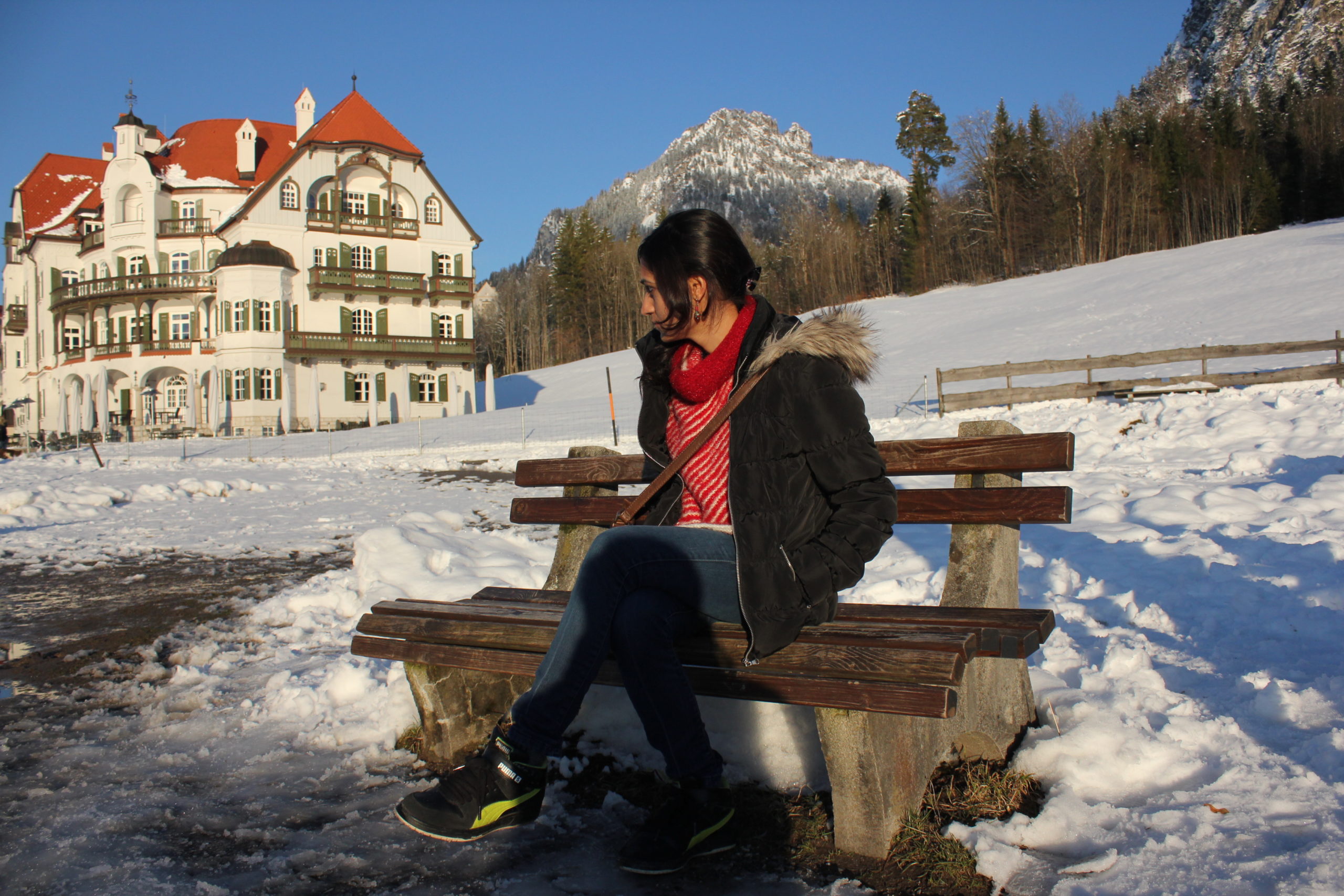
The cool weather and my bright red sweater was a perfect combo!

Labim Mall – A Modern Addition to Patan

The intricate details in the buildings with its form and the materials always excites me as an architect. I must say the new addition to the LABIM complex is far more than exciting. It is a beautiful building with well thought material and colour use. It is a good design with the playfulness of forms with multiple entrances, alleys for seating outside and the balance of indoor and outdoor. The only thing that hit me was the insufficiency of greenery. One example would be: If real trees were planted in the alleys, the dwellers would get the natural fresh air from them, instead of the ‘metal trees’ that are being planted at the moment.

Boundary, Chaos and the Standing Strong – Ashoka Stupa

Simplicity has great value. I feel comfortable going to places which do not stand out but lets you blend in with them at your own comfort. One such place in my city Patan, also known as Lalitpur is Pulchowk Stupa. It is one of the four Ashoka Stupas of Patan (oldest city in Kathmandu Valley), which marked the ancient boundaries of the city. At the time these Stupas were built in Patan (250 BC), the city was flourishing with Buddhism. Today still, we can see a unique blend of Hinduism and Buddhism in this city which cannot be experienced elsewhere in the world.

At one time, this Stupa was marking the boundary of Patan. Today it stands along the confused infrastructure of streets and buildings, dominated yet screening its own existence.

I pass through it many times, uncountable. It is on my way to work, my way to my relative’s house and many other locations. But yesterday I went there as a visitor and not a passer-by. I went there to see and look around just as I do when I go to other cities as tourists. Here began my architecture journey again to share with you. From the border of Kathmandu and Lalitpur, after crossing the Bagmati bridge of Thapathali, this place is at walking distance, you just have to keep on walking the main street but one can easily find public transport if you cannot walk around 15 minutes from Kopundole, the border of Kathmandu and Lalitpur.

Always visit a city as a residence, not as a tourist. Then only you can tell if it is an interesting city or not. I discovered this when I went to Sarajevo in Bosnia and Herzegovina for two weeks this year in March. The city looked nice and promising at the start. But when I visited each new place and explored its history for the many days I stayed there, I was mesmerized by its beauty. So, whenever you go to visit a city, try to explore it a little more than just seeing the monuments and tasting the speciality of that place. You will witness a whole new perspective.

The form of stupa gives a passer-by a feeling of contentment. The very form of Stupa symbolizes five elements earth, water, fire, wind and space, which is represented by its cubic base, dome-shaped mound, triangular conus, calyx and the top flame respectively. But unlike the big Stupas of Kathmandu valley namely Bouddhanath and Swayambhu (which are also in UNESCO world heritage), this small mound of earth covered with bricks and then overgrown grass does not give a feeling of extravagance. When you look at it from far, it is almost surrounded by buildings taller than it and overhead bridge. On its diagonal is a newly constructed modern building complex and opposite to it towards the street is municipality office of Lalitpur. These structures though functional and logical in their own space somehow make the physical form of Stupa not so dominant. But what is it that makes this structure stand out?

1

The first answer to it would be the religious belief of the worshipers and devotees. This brings positive energy to the people passing by it. As I approached its few steps at the entrance for circumambulation of the dome, I realised the inner peacefulness. In spite of the disturbance from the street, surrounding houses and parking spaces around it, once you step on its premises, it lets you enjoy its simplicity and when you look at it from bottom up, you see the five elements in its form taking you to the stage of the void. Looking at it from very close from bottom up shows the form of the dome to be converging and taking one to the stage of void through the central point where the dome converges into the conical conus and then to the nothingness and void which touches the sky. The prayer wheels which you rotate as you make a round around the dome are a precious delight. There is also a place to light candle below it all around which is normally lit in the evening. The combination of these two elements, the bells and the light standing below it gives an intricate detail to the form of a dome. And to my surprise, all the dominating structure around it did not exist and were out of view once I was inside its narrow alley to pass around it. Trees also made a huge impact in making it separate from the surroundings blocking the view of the cityscape. The beautiful sight was few children playing around the corner in the small streets near the stupa making the place livelier.

This beauty I visited yesterday, was in its full-fledged form as the air around it was also clean due less vehicle movement because of a strike. The sky appeared bluer giving its form more shape. This is one of the very few open spaces we have in our city. It is providing some space for its dwellers to breathe, to feel peace and to feel proud of the long history it carries with it. I used to come here more often when I had time. I am so happy that I decided to go there yesterday, it made me realise what I was missing, a feeling of peacefulness and bliss. More such places in your neighbourhood give you more opportunity to socialise and understand the city’s culture and activities.

Explore the areas in your neighbourhood and share with me. Try to find out about its history and today’s ambience. I am sure you will find more aspects to cover the reasons for existence.

Bridge, Grass and the Sunset – One Fine Day in Salzburg

Can you tell if a design is good or bad just by looking at a building or seeing a mesmerizing bridge from a distance? If yes then I would believe that you are the God of architecture. But for my understanding, the design is something with intention a bit more than just aesthetics. Form and composition, colour and texture might add up to what makes architecture but without fulfiling its function, it is not worth. A bridge is already a fascinating sight as long as it rightfully makes the users pass from one edge to the other. The structural details needed for it already gives it a beauty that no other ornament can fulfil. However the cases of railings of most famous bridges in the world, they get different kinds of lock, love locks, luck locks, birthday locks and what not. Do these add beauty to the existing structure or just additional uncalculated dead load? Let’s not worry about it now. Let’s just talk about the existence and beauty of such bridges.

Have you ever gone to the middle of a pedestrian bridge over a huge river in the evening and seen the sunset just below the horizon right in front of your eyes? Well, I have and I must say it is a spectacular sight.

It was February and suddenly we decided to go to Salzburg one weekend from Munich. The sudden decision was not bad at all because it is very easy to travel around Europe from one place to another, the connections are excellent. From Munich to Salzburg was just 3 hours in the train and the three of us reached the beautiful sight of Salzburg.

It was one fine day, was definitely not summer, because we had our winter jackets on but luckily we found a sunny day in starting of February, not very usual during that time. First we decided to visit the castle (Hohensalzburg castle), on top of the hill. The view of the city from up above was amazing. But one more view towards the south, down the hill, was even more spectacular. What was it? Simply a grass lawn, very huge with two diagonal paths crossing each other. One small hut somewhere near that crossing and some, very few bicycles passing through it. Then I was thinking, if I belonged to this city, I would travel this path in my bike every day, on purpose or even without any purpose. It looked that promising. After that we visited a garden (Mirabell Palace garden), which was supposed to be one of the best tourist spot in Salzburg. But I was not so much impressed with it. It was a well maintained garden with seasonal planting which made it dull during the season we went and few ordered seats were there which did not give a welcoming feel at all.

Then we decided to move towards the bridge (Makartsteg Bridge) over the Salzach river as it was our last destination for the day. We had already went passed it during the day when we went from Hohensalzburg castle to Mirabel palace. And we decided that we will visit it again before we leave. Beautiful, mesmerizing and it had to be evening. Luckily we decided to stroll around the river in the evening. This spectacular view was only possible when the sun is just about to say goodbye for the day. Once I started walking in solitude, it gave me peace from inside. The warm breeze in the evening gave the fragrance of existence of a history which made this place at this moment extremely special. As the name suggests it was named after a 19th century painter Hans Makart who was born and raised in Salzburg. More than that, it is now ornamented with modern tradition of locks in the railings. This gave the bridge a new perspective. The positive energy of locked bonding through the metals proved the existence of love and faith people have. And the continuous sound of Mozart, which was playing all over the city and could be heard even from the bridge, took it a step further. When I was standing in the middle of that bridge, it gave me happy feeling of smiles and trust but it also made me wonder, how something which is out of intention in design can have influence of this level that people who are using certain space and elements have the capability to change its aesthetics and change its architecture. This is the strength of the combination of architecture and people.

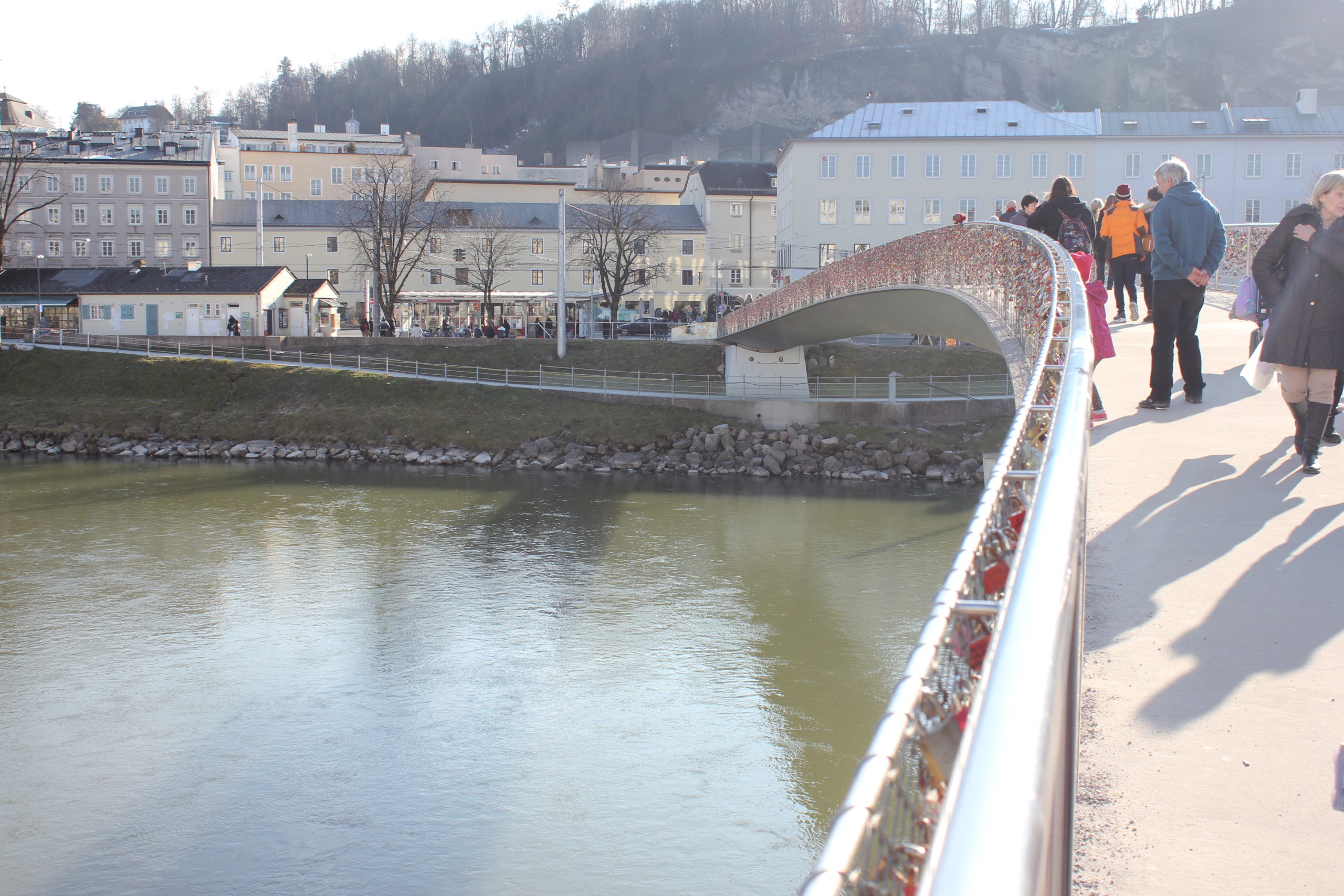
Makartsteg Bridge over the Salzach River in Salzburg, Austria

Monumetalisation of architecture is no more a fancy. Today’s architecture is more people focused. People want to decide what they want and not be told what they should want. If something is out of their own will they will respect it more. Hence architecture should speak people’s mind, architects must be able to translate the ideas into architectural being, which they can experience.

This pedestrian bridge rebuilt in 2000 is one of them. This simple form of architecture doesn’t dominate the existence of its surroundings. The spectacular view of the Alps from the bridge and also through the bridge mesmerizes your senses with the blend of manmade and nature in harmony both complimenting each other. The low curve of the bridge gives frame to the Southern Alps and the Alps giving the bridge a picture perfect background. And when you start walking in this pedestrian bridge you see the curves getting curvier and the colourful locks delighting your way through. This is where people decide to stand, look around stroll and take photos to capture the beauty. As you walk through the bridge the curves start getting curve less, the lines appear straighter and the locks in the railings start appearing more distinct, each one with this specific character rather than a colourful mass which appeared when we looked at it from a distance. The bank of the river made its smooth transition from concrete to grass to stones and water. This tempting view from the bridge makes you want to go and lay down on the grass or lean down from the stones to reach the fresh water. Unfortunately, I had no time to go down there and rest as we had to take a train soon. But I promised myself I will visit again for that pleasure of laying on the grass.

It was surprising to discover that the tradition of attaching locks onto the bridges started in 2008 following the custom traced in 2006 novel ‘I want you’ by Frederico Mocia. And now we can see this tradition in many almost all the bridges in touristic areas. Influence of certain things can drive people crazy. I believe architects must enhance the positive influence into the daily lives of people so that communities and societies can become better altogether.

For me I will visit Salzburg again, just to sit in the bank of Salzach river, just to walk on the Makartsteg bridge, to feel the bridge and to watch the setting sun, to discover love and life one more time and to understand pleasant moments are to be felt not created. This time this day, the setting sun said goodbye to me. Of course, it also said see you soon, hopefully I will see you soon!